The Weight of the Clipboard
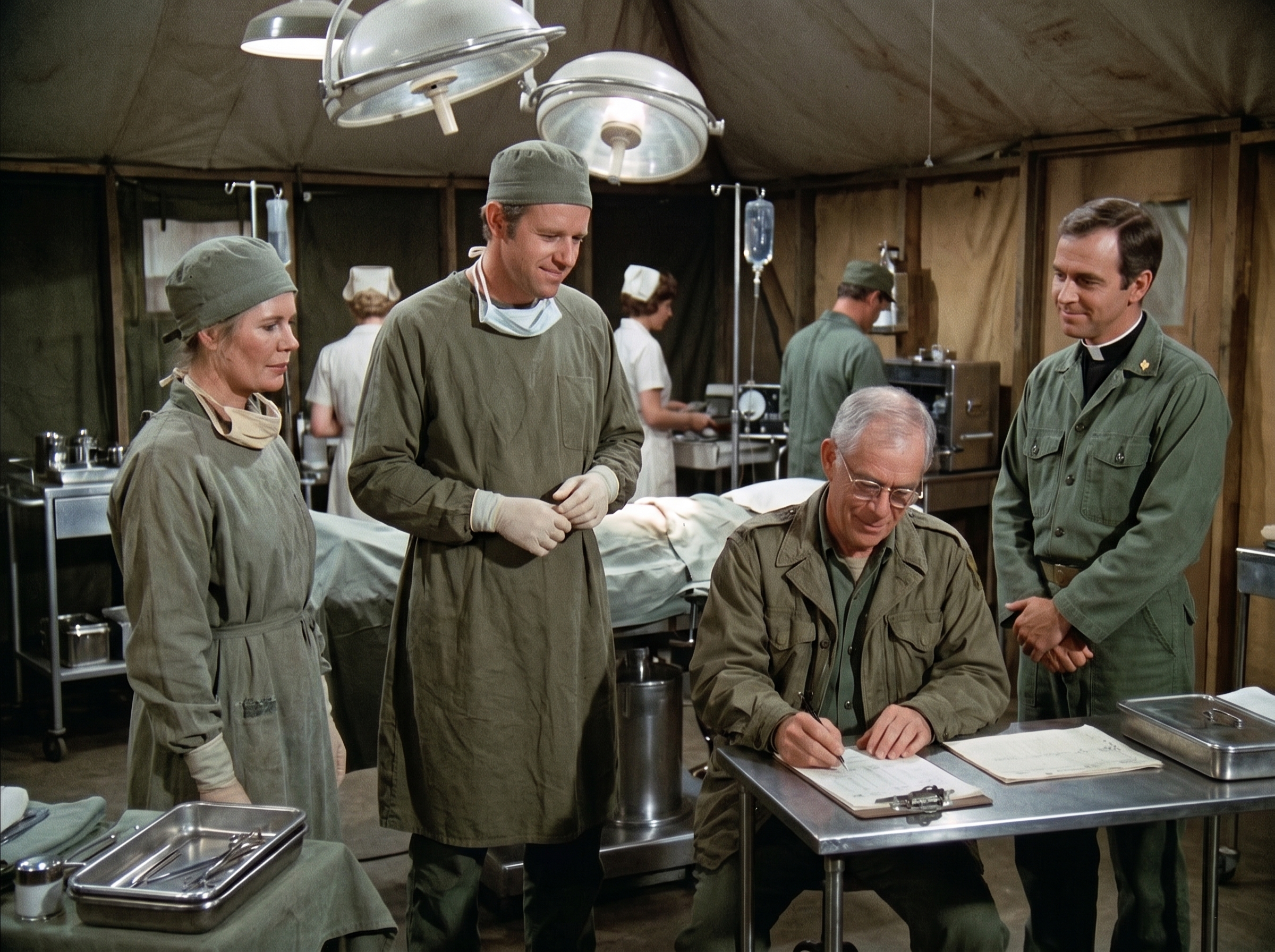
The hardest part of a marathon session in the Operating Room wasn’t the chaotic noise of the helicopters, nor was it the frantic shouting for clamps and sponges.
It was the profound, heavy silence that always followed.
The rush of adrenaline, the kind that kept exhausted doctors and nurses on their feet for eighteen straight hours, would suddenly evaporate. In its place came a bone-deep, aching fatigue that settled into every joint and muscle.
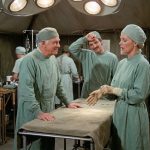
The overhead surgical lamps still cast their bright, unforgiving glare across the sterile surfaces, illuminating the muted greens and stark whites of the 4077th. The air was thick with the lingering scent of ether, iodine, and damp canvas.
At the edge of the surgical theater, the frenetic energy had finally slowed to a manageable crawl. The last patient of the shift, a nineteen-year-old kid from Iowa, was stable and being prepped for post-op by the background nurses.
Captain B.J. Hunnicutt stepped back from the stainless steel table, his shoulders dropping a fraction of an inch as the immediate life-or-death pressure lifted. He was still in his surgical gown, his sterile gloves still pulled tight over his hands, but his posture had lost its rigid, desperate focus.
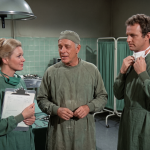
Major Margaret Houlihan stood nearby, her surgical mask pulled down to rest comfortably around her neck. She didn’t move to leave the room. Instead, she stayed anchored to her spot, her eyes sweeping the area with the practiced, protective gaze of a head nurse who knew her people were running on empty.
But both of their eyes were drawn toward the small metal table at the center of the room.
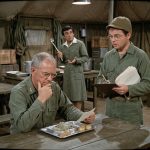
Colonel Sherman T. Potter sat hunched over a metal clipboard, his reading glasses perched on the bridge of his nose. He was wearing his standard olive drab jacket over his scrubs, the fabric looking as worn and lived-in as the man himself.
He was supposed to be filling out the post-operative charts, detailing the endless, bureaucratic nightmare of injuries, treatments, and supplies used.
Instead, the old cavalryman had stopped writing.
His pen hovered above the paper, frozen in mid-air. Slowly, Colonel Potter leaned forward, resting his weight entirely on his left forearm. He closed his eyes, and a long, ragged sigh escaped his lips, trembling slightly in the quiet tent.
He looked incredibly frail in the harsh light, the weight of command and the sorrow of the war pressing down on his shoulders all at once.
Margaret took a sharp, quiet breath, her professional strength slipping into genuine alarm. She took a half-step forward, ready to call for a corpsman, while B.J.’s relaxed stance vanished instantly as he watched his commanding officer falter.
The silence in the O.R. suddenly felt terribly loud.
For a heartbeat, nobody breathed. The 4077th was held together by chewing gum, dark humor, and the steady, unshakeable presence of Colonel Potter. If their rock cracked, the whole camp would shatter.
“Colonel?” B.J. asked, his voice low, gentle, and laced with quiet concern.
Father Mulcahy, who had been standing silently by the canvas wall offering spiritual comfort to the wounded, took a soft step forward. His hands remained folded, but his eyes were bright with deep pastoral worry for his friend.
Potter didn’t move for another long second. Then, slowly, he opened his eyes. He looked down at the clipboard, then up at the concerned faces surrounding him.
He didn’t collapse. He didn’t ask for the medic.
Instead, a dry, remarkably warm chuckle rumbled in his chest, breaking the tension into a million harmless pieces.
“Form 47-B, Section Four,” Potter said, his voice raspy with fatigue but steady as a drum. “The United States Army, in its infinite, boundless wisdom, requires me to specify the exact make, model, and origin of the mortar fragment we just pulled out of that boy’s spleen.”
He tapped the pen against the metal clipboard, a wry, tired smile touching the corners of his mouth.
“I’ve been a doctor in three wars,” Potter continued, shaking his head slowly. “And I have yet to find a piece of shrapnel that had a manufacturer’s stamp on it. I’m half tempted to write ‘Made by Idiots’ and see if the brass at I Corps kicks it back.”
The heavy, suffocating anxiety in the room vanished, replaced by a sudden, collective wave of immense relief.
B.J. let out a soft breath, shifting his weight back. A gentle, deeply thoughtful smile spread across his face. It was a smile of pure affection, a quiet acknowledgment of the absurdity they lived in and the incredible man who helped them survive it.
Margaret stopped her forward motion, planting her feet back on the concrete floor. The tight, worried lines around her eyes softened instantly. Her mask remained down, revealing not just her exhaustion, but a quiet, fierce pride. She loved this unit, and she revered this man. Her posture relaxed into one of tired, professional satisfaction.
Off to the side, Father Mulcahy smiled. It was a soft, gentle expression of pure humanity. He looked at the Colonel, then at B.J. and Margaret, his heart swelling with a quiet grace. He didn’t need to preach a sermon to see the divine; it was right here, in the muddy, blood-stained camaraderie of this canvas tent.
Potter adjusted his glasses, looking at the three of them. He saw the way Margaret hovered like a protective mother hen. He saw B.J.’s warm, steady friendship. He saw the Padre’s unwavering moral support.
“Go get some sleep, people,” Potter said gently, his voice softening into the fatherly tone they all secretly relied on. “You did good work today. All of you. Let the old man fight with the paperwork.”
Nobody moved toward the door. Not yet.
They just stood there for a moment longer in the bright, soft television light, sharing the quiet space. They were miles from home, surrounded by madness, draped in muted greens and weary whites.
But in that brief, captured moment, pausing over a medical chart in the dead of night, they weren’t just an army unit. They were a family, finding light in the darkest of places, holding each other up simply by standing together.
Potter lowered his head back to the chart, his pen finally moving across the page, anchored by the silent, steadfast presence of his people.
Some families are born, but the best ones are forged in canvas tents, stitched together by shared exhaustion, quiet grace, and love.