The Quietest Symphony in the 4077th
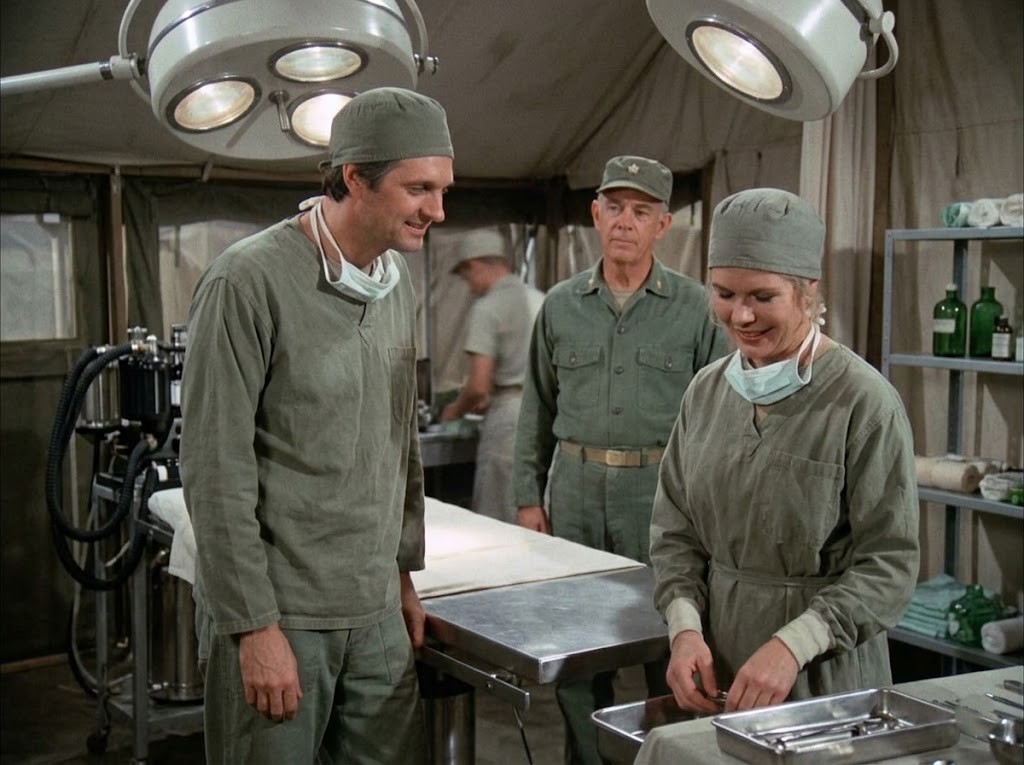
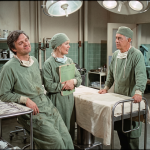
The surgical theater was never truly silent, but at 3:00 AM, it held a different kind of hush. It was a heavy, exhausted sort of quiet, broken only by the hum of the generator outside and the rhythmic, metallic clinking of instruments being cleaned.
Hawkeye stood by the operating table, his shoulders slumped, his eyes tracing the tired lines on Margaret’s face. She was meticulously organizing the tray, her movements precise, almost mechanical, as if she were trying to impose order on a world that refused to stay put.
Colonel Potter watched them both from a few feet away, his arms folded across his chest. He wasn’t yelling, he wasn’t demanding reports, and he wasn’t pacing. He was just present, a steady anchor in a sea of fatigue.
“You know, Margaret,” Hawkeye murmured, breaking the silence with a soft, raspy cadence, “if you keep polishing those forceps any harder, you’re going to turn them into wedding rings.”
Margaret didn’t look up immediately, but the corner of her mouth quirked, a tiny rebellion against the exhaustion that threatened to pull her under. She picked up a small, forgotten metal tool, holding it up to the harsh light.
“It’s not for me, Pierce,” she replied, her voice steady but underscored with a weariness that went deeper than bones. “It’s for the next poor soul who has to rely on them. I’d rather the metal be clean than my conscience be heavy.”
Hawkeye took a half-step toward her, the humor in his eyes replaced by a flicker of raw, shared understanding. He reached out as if to take the tray, his fingers brushing against hers, and for a fleeting, suspended moment, the entire war seemed to stop.
The tension in the room wasn’t about the surgery; it was about the crushing weight of everything they had left unsaid since the sun went down.
Then, suddenly, Margaret’s hand trembled. She dropped the instrument. It clattered loudly against the tray, a sharp, jarring sound that shattered the fragile stillness, and her composed mask finally, visibly fractured.
The sound echoed off the canvas walls like a gunshot. Margaret gasped, instinctively pulling her hands back, her composure unraveling in the span of a heartbeat. Her breath hitched, a jagged, uneven sound in the stifling air.
“Dammit,” she whispered, her eyes shining with the sudden, overwhelming sting of tears she had fought back for twelve straight hours.
Colonel Potter didn’t move toward her with a lecture. Instead, he stepped into the light, his face softening into the expression of a man who had seen too much but had run out of ways to fight it. He moved with a heavy, deliberate slowness, placing a firm, fatherly hand on her shoulder.
“Easy now, Major,” Potter said, his voice as rough and comforting as old sandpaper. “Gravity’s a hell of a thing when you’ve been standing against it for half a day. Let it drop.”
Hawkeye, who had been frozen in the wake of her outburst, let his own guard drop entirely. He moved to the other side of the tray, picking up the fallen tool with a quiet, practiced grace. He didn’t offer a joke. He didn’t offer a witty retort to fill the air.
He just set it back down, right where it belonged.
“We’re all a little frayed at the edges, Maggie,” he said, using the nickname softly, without the usual teasing edge. “The war’s long, but the night’s short. You’re allowed to be human, even in this tent.”
Margaret let out a long, shaky breath, her shoulders finally dropping from their rigid, defensive height. She looked at the two men—the Colonel, who carried the weight of the camp, and Hawkeye, who carried the weight of the wounded—and she saw her own reflection in their weary faces.
They weren’t soldiers in that moment. They were just people who had spent their day stitching together the broken remnants of others, only to find themselves needing a bit of mending in return.
“I just…” she started, her voice trailing off as she looked around the familiar, sterile, crowded space. “I just wanted one thing to stay exactly where I put it.”
“I know,” B.J. said from the doorway, having just walked in to find the scene. He didn’t need to be told what had happened; he saw the tray, the tears, and the quiet solidarity. He walked over and handed her a canteen cup, steam rising from it. “Coffee’s burnt, but it’s hot. And the sun’s going to be up in three hours, whether we’re ready or not.”
The tension didn’t vanish—it couldn’t, not here—but it transformed. It became something lighter, something shared. It was the unspoken pact of the 4077th: we hold each other up so we don’t have to face the dark alone.
They stood there for a few minutes longer, a circle of tired, brilliant, mismatched souls, sharing the quiet before the next bell would inevitably ring. There were no grand declarations, no heroic speeches. Just the smell of iodine and coffee, the low hum of the lamps, and the quiet comfort of knowing that when one of them stumbled, there would always be someone standing nearby to help pick up the pieces.
They left the tent together, heading out into the cool, pre-dawn air, leaving the instruments clean and waiting for the morning light.
In the heart of the madness, the most important thing we ever did was simply show up for each other.