The Weight of a Clipboard and a Feathered Hat
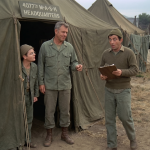
 Some days in the 4077th, the war didn’t announce itself with the thud of incoming choppers.
Instead, it crept in through a brown paper envelope, dropped quietly on Colonel Potter’s desk by a weary mail clerk.
It was late afternoon, the kind of heavy, humid Korean air that made your fatigues stick to your back and your brain feel like wet wool. Inside the administrative tent, the overhead fan hummed a monotonous, sputtering tune, doing little more than moving the stale heat from one corner of the room to the other.
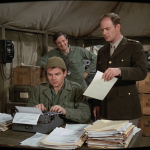
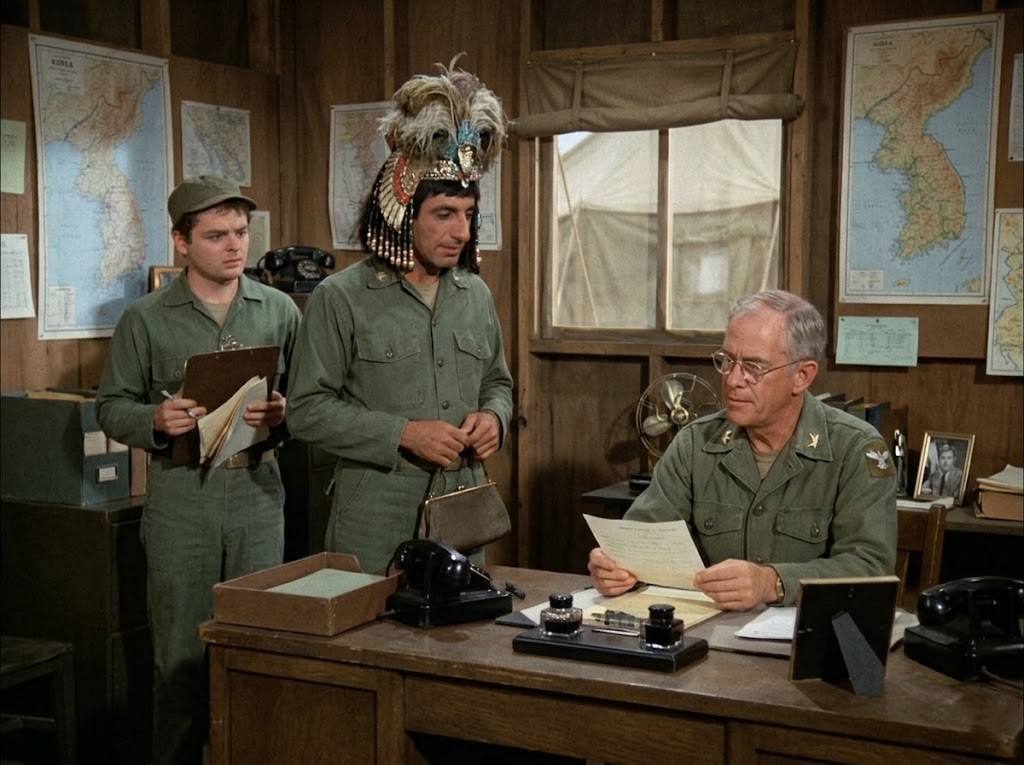
Radar stood frozen by the filing cabinet, his fingers clutching a wooden clipboard against his chest like a shield. His eyes, wide and heavy with the shared exhaustion of three straight nights in post-op, were fixed on the commanding officer. He didn’t say a word, but the slight tilt of his cap and the tense set of his shoulders spoke volumes. He had already sensed the shift in the room before the envelope was even opened.
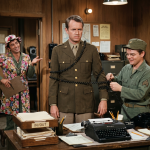
Beside him stood Klinger, stripped of his usual vibrant chiffon but still wearing his latest, most elaborate creation—a towering, feathered headdress that looked like a cross between an Aztec ceremonial piece and a disgruntled pheasant. Underneath the plumage, his face was uncharacteristically solemn, his large dark eyes darting between the Colonel and the small leather purse clutched tightly in his hands. He hadn’t made a single joke about Toledo, the Mud Hens, or a hardship discharge since walking through the door.
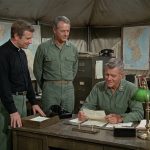
Colonel Potter sat behind his desk, the brass eagles on his collar catching the dim light of the tent. He adjusted his glasses, his lined face mapped with the endless decisions of a long career, and slowly unfolded the single sheet of paper. The scratch of the paper seemed loud in the small room.
For a long moment, nobody breathed. The maps of Korea pinned to the wooden walls behind them looked down like silent witnesses to another routine moment of military bureaucracy that was about to break someone’s heart.
Potter’s eyes scanned the typed lines once, then twice. The fatherly warmth that usually lingered around the edges of his sharp eyes vanished, replaced by a sudden, rigid stillness. His jaw tightened, the paper trembling just a fraction of an inch between his fingers.
“Radar,” Potter said, his voice dropping into a low, gravelly register that signaled trouble. “When did this dispatch arrive from Seoul?”
“Just ten minutes ago, sir,” Radar whispered, his voice cracking slightly as he instinctively squeezed his clipboard tighter. “I… I checked the routing numbers twice, Colonel. I thought there must have been a typo at Headquarters.”
Potter didn’t answer right away. He lowered the paper to the desk, his gaze fixed on a framed photograph of his wife, Mildred, as if looking for an anchor. The silence stretched, thick and suffocating, until the humor of Klinger’s ridiculous hat felt completely swallowed by the heavy air of the tent.
Klinger shifted his weight from one foot to the other, the feathers on his head rustling like dry leaves. “Is it bad news, Colonel? If it’s about the supply truck from Incheon, I swear I didn’t have anything to do with the missing crates of peaches this time.”
Potter looked up, his eyes resting on Klinger. There was no anger in the Colonel’s expression, only a profound, generational tiredness that every man in the outfit recognized all too well.
“It’s not the peaches, Max,” Potter said softly, using Klinger’s real name—a rare occurrence that made both younger men instantly stiffen. “It’s an administrative reassignment order from the Pentagon. Effective immediately.”
Radar took a half-step forward, his boots creaking on the wooden floorboards. “Sir? Who is it?”
Potter sighed, rubbing the bridge of his nose where his glasses had left deep red indentations. “They’re auditing the personnel files of non-combat volunteers who have exceeded their standard tour rotation. According to this, Corporal Klinger is being transferred to a frontline infantry unit near the 38th Parallel. They say his administrative skills are needed in a forward command post.”
The words hung in the air, cold and absurd. Klinger, the man who spent every waking hour trying to scheme his way out of the army, was being sent closer to the fighting, not because of a punishment, but because a clerk in Washington had shuffled a deck of carbon copies.
Klinger looked down at his small leather purse. The theatrical defiance that usually defined him seemed to evaporate, leaving behind just a tired kid from Ohio who was terrified of the dark. “The front, sir? But… I’m a dressmaker’s son. I don’t even like the sound of the evening bugle.”
“I know, Klinger,” Potter said, his voice softening with genuine tenderness. He stood up from his desk, walking around to face the two young men. “And I know that beneath all this nonsense—this feathered monstrosity on your head—you’ve kept this office running when Radar was down with the flu. You’ve carried stretchers until your hands bled, and you’ve given this camp something to laugh at when we forgot how.”
Radar looked at Klinger, then at the Colonel. The typical hierarchy of the army felt distant and meaningless inside the wood-framed tent. They weren’t just an officer and his subordinates; they were survivors sharing a lifeboat.
“We can’t let them take him, Colonel,” Radar said, his voice rising with a rare flash of stubbornness. “There has to be a loophole. A regulation. I can look through the manual. Section 8, or… or maybe a clerical error on Form 104-B?”
Potter placed a hand on Radar’s shoulder, a gentle but firm pressure that quieted the young clerk. “We’ll fight it, Radar. You and I are going to sit down with those files, and we are going to find every misplaced comma and missing signature that the United States Army has ever generated. If Headquarters wants a paper war, they picked the wrong company clerk to mess with.”
A tiny, tentative smile broke through Klinger’s anxiety. He adjusted his feathered headdress, trying to restore a bit of its crumpled dignity. “Thank you, Colonel. If we win this, I promise my next outfit will be a much more conservative shade of olive drab. Or maybe a nice lavender chiffon for the evening shift.”
Potter let out a dry, short chuckle, the tension finally leaving his shoulders. “Keep the lavender in the trunk, Klinger. Just make sure you’re here tomorrow to file the morning reports.”
He walked back to his desk, picking up the black telephone receiver with a look of fierce determination. The war was still waiting outside the screen door, but inside the tent, the family was holding its ground.
In the corner of a forgotten valley, amidst the mud and the madness, they looked out for each other one piece of paper at a time.