THE PETITION FOR THE SOUL OF THE 4077th
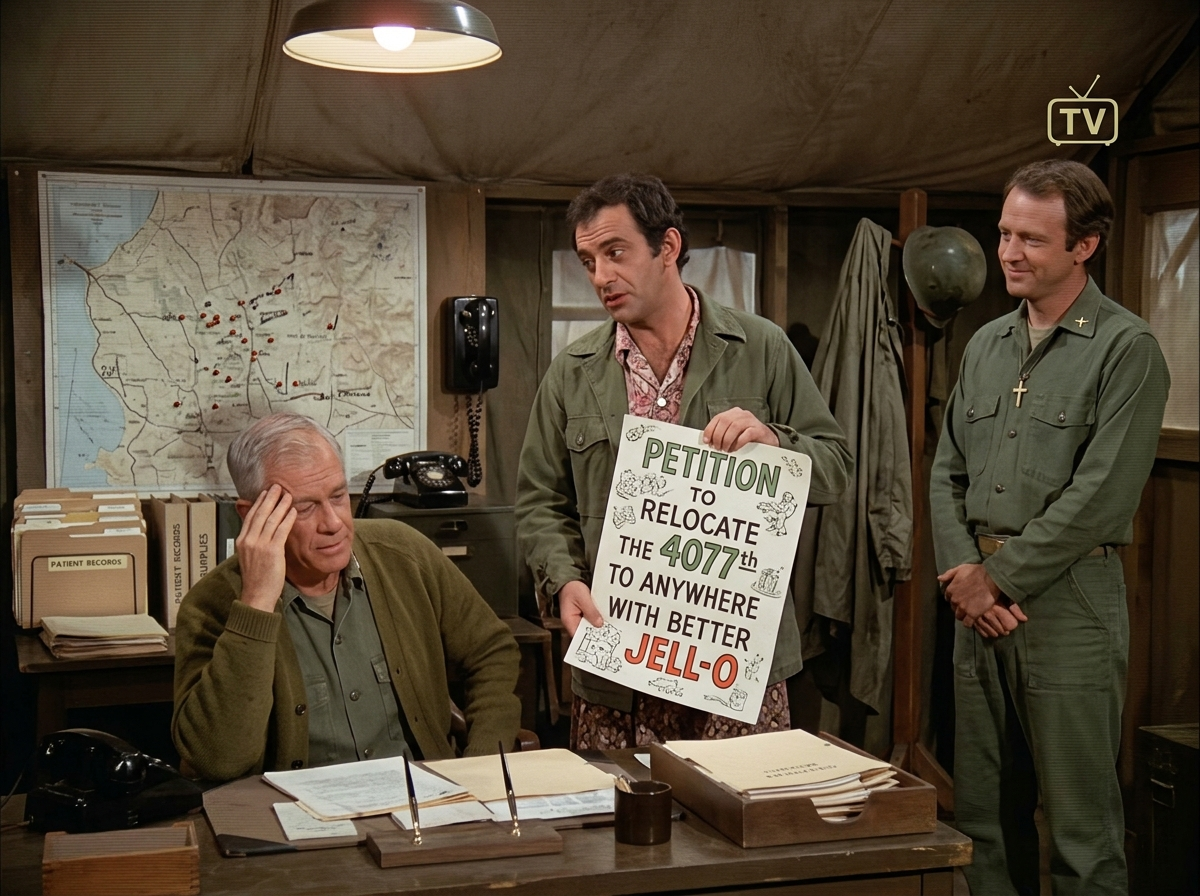
If fatigue had a physical form, it would look like Colonel Potter’s hand, massaging his left temple.
The office was quiet. A rare moment. Too rare. Outside, the Korean dust settled on tents and jeeps. Inside, the hanging bulb cast a warm, tired light.
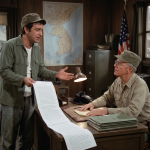
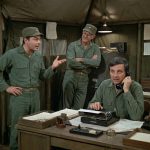
Colonel Potter sat behind his large desk. Papers were stacked high. Patient records, supply requisitions. The map on the wall was pinned with small, ominous red dots. Each dot a battle. Each dot a wave of wounded.
Radar had left minutes ago. Potter thought he finally had five minutes to rest. Just five minutes before his head actually split open from the pressure of command.
Then the door flew open. It wasn’t the enemy. It was worse. It was Hawkeye Pierce.
He strode in, bringing the energy of a manic tornado into the still room. Hawkeye wore his standard disheveled look: fatigue jacket over a floral shirt, eyes tired but sharp, ready with a quick line.
His expression was intense, dramatic, urgent. He stopped directly in front of the desk, dominating the space.
In his hands, he held a large white poster. It was handwritten, block letters, decorated with silly little cartoons that only someone deeply exhausted would find amusing.
Colonel Potter stared at the paper. His massaging hand froze on his temple.
“Pierce,” Potter muttered, his voice dry.
Hawkeye ignored the tone. He presented the poster like a sacred scroll, presenting the message. “Colonel, we have a crisis. A human rights crisis.”
The poster read: “PETITION TO RELOCATE THE 4077th TO ANYWHERE WITH BETTER JELL-O.”
From behind Hawkeye, a gentle figure appeared. Father Mulcahy, hands clasped, stood patiently, a small, subtle smile touching his lips as he watched the inevitable scene unfold. He was here as a witness to the madness.
Potter looked from the poster back to Hawkeye. The Colonel’s eyes were narrow, processing the absurdity of this demand against the backdrop of the massive map and the piles of paperwork.
His hand slowly moved from his temple to rest on his desk. He stared at Hawkeye, the silence stretching taut between them. The Colonel’s expression was unreadable, a blend of exhaustion and a controlled, dangerous stillness. He was about to speak.
“Pierce,” Potter finally said, his voice quiet. “You want me to relocate a mobile army surgical hospital… on account of the dessert selection?”
The tension in the room was palpable. Father Mulcahy shifted slightly, recognizing the gravity beneath the Colonel’s low volume.
Hawkeye did not back down. He amplified his stance, raising the petition.
“Not just dessert, Colonel! Morale. Sanity. The sheer decency of a wiggling lime square that doesn’t taste like powdered despair! Last night… you were in surgery. You didn’t taste the green… stuff.”
Potter’s eyes met Hawkeye’s. The humor drained out. “We are in Korea, Pierce. People are dying.”
The Colonel gestured to the patient records. “I have reports here of three young men who will never eat Jell-O again. Not here, not anywhere.”
He looked at Hawkeye, then to the priest. The map behind them with all those pinned battles seemed to press into the room.
Hawkeye lowered the petition a few inches. The dramatic flair faded. His shoulders dropped. He looked, suddenly, just as tired as the Colonel.
The silence that followed was different. It wasn’t about an absurd demand. It was a silent acknowledgement of where they were, who they were, and why Hawkeye was doing this at all.
This wasn’t about food. This was about holding onto any shred of sanity, of normalcy, of simple human comfort in a place designed to strip it all away. The stupid Jell-O petition was a desperate act of resistance against the numbness.
Potter knew it. He saw it in Hawkeye’s defeated eyes. He had seen it in every single member of this unit at some point.
The Colonel took a deep breath. His anger evaporated, replaced by a profound, fatherly empathy. He couldn’t move the 4077th, but he understood the plea.
He looked at the poster again. The silly cartoon faces.
“Alright, Pierce,” Potter said softly. He reached out his hand towards the petition.
Hawkeye hesitated, then handed the poster to the Colonel.
Potter took it. He laid it flat on his desk, carefully, right on top of a supply report.
He picked up a pen.
Hawkeye looked stunned. Father Mulcahy smiled broadly, a genuine beam.
Colonel Potter didn’t say anything. He carefully and clearly signed his name: ‘Sherman T. Potter, Col. MC.’
Hawkeye looked at the signature, then back at the Colonel. His expression was a mix of surprise and silent gratitude.
Potter then picked up the entire pile of patient records and set them on a side table. He tapped the desk next to the signed petition.
“Sit,” he said. “The kettle’s on. We can’t move the hospital, and God knows I can’t make better Jell-O, but we can have some bad coffee and talk for five minutes about absolutely nothing.”
Hawkeye took the chair, and Father Mulcahy leaned against the wall, as the three men settled into the quiet of the office, finding a different kind of sweetness in their shared, tired company.
In a place where everything was temporary, the friendship was the only thing that stayed.