The Quietest Hour at the 4077th
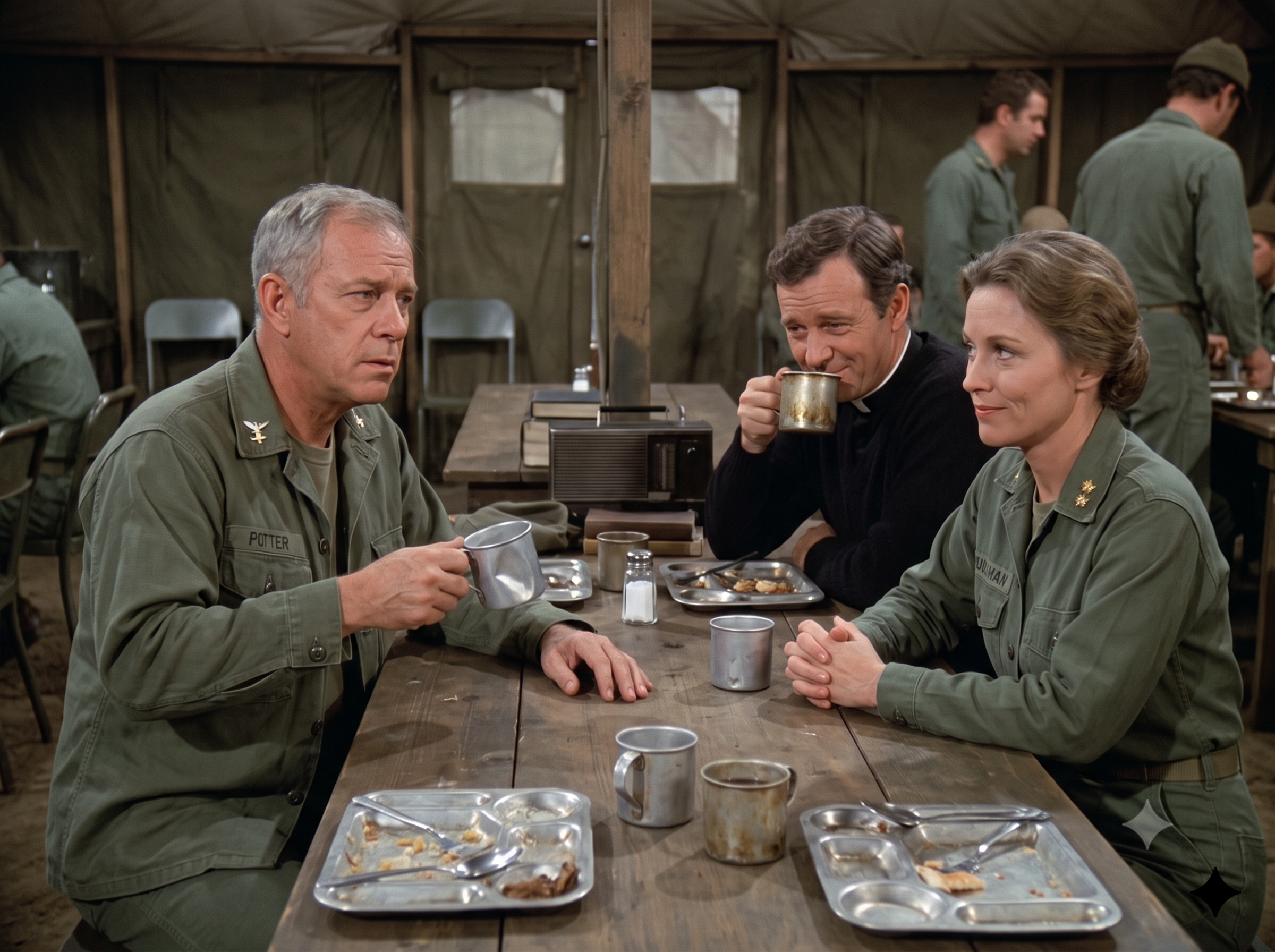
The mess tent was always a place of uneasy truce. It was a space where the day’s intake of casualties usually met the impending night’s exhaustion, and the only thing heavier than the humidity was the silence between spoonfuls of powdered eggs or stewed mystery.
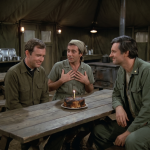
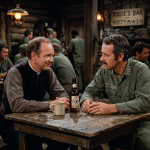
Today, however, the air held a strange, brittle stillness. Colonel Potter sat at the head of the table, his eyes tracing the steam rising from his metal cup, his face a roadmap of long years and longer miles. Across from him, Father Mulcahy leaned in, nursing his own coffee with a look of quiet, scholarly introspection, while Major Houlihan watched them both with a gaze that had softened, just for a moment, into something almost vulnerable.
It was a rare pocket of calm in a war that rarely granted permission for such things. The Colonel shifted, the metal of his chair scraping against the dirt floor—a sharp sound that seemed to snap the others out of their private reveries. He opened his mouth, perhaps to crack a joke about the cooks’ latest culinary crime, but the words died in his throat as a distant, unmistakable rumble of incoming trucks began to vibrate through the table.
The camaraderie of the moment didn’t shatter, but it shifted, tightening like a taut wire. Everyone knew that sound meant the lull was officially over. Potter’s knuckles tightened around his mug, his eyes meeting Mulcahy’s in a shared look of resignation, a silent communion of men who had seen too much but were ready to face one more shift.
“Well,” Potter murmured, his voice raspy but steady, “I suppose the hospitality committee is about to get busy.”
Just as the first shouts echoed from the compound, the flap of the mess tent whipped open, letting in a blinding shaft of afternoon light that cast them all in sharp, sudden relief. The tension peaked; the choice was now between finishing that last, precious drop of coffee and stepping back into the fray where they were needed most.
Mulcahy didn’t put his cup down right away. Instead, he took one slow, deliberate sip, a quiet act of defiance against the urgency of the war outside.
“They can wait thirty seconds, Colonel,” the Father said softly, his voice cutting through the growing chaos of the camp. “Even the wounded deserve a chaplain who isn’t frantic.”
Colonel Potter looked at him, the corner of his mouth twitching in a faint, appreciative smile. He relaxed his grip on his mug and set it down, the metal clinking softly against the wooden table. Margaret, who had been halfway to standing, sank back into her seat for a fraction of a second, her posture relaxing just enough to show the deep, bone-weary fatigue she usually hid behind a mask of rigid professionalism.
For those few seconds, the mess tent ceased to be a staging ground for the next crisis. It became a sanctuary. It was a moment of profound, wordless connection—the kind that held the 4077th together when the world outside tried to tear it apart. They weren’t officers, or doctors, or clergy in that moment; they were just people, held together by the thin thread of shared survival.
Potter looked at Margaret, his eyes softening. “You’ve been on your feet since four this morning, Margaret. Eat your coffee—or whatever passes for it—before we go. The wounded won’t benefit from a nurse who’s passed out in the OR.”
Margaret blinked, a rare, genuine smile touching her lips. “I’m fine, Colonel. I just needed to remember what quiet sounds like.”
The rumble of the trucks reached the perimeter, and the voices of the corpsmen grew louder, more frantic. The spell was breaking. One by one, they rose from the table. There was no grand speech, no flourish of heroism. Just the quiet, methodical movement of people who knew their duty and accepted it as the price of their fellowship.
As they stepped out of the tent and into the harsh light of the compound, the reality of the war returned in full force. But as they walked toward the triage unit, shoulders brushing, a quiet, unspoken understanding passed between them. They had shared one more moment of humanity before the madness began again. It was a small victory, quiet and invisible, but it was enough to see them through the long, dark night ahead.
In the heart of the madness, it’s the quiet moments that keep us human.