The Quietest Triage
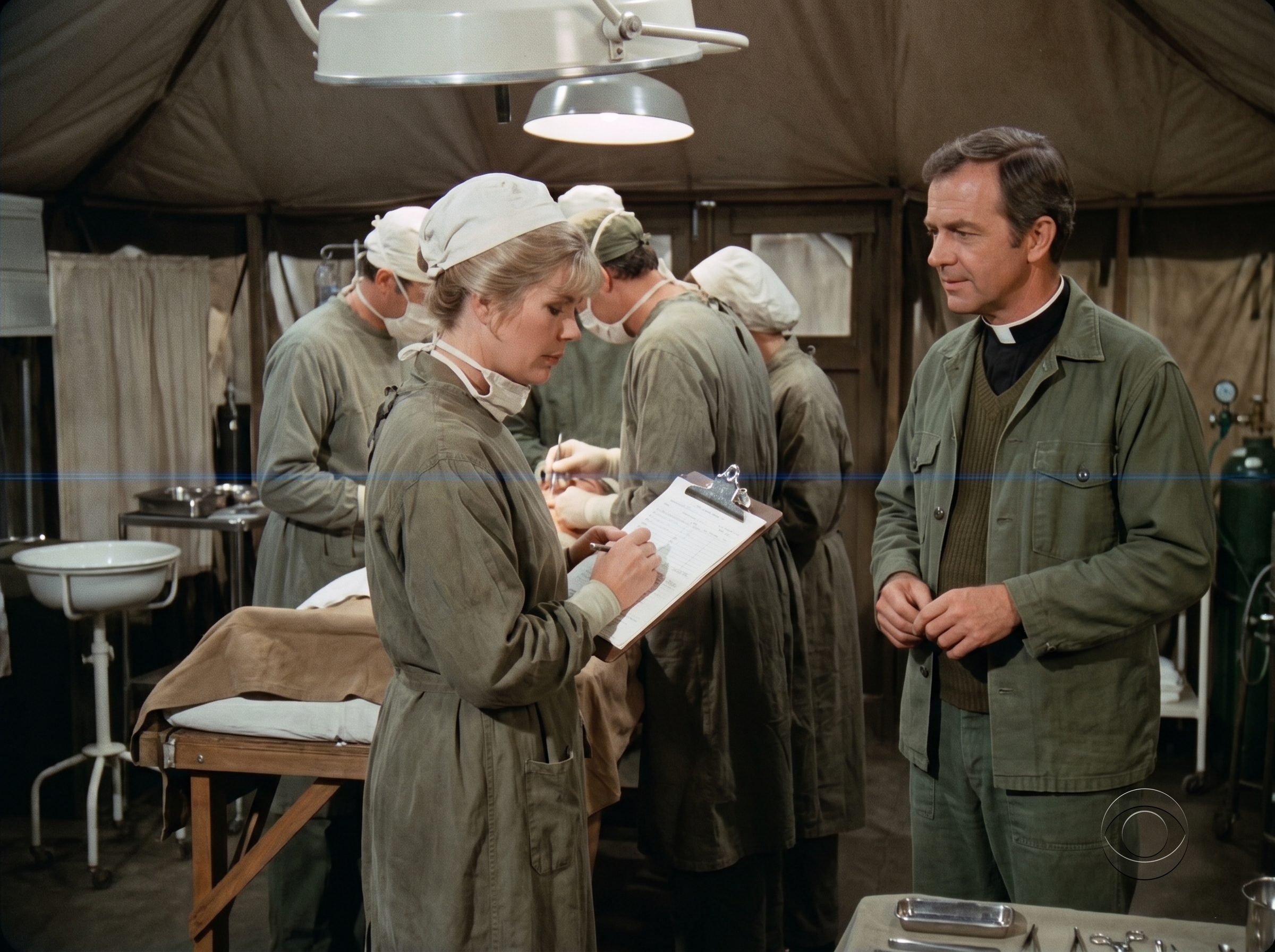
The lighting in the OR tent always had a hazy, greenish cast, filtering through the canvas like old river water. Inside, the air was still, heavy with the sharp tang of antiseptic and the dull hum of overhead lamps.
“Another five minutes on the O2, Margaret, if you please,” B.J. said from behind his mask, his focus narrow as he worked over a patient. He didn’t look up, his voice steady but layered with the distinct, worn-out drag of a twelve-hour shift.
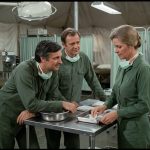
Margaret, immaculate in her scrub cap, was a pillar of controlled routine. She merely nodded, her eyes briefly meeting B.J.’s before she resumed adjusting a flow valve, a small metal instrument in her gloved hand. Her movements were crisp, professional, a silent antidote to the chaos they lived in.
Radar, as always, was a twitching nerve-ending in scrubs. He stood just behind the operating table, seemingly connected to the other operating rooms by some phantom wire, glancing back and forth. His cap was slightly crooked.
Near the back door, Klinger, looking unusually muted in olive drabs instead of taffeta, adjusted an IV stand. It was a quieter-than-usual night, but the silence had its own weight.
Then the door pushed open, and Father Mulcahy slipped inside. He didn’t wear a surgical mask, only his quiet presence. He had on his knit sweater-vest under an army field jacket, a small patch of clerical collar visible, like a quiet reminder of life beyond the green tents.
Mulcahy just stood there for a moment, near Hawkeye’s empty table, his hands loosely clasped. He looked from surgeon to nurse, his gaze coming to rest on the patient on B.J.’s table. He wasn’t a medical man, but he understood suffering.
Hawkeye Pierce, after completing a lengthy repair on a patient next to B.J., finally looked up. He was a picture of weary wit.
His eyes crinkled above his mask as he spotted the priest. “Mulcahy,” Hawkeye called out, his voice slightly muffled. “Looking a little under-dressed for the operating room. We do have a dress code, you know. Strict penalties. Colonel Potter has a system of fines involving prune juice.”
Mulcahy smiled softly, a little sadly. “I heard you were nearly done, Pierce. Just checking on the souls.”
“Souls, sure,” Hawkeye said, discarding his gloves. “I just sewn up a soul. Or at least the casing. B.J.’s still looking for one, though. They’re tricky little devils.” He nodded towards the clipboard Margaret held.
Mulcahy’s smile didn’t waiver, but his expression grew more thoughtful as he saw Margaret, looking focused, start to pen notes on the medical chart. “The clerical work is never finished, eh, Houlihan?” he said softly.
The small interaction was a silent reprieve. A quiet hum of life, of people they all were, suspended between the chaos of arrival and the silence of recovery.
Margaret finished her note and looked up from the clipboard. “Just the last entry, Father,” she replied, her voice soft but official. She looked at the patient. “Stable.”
But as Hawkeye watched, he noticed something. Something in the way Margaret held the pen. A slight tremor. Just a tiny, persistent shake in her gloved fingers.
It was barely perceptible, a human detail lost to everyone else in the room’s rhythm. The woman who was all ice and precision was, just for a moment, showing the cracks of exhausting labor and silent, accumulated strain.
A silence stretched for a moment, heavy and fragile. Hawkeye watched the tremor, but he didn’t call it out with a joke. That would be too harsh, too direct for Margaret, a woman who only showed weakness through sheer exhaustion.
“So, Mulcahy,” Hawkeye said, his voice dropping an octave, quieter. “Any tips for the next round? Or are we just improvising until we run out of silk?”
Mulcahy looked between Hawkeye and Margaret, his expression tender. He seemed to sense the shifted atmosphere.
“Sometimes, Pierce,” Mulcahy replied, his tone gentle, “the hardest work is simply continuing. We must remember to catch our breath.”
B.J., finally placing a finishing stitch on his patient, sighed, a long, tired breath. “I could use about twenty hours of catching. And a decent corned beef sandwich.” He stepped back, stripping his gloves with a snap that resonated in the quiet room. “This boy’s going to be okay. For now.”
“Stable,” Margaret repeated, her voice now firmer. The tremor in her hand was gone, replaced by a resolved grip on the clipboard. She looked up at Hawkeye, then at B.J., then at the priest.
“You three could have used that time to check on the pre-op patients,” she said, her voice reclaiming its professional edge. She addressed the room generally, but it was directed at the doctors. “There are four more incoming, as of five minutes ago. Radar?”
Radar jumped. “Uh, yes, Major. Four. Ambulances are due on the compound within fifteen.” He adjusted his cap, looking relieved to have a concrete task.
Margaret nodded curtly. She pulled off her surgical cap, shaking out her blonde hair, immediately restoring the image of the commanding officer. The moment of human fragility, of the trembling hand on the clipboard, was locked away as she assumed the mantle of leadership.
As B.J. and Hawkeye started their cleaning-up process and Radar prepared to leave, Father Mulcahy remained standing in the doorway, his eyes lingering on the clipboard Margaret still held loosely, almost protective.
“The work is never-ending, is it?” he murmured, seemingly to himself.
“It is,” Margaret replied, not looking at him, but her tone was quiet, almost soft.
Hawkeye looked up as he discarded his mask. “Never-ending, Mulcahy. But at least we keep track. We got it all down in triplicate. Margaret’s a wiz with the paperwork. If you ever need your soul itemized, you know where to come.”
Mulcahy just chuckled, a small, genuine sound. “I’ll remember that, Captain.” He looked at the group, his expression peaceful. “You all did good work today. Rest when you can.”
As the priest exited the tent into the dark Korean night, Hawkeye watched him go, then glanced back at Margaret, who was busy organizing medical supplies.
The silence that followed was different now. It was the companionable, weary quiet of shared survival and unspoken care. It was the 4077th, where people showed their fractures not in brokenness, but in a small, fleeting tremor that proved they were human before they were soldiers.
We measure our days in quiet moments of breath and a signature, always hoping for a blank clipboard.