The Quietest Watch in the 4077th
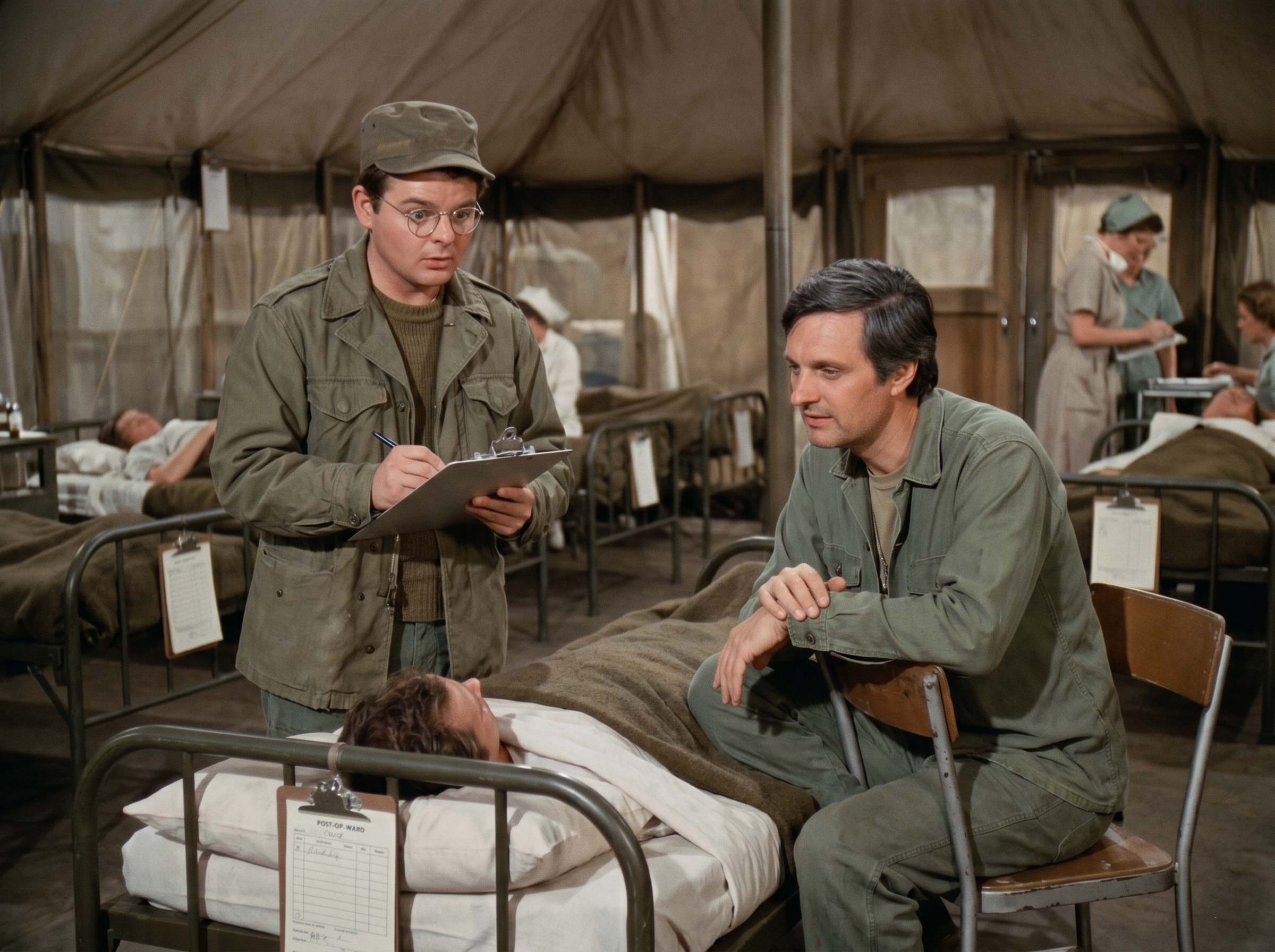
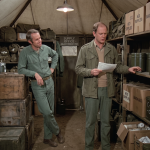
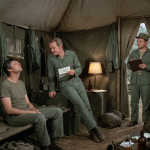
The canvas of the recovery ward always seemed to hold the heat of the day, trapping the scent of antiseptic, damp wool, and the heavy, lingering exhaustion that followed a long shift in Surgery.
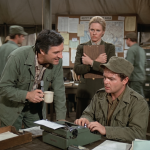
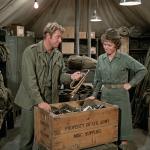
Radar O’Reilly stood by the cot, his clipboard clutched like a shield, his brow furrowed behind those round spectacles as he dutifully took notes on the patient resting before him.
He was in his element, the tireless clerk of the 4077th, making sure every detail was accounted for while the rest of the world felt like it was tilting on its axis.
Across from him, Hawkeye Pierce sat slumped on a simple wooden chair, his posture a study in profound, bone-deep weariness.
He wasn’t quipping, and he wasn’t looking for a drink; he was simply watching the rhythmic rise and fall of the patient’s chest with a gaze that was uncharacteristically soft, almost searching.
“His fever’s holding steady, Radar,” Hawkeye murmured, his voice cracking slightly, breaking the silence that had settled between the cots.
Radar looked up, his expression shifting from clinical focus to something far more vulnerable, a flicker of uncertainty crossing his face as he realized just how much weight his friend was carrying beneath that fatigue.
“I’ve got the chart right here, Hawk,” Radar whispered back, his voice trembling just enough to betray how much he wanted the news to be better than it was.
Hawkeye didn’t look at the clipboard; he just kept his eyes on the boy in the bed, his hand resting on the metal frame as if he were trying to transmit his own fading strength directly to the patient.
“I know,” Hawkeye said, his tone dropping to a whisper that felt like a plea to the universe. “But do you think he knows he’s safe yet?”
The air in the tent seemed to thicken, the distant rumble of a truck outside fading into an oppressive silence that pressed down on the three of them, waiting for an answer that wasn’t on any chart.
Radar didn’t have an answer, but he moved closer, the clipboard forgotten for a fleeting second as he leaned in to look at the sleeping soldier.
He saw what Hawkeye saw: the lines of tension still etched into the boy’s forehead, the way his knuckles were white even in sleep, gripping the edge of the blanket as if preparing to jump back into a trench.
“He’s been here for six hours, Hawk,” Radar said, his voice regaining that earnest, steady quality that usually managed to ground even the most frantic situations. “The nurses said he hasn’t let go of the sheet once, not even when they changed the dressing.”
Hawkeye finally turned his head, looking at Radar with a tired, sad smile that didn’t quite reach his eyes.
“It’s a long way from home, Radar,” he said quietly. “Sometimes the mind takes longer to catch up than the body.”
Hawkeye reached out then, and with a gentleness that seemed impossible for someone who had spent the last twelve hours holding a scalpel, he carefully tucked the edge of the blanket in, loosening the boy’s grip.
The patient stirred, a small, frightened sound escaping his throat, but he didn’t wake—he just let out a long, ragged exhale and his fingers finally, slowly, uncurled.
The tension that had been hanging over the cot seemed to snap, replaced by a sudden, heavy wave of relief that left Hawkeye slumped even further, his chin resting on his chest.
Radar watched them, his own eyes misting over, realizing that this was the real work of the 4077th—not just the cutting and the sewing, but the quiet, unseen labor of keeping one another tethered to the world of the living.
“I’ll mark him as stable for the night shift, Hawk,” Radar said softly, scribbling something on his pad, though his focus remained entirely on the two men—the doctor and the patient—finding a moment of peace.
Hawkeye nodded, closing his eyes, letting the stillness of the ward wash over him, the hum of the generator outside sounding, for just a moment, like a lullaby rather than a reminder of where they were.
They stayed there for a long time, the clerk and the surgeon, acting as silent sentries in a place that had seen too much, proving that even in the middle of a war, kindness was the most vital medicine they had to offer.
Eventually, the shadows in the tent grew long, and the cool night air began to seep through the canvas flaps, but the boy slept on, his breathing slow and even, finally anchored to the present.
The 4077th would go on, the trucks would rumble, and tomorrow would bring its own set of burdens, but for this one night, in this one corner of the recovery ward, everything was as it should be.
In a place where time was measured in heartbeats, sometimes the greatest act of courage was simply staying put.