The Longest Inventory of the Heart
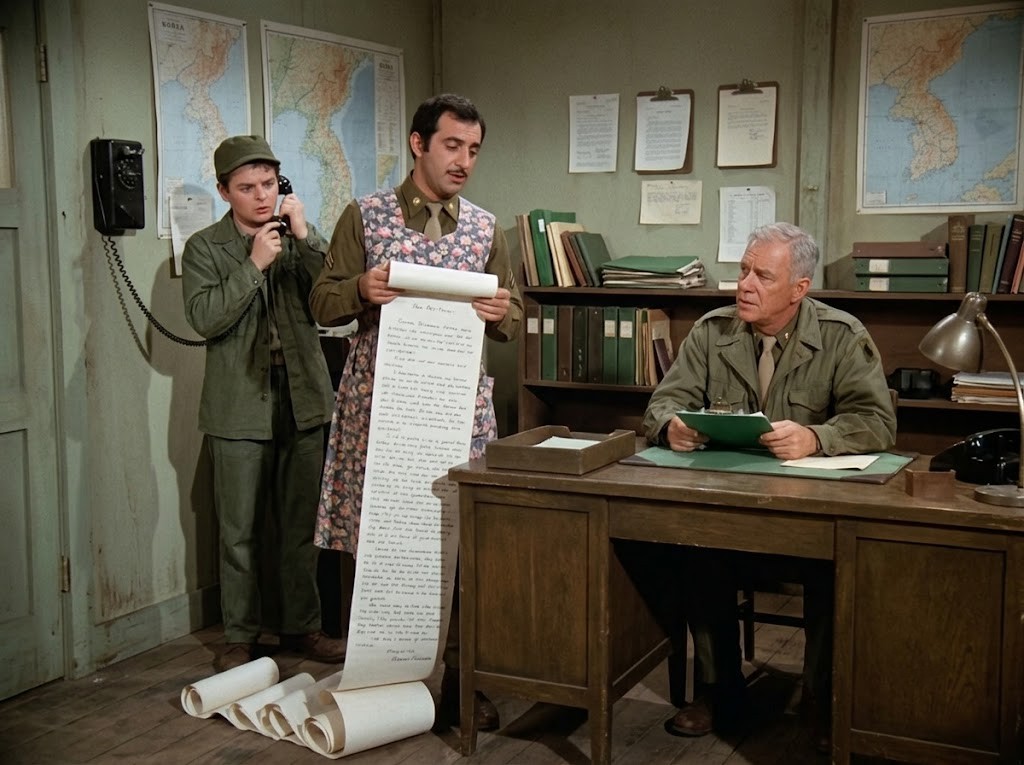
Sometimes, the loudest thing in Korea was the sudden, unexpected silence between the incoming choppers.
In the corner office of the 4077th, the only sound was the dry scrape of paper unfolding, a sound that seemed to stretch out as long as the war itself.
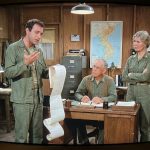
Colonel Sherman Potter sat rigid at his desk, his fingers gripping a green clipboard like an anchor, his eyes fixed on the towering figure before him.
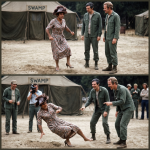
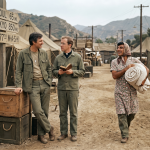
Corporal Maxwell Klinger stood in his finest floral kitchen apron, draped over his olive drabs, holding a roll of butcher paper that cascaded down his front and pooled onto the dusty floorboards like a paper waterfall.
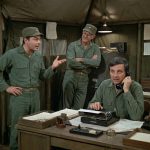
Behind them, Radar O’Reilly gripped the wall-mounted telephone to his ear, his young face tight with a mixture of intense concentration and growing dread.
“Let me get this straight, Klinger,” Colonel Potter said, his voice a low, gravelly rumble that could cut through a swamp. “You’re telling me this isn’t a supply manifestation from Seoul?”
“No, sir,” Klinger said, his mustache twitching with defensive pride as he adjusted his grip on the scroll. “This is a meticulously cross-referenced, fully itemized petition for my hardship discharge, compiled chronologically by emotional gravity.”
Potter sighed, rubbing his temple. “Klinger, you’re wearing an apron that looks like my wife Mildred’s favorite tablecloth, and you’re holding enough paper to wallpaper the Pentagon. What could you possibly have written on there that takes up eight feet of paper?”
“It’s not just complaints, Colonel,” Klinger replied softly, his theatrical bravado slipping for just a second to reveal a tired, homesick kid from Toledo. “It’s a list of everything we’ve lost, everything we’ve used up, and everything we’re running out of. Starting with my sanity and ending with the camp’s supply of hope.”
Radar suddenly gasped, his knuckles turning white on the black telephone receiver.
“Colonel,” Radar whispered, his voice cracking as he looked up from the receiver, his eyes wide behind his glasses. “It’s the radio room from I Corps. They… they just got a flash message from the frontlines about the latest convoy.”
Potter froze, his fatherly instincts instantly overtaking his irritation as he stared at the young clerk. “What is it, Radar? Speak up, son.”
“It’s the supply truck, sir,” Radar swallowed hard, his voice trembling as Klinger stopped reading and the whole room seemed to hold its breath. “The one carrying our winter blankets, the penicillin, and… and the mail from home. It took a direct hit near the crossroads.”
The silence that followed was heavy, pressing down on the small office like a physical weight.
For a camp living on the edge of exhaustion, a lost mail truck wasn’t just a logistical failure; it was a devastating blow to the spirit, a sudden severance of the fragile thread connecting them to the world they used to know.
Potter slowly lowered his clipboard onto the desk, the lines on his face deepening with the accumulated weight of a three-war career.
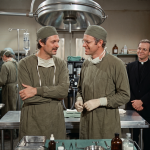
Just then, the screen door banged open, and Hawkeye Pierce walked in, trailing B.J. Hunnicutt and Margaret Houlihan, all of them wearing the telltale exhaustion of a twelve-hour shift in the Operating Room.
“We heard the phone ringing from the Swamp,” Hawkeye said, his voice unusually quiet, his usual rapid-fire wit muted by the grey pallor of fatigue. “Tell me it’s good news, Radar. Tell me someone accidentally shipped us a crate of prime rib instead of more formaldehyde.”
Radar just shook his head, looking down at his boots, unable to deliver the blow to the surgeons who had just spent all night stitching humanity back together.
Margaret stepped forward, her shoulders straight but her eyes glistening. “The mail, Radar? Not the mail.”
Klinger stood frozen, looking down at the long, hand-written scroll in his hands—the list he had spent days writing to prove why he didn’t belong in this godforsaken place.
Slowly, B.J. walked over to Klinger, looking down at the endless paper trailing onto the floor. “What’s all this, Max? A new dress pattern?”
“No,” Klinger said, his voice dropping to a gentle, uncharacteristic whisper. “It was… it was supposed to be my way out. I listed every reason I shouldn’t be here. Every grievance. Every missing comfort.”
He looked at the map of Korea pinned to the wall behind Radar, then back at the exhausted faces of Hawkeye, B.J., Margaret, and Colonel Potter.
Without a word, Klinger began to roll the paper back up, his thick fingers moving with surprising tenderness as he folded the long sheets together.
“But I guess,” Klinger continued, looking directly at Colonel Potter, “my list can wait. Because looking around this room… I realize the things we’re missing out there aren’t nearly as important as the people we’re stuck with in here.”
Father Mulcahy slipped into the room, having heard the news from the triage tents, his quiet presence bringing a calm dignity to the crowded office. “We will find a way to manage, Colonel. We always do. The human spirit is remarkably resilient to the cold, provided we keep each other warm.”
Potter stood up from his desk, walking around to stand beside Klinger, placing a firm, fatherly hand on the corporal’s aproned shoulder.
“You’re a good man, Klinger,” Potter said softly, a rare smile breaking through his stern demeanor. “Even if your taste in kitchen apparel leaves a hell of a lot to be desired.”
Hawkeye let out a dry, tired chuckle, leaning his head against B.J.’s shoulder. “Look at the bright side, corporate. If we run out of winter blankets, we can always stitch your petition together and sleep under your grievances.”
“Careful, Pierce,” Klinger shot back, a spark of his old fire returning. “This is high-grade Toledo stationery. It’s got a thread count higher than your mattress.”
The laughter that rippled through the room was quiet, modest, and deeply human—the kind of laughter that didn’t cure the war, but made the next hour bearable.
Outside, the faint, rhythmic thumping of approaching choppers began to vibrate through the floorboards once again, signaling that the brief respite was over and the real work was about to resume.
But for that one quiet minute in the colonel’s office, surrounded by maps of a divided land and lists of what was lost, the found family of the 4077th stood together, holding the line against the winter.
Because in the end, it wasn’t the supplies that kept the 4077th alive, but the beautiful, stubborn hearts of the people who stayed.