A Record for the Weary Soul
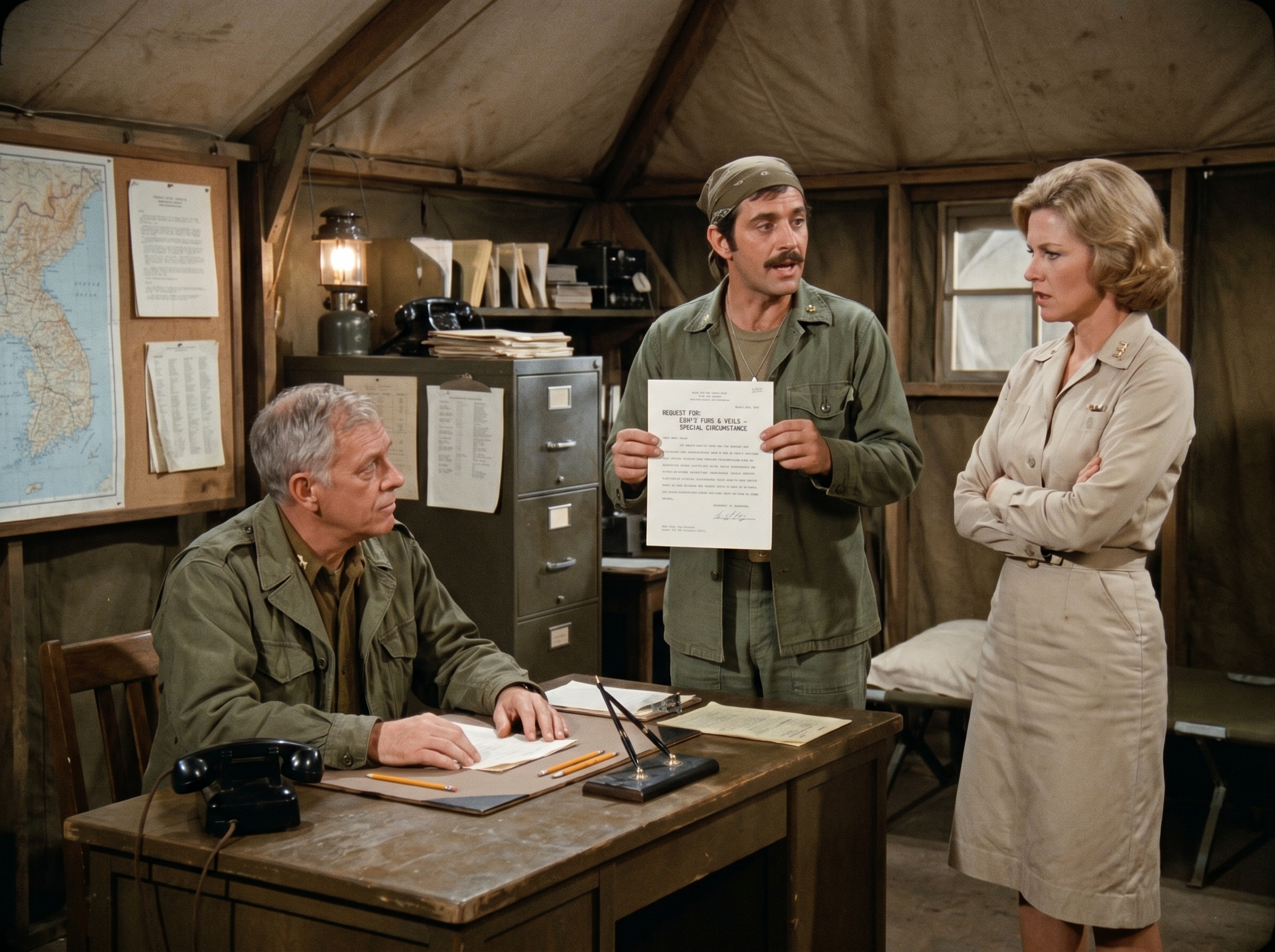
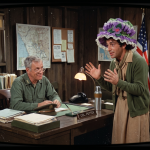
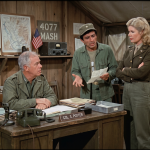
The lantern hanging above Colonel Potter’s desk hummed with a tired, yellow light, casting deep shadows across the canvas walls of his office. It was the sort of quiet evening that was always the prelude to another storm at the 4077th, a pause before the next convoy of wounded arrived. The Colonel sat at his desk, his hands clasped over the daily casualty list, his eyes weary as he looked up. He was a rock, but even rocks get ground down by time and war.
Across from him, Captain Benjamin Franklin “Hawkeye” Pierce stood with a determined exasperation. He wore a simple green bandana around his head like a pirate preparing for a duel, contrasting with the military uniform of his colleagues. In his hands, held up like a proclamation or a white flag, was a single sheet of paper. His face was a mask of dramatic presentation, though the tiredness in his eyes was real. He had presented it without a word, letting the single line at the top speak for him.
Major Margaret Houlihan stood off to the side, arms crossed tightly over her tan jacket, her mouth a thin, disapproving line. She had been there for the duration of Hawkeye’s latest crusade, and she was clearly not amused. To her, this was another attempt by the “swampmen” to waste army time and resources.
“Request for: Chief’s Fund for Vices – Special Circumstance.” The words, crudely written but clear, seemed to echo in the small room.
Potter sighed, a long, deep exhale that rattled through his chest. “Vices, Pierce? I have a camp to run and a war to win. Penicillin is a vice; this piece of paper is a luxury I cannot afford.”
“With all due respect, Colonel,” Hawkeye countered, his voice losing its usual cynical wit and gaining a surprising earnestness, “penicillin cures infection, but a man needs more than a sterilized operating room to survive out here. Sometimes, he needs to remember what he’s fighting for.”
Margaret huffed. “And I suppose that means another shipment of stolen bourbon and silk pajamas, Captain? The nurses need supplies, not more distractions.”
Hawkeye’s gaze shifted to her, the bandana slipping slightly as he leaned in. “No, Major. Not bourbon. And not pajamas. Though I admit, I could use a fresh pair. This… this is different.”
“What ‘special circumstance’?” Potter asked, picking up a pen and resting it on the paper, ready to deny the request with a single stroke.
Hawkeye held the Colonel’s gaze. The humor was completely gone now. “Sergeant Evans from the 101st is coming in on the tomorrow convoy. His last request to his wife in a letter was to hear a specific piece of Mozart. He used to play it in a chamber orchestra before the war. That piece of paper is a requisition for two 78 RPM records. Clarinet Concerto. Because sometimes, Colonel, the soul needs its own medicine.”
The room went silent, save for the hum of the lantern. The request for “vices” had been a joke, but the “special circumstance” was anything but. Margaret’s arms dropped slightly, her expression turning from disapproval to shock. Potter stared at Hawkeye, his hand holding the pen, the request still pending on his desk, his expression a complicated mix of weary resistance and human understanding. The moment stretched, full of the silent weight of a dying soldier’s wish in a place that dealt in death.
The silence hung heavy. The humor was gone, replaced by the grim reality of the ‘special circumstance’ Hawkeye had just revealed. Potter looked at the paper, then at the pen, then back at Hawkeye’s resolute face. He could deny it. He could say there was no time, no budget, no way. But he also knew the look on Hawkeye’s face. It wasn’t the look of a prankster; it was the look of a doctor who saw a patient needing something medicine couldn’t provide.
“A soldier’s request for Mozart,” Potter mused, his voice quiet. He began to rub his jaw, a sign of contemplation. “You don’t think Supply will throw a fit? Records are not prioritized.”
Hawkeye took a step closer, emphasizing his point. “I will sign it, Colonel. The blame is mine. I will trade Klinger’s entire dress collection if I have to. The ‘vice’ isn’t for us. It’s for him. Just one peaceful moment.”
Margaret, who had remained frozen, slowly unclenched her hands. The image of the soldier and his wife playing music together back home softened something in her. She had seen too many men lose their lives, and too few get what they needed in their final hours. Protocol was her shield, but compassion was her heart.
“You’ll put this request before bandages?” she asked, her voice softer than usual.
“Bandages stop bleeding, Major. But this stops the bleeding inside,” Hawkeye replied, not mockingly.
Potter took a deep, steadying breath. “Alright, Captain. But you get to explain this to the supply depot when they call. I’ll endorse it, under ‘Special Morale Provision’.” He clicked his pen and signed the paper. “Tell them to expedite. I’ll make a note.”
Hawkeye’s tense posture visibly relaxed. The bandana, which had felt dramatic, now felt practical—a sweat-stained tool used to get something important done. A quiet smile spread across his face, a genuine one. “Thank you, Colonel. And Major.”
He took the signed requisition form, treating it with the care of a precious artifact. The “vices” title now felt like a joke they shared, a secret way for humanity to sneak into a war zone. As he turned to leave, Margaret spoke.
“Captain,” she began, stopping him at the door. “Make sure they keep the record in a warm place, so it doesn’t warp. We’ll… we can organize a spot, out of the way. A reading nook. The nurses can take shifts.” It was her own way of participating, offering support without breaking protocol.
Hawkeye nodded, a look of profound respect crossing his face. “Yes, Major. A reading nook with Mozart. That sounds civilized.” He slipped out of the office and into the night, the paper secured.
The lantern continued its tired hum. Potter and Margaret were alone again. They both knew that in a few hours, the convoy would arrive, and the real storm would begin. But for one moment, they had prioritized a single human connection.
Potter rubbed his eyes, the fatigue returning, but perhaps slightly less heavy. “Sometimes, Margaret,” he said, turning to look at her, “the army makes rules for a perfect world. But we don’t live in a perfect world. We live in this one. And in this world, Mozart is a virtue.”
Margaret nodded, a single, firm movement. “Yes, Colonel. A virtue.” She looked at the filing cabinet, perhaps seeing the countless requests and orders stored there, and for the first time, they felt a little less bureaucratic and a little more human. She quietly exited the office.
Potter was alone, just as in the image, the lantern light still casting shadows. He looked at his clasped hands, a man of war making a gesture of peace. The image from that night wasn’t just of a request being made; it was the moment they all agreed to be a found family, fighting for the little things that made being alive worth it.
Weeks later, the Clarinet Concerto was playing on a battered, salvaged gramophone in a small, organized “reading nook” near the nurses’ tent. A few weary soldiers had gathered, their expressions calm as the music floated through the air. Sgt. Evans, his arm bandaged but alive, closed his eyes and smiled, hearing the notes his wife had played. And Hawkeye, wearing that same bandana and watching from afar, finally let the tiredness show, just a little, the music acting like its own medicine for the man who fought for every weary soul, including his own. It was a found moment of grace, a quiet victory of humanity over chaos. And in the heart of the 4077th, those little victories were the most important of all.
In the end, it was the small, unscheduled acts of mercy that reminded them they were still human.