Alien Files Unlocked: Trump’s UFO Bombshell Promise
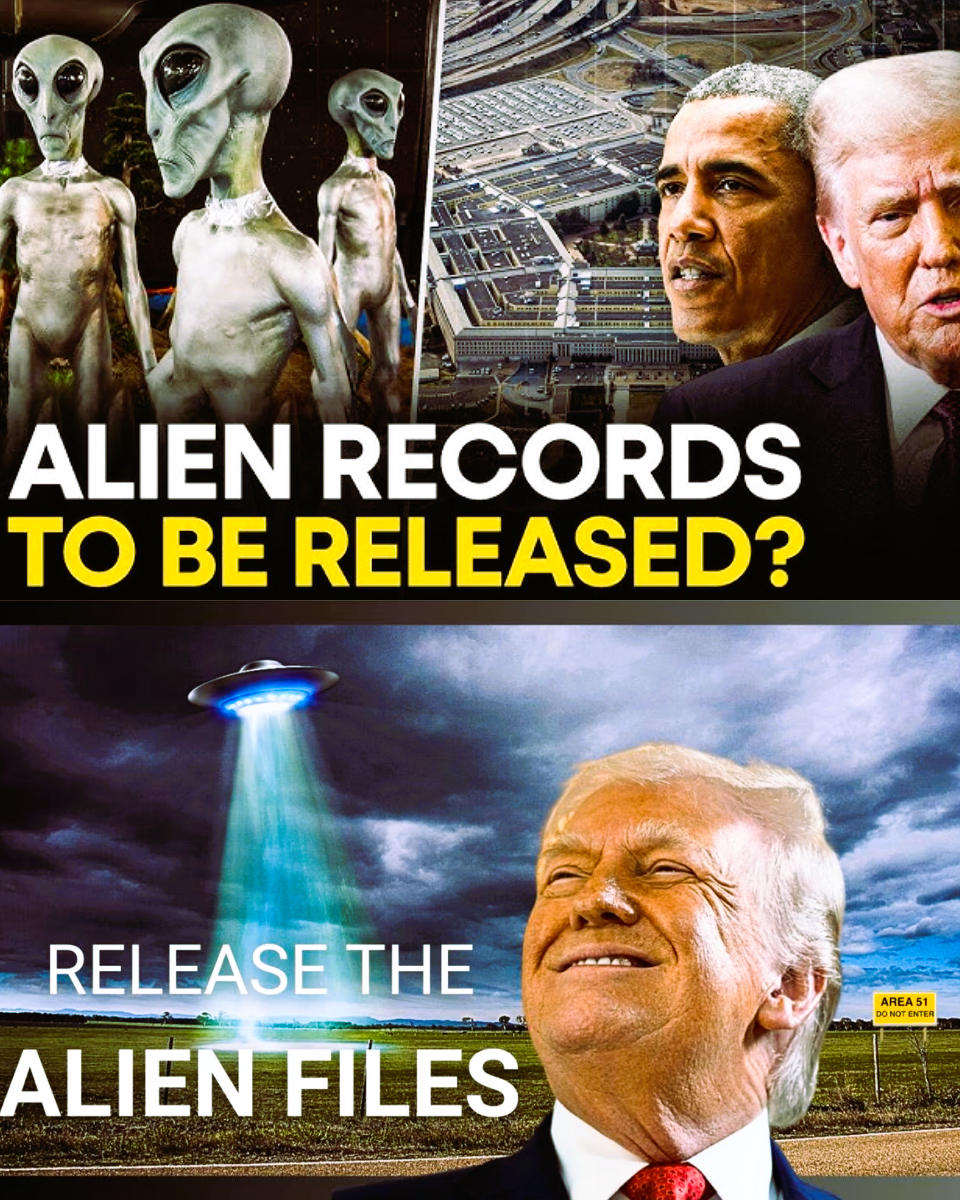
WASHINGTON — President Donald Trump has reignited America’s longest-running mystery with a single, incendiary directive: identify and begin releasing U.S. government files related to “alien and extraterrestrial life,” UFOs, and what the Pentagon now calls UAP—Unidentified Aerial/Anomalous Phenomena. The announcement, posted on social media, landed like a match tossed into dry grass—instantly setting off a frenzy among believers, skeptics, and national-security watchers who have spent years arguing over what the government knows, what it is hiding, and what it will never say out loud.
Trump’s statement does not claim proof of aliens. In fact, reporting notes he said he doesn’t know whether aliens are real, while still ordering agencies to begin the process of surfacing records the public has demanded for decades. But the promise is explosive because of what it implies: that inside classified vaults are documents—briefings, sensor logs, field reports, internal memos—serious enough to justify continued secrecy, yet compelling enough for a sitting president to tease “tremendous interest” and push disclosure.
What could be in those files? Experts say the likeliest trove is not a Hollywood “alien autopsy,” but the messy, technical reality of modern defense: radar tracks, pilot accounts, satellite observations, and incident reports that could reveal sensitive capabilities. In recent years, the U.S. military has shifted from the pop-culture term “UFO” to “UAP,” framing the issue as an airspace-safety and intelligence challenge—especially after Navy videos went public and Congress began demanding answers.
That is where the tension snaps tight. The Pentagon’s own UAP office, AARO, has repeatedly stressed that it has found no verifiable evidence of extraterrestrial beings, activity, or technology in the cases it has resolved. Scientific American warned that political “alien evidence” talk can blur the line between legitimate scientific searches for life beyond Earth and claims of visitation for which no confirmed evidence exists.
So why the secrecy at all? Because even mundane explanations can be classified. A portion of UAP reports may involve misidentified aircraft, drones, balloons, sensor artifacts—or sensitive U.S. programs and foreign surveillance platforms that officials don’t want adversaries to understand. AARO’s historical report details decades of government UAP efforts and concludes there’s no confirmed “off-world” technology, while still acknowledging how rumors and fragmented programs fueled belief in hidden reverse-engineering schemes.
Trump’s order now creates a countdown with unknown rules: how much gets released, how much is redacted, and how fast agencies move when classification and intelligence equities collide. Transparency advocates are already urging the public to watch for substance, not spectacle—because the most dangerous outcome may be the one that feeds every side: partial releases that confirm nothing, deny nothing, and keep the internet permanently on fire.