Breaking News: “Nuclear 2.0” Gets Crowned Breakthrough Tech — And America’s First Next-Gen Reactors Are Finally Moving
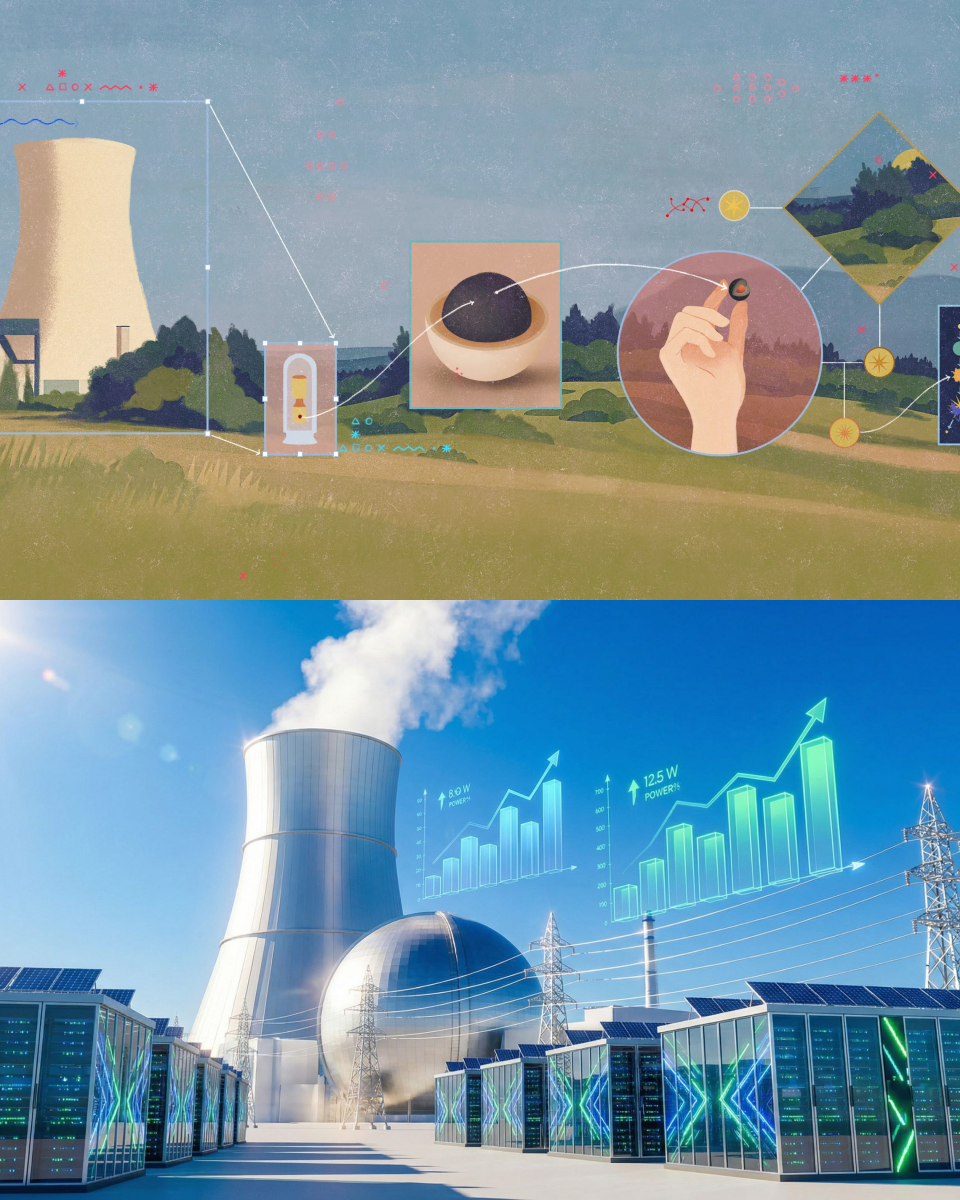
Forget the stereotype of nuclear power as a slow, giant, terrifying machine. A new wave of compact reactors—marketed as safer, simpler, and faster to build—has just been named one of MIT Technology Review’s “10 Breakthrough Technologies of 2026,” signaling that “next-gen nuclear” is no longer a fringe promise but a mainstream bet in the clean-energy race.
The pitch is seductive: smaller reactors using novel materials and alternative designs that aim to reduce the risks associated with older, high-pressure water systems—while delivering the one thing wind and solar can’t guarantee on their own: 24/7 carbon-free power.
And 2026 is shaping up to be a proof-year.
In February, the U.S. government announced what it called the first-ever air transport of a nuclear microreactor, moving an unfueled unit by military cargo plane to demonstrate rapid deployment. Officials said initial operation is expected to begin in July 2026 at a low power level, with the system designed to scale later—an attention-grabbing milestone for the idea that reactors can be shipped like industrial equipment, not built like cathedrals.
Meanwhile, advanced-reactor developers are racing to solve the unglamorous bottlenecks—fuel supply chains, licensing pathways, and first-of-a-kind costs. The U.S. Department of Energy has issued major support packages to accelerate small modular reactor development, underscoring that government is trying to compress timelines that once stretched across generations.
Supporters call it the climate “holy grail.” Critics call it a high-priced experiment wrapped in optimism. Either way, the message of 2026 is unmistakable: the nuclear comeback is no longer theoretical—it’s entering the test phase.