The Supply Tent Waltz
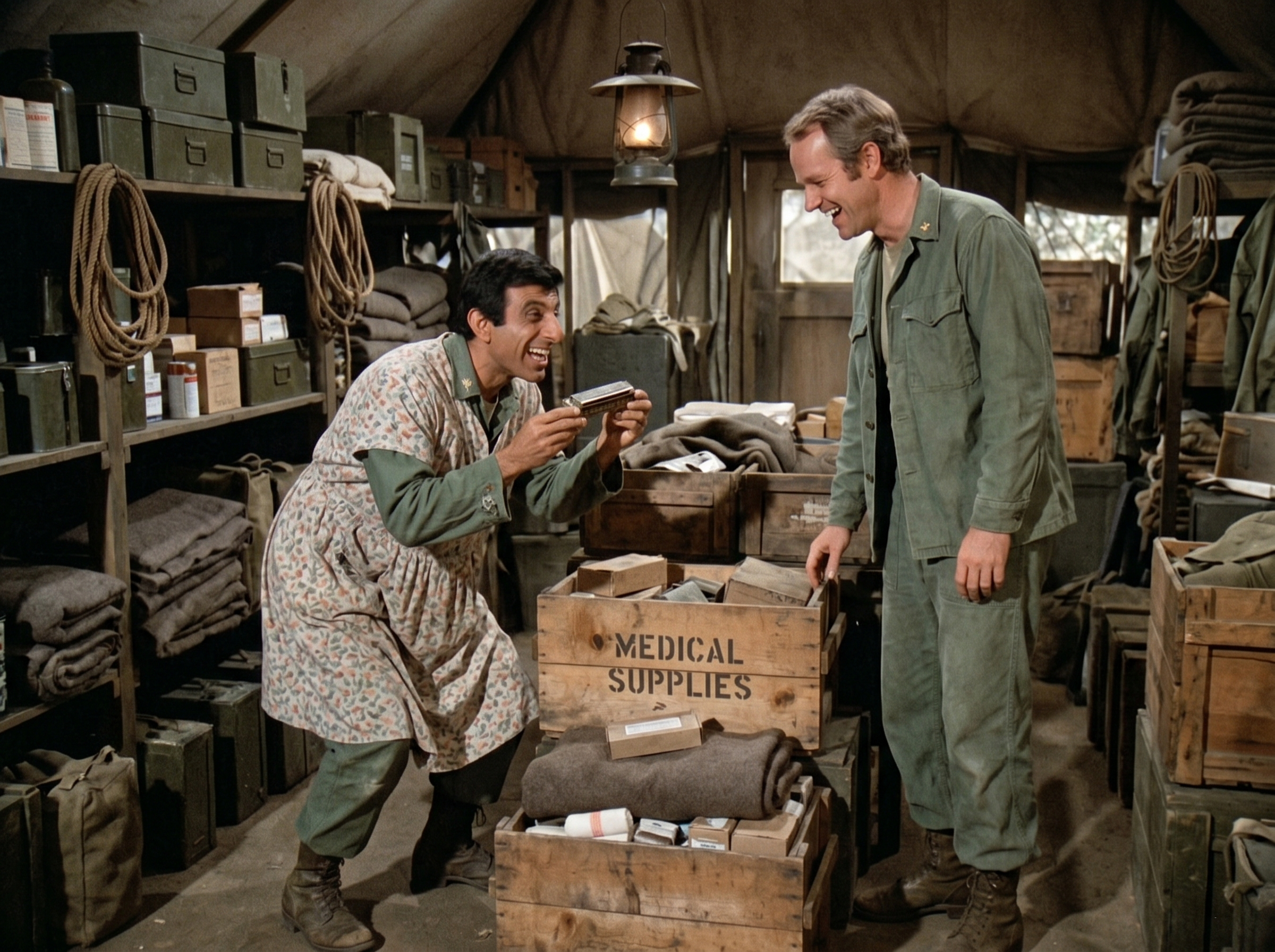
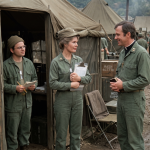
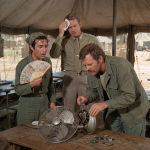
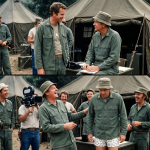
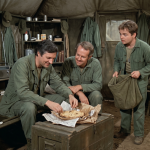
You can almost smell the canvas and dust from here, can’t you? This picture captures that distinct feeling you only got in one place. It’s that rare, almost impossible kind of break when the *077th falls quiet, just for a moment.
The O.R. had finally closed down around 4 AM. By noon, the tension had eased just enough for two surgeons to remember they hadn’t had proper coffee. Hawkeye and B.J. were searching for it. And when I say “searching,” I mean they were conducting unauthorized inventory in the heart of the main supply tent.
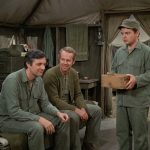
This scene, captured so perfectly in **q3_clean.jpg**, isn’t just about supply crates. Look at it. This is the nervous laughter and the absurd camaraderie that keeps them sane.
B.J. is leaning on a stack of “MEDICAL SUPPLIES” crates. Look at that smile—that genuine, head-back laugh. He’s weary, but for a second, he’s forgotten about everything except the ridiculous sight before him. And what a sight.
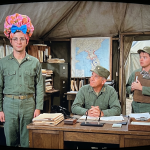
There’s Corporal Klinger, a man whose dedication to a Section 8 is only matched by his bizarre ingenuity. He isn’t just foraging. He’s *performing.*
He’s wearing his standard fatigue trousers, but he’s “dressed it up” with a magnificent floral housecoat thrown over his shirt. A subtle, classic choice. Klinger is presenting his finding with all the dramatic flair of a game show host revealing the Grand Prize.
The object? A small silver rectangle. A harmonica.
“Behold, Captain Hunnicutt,” Klinger announces, his eyes wide with triumphant mischief. “I didn’t find the Kona blend, but I did locate this genuine, vintage Hohner. It fell behind the penicillin. It’s a sign.”
“A sign of what, Klinger?” B.J. chuckles, his shoulders dropping a fraction from sheer relief at the break.
“A sign,” Klinger replies, bringing the instrument dramatically to his lips, “of *soul*, Captain! This here is the sound of the Toledo docks, filtering right into the Korean mud. Allow me to serenade you…”
He draws in a breath, poised to play. This is where the simple joke stops and something else begins. It’s the high point before the shift. Klinger isn’t just clowning. There’s a nervous energy. A desperate need to fill the sudden, heavy silence with something, anything, other than memory. B.J.’s smile is warm, but it’s the smile of someone waiting.
Klinger breathes out, his face contorting into serious concentration. The tent holds its breath.
The sound that leaves the small instrument isn’t a beautiful blue note. It’s a sad, reedy, lonely noise. Klinger, for all his flair, cannot play a lick.
His expression, caught as it is in the picture, falters. The confidence vanishes. His cheeks sink in. He looks at the harmonica, then up at B.J., his face a mask of unexpected dejection.
“It’s… it’s broken, Captain,” Klinger mutters, his voice cracking slightly, the clowning forgotten. “Even the music is broken here.”
B.J. stops laughing immediately. That fatherly, protective side that made him who he was kicks in. He moves, closing the gap. He places a gentle hand on Klinger’s shoulder, the same hand that holds scalpel and coffee mug, right over the floral print.
“Let me see it, Maxwell,” B.J. says quietly, with that steady kindness that could calm an elephant.
Klinger hands it over, the hope drained. He slumps, just another tired soldier in a silly dress. B.J. inspects the harmonica, tapping it.
“Ah,” B.J. notes softly, bringing it close to the single hanging lantern for light. He isn’t mocking. He’s taking it seriously. “There’s your problem. Someone tried to play this in 100% humidity. Reed’s stuck with gum or dust. We can fix that.”
He takes his penknife from his pocket, the delicate motion a stark contrast to the rough canvas and wood. Carefully, tenderly, he starts cleaning.
While B.J. works, Klinger just watches him. That profound look of earnest gratitude, the kind you only see in this unique family. He isn’t thinking about the joke or the dress. He’s thinking that this captain, this *surgeon*, is taking five minutes out of his impossible life to fix a broken toy just for him.
Minutes pass. The dust in the lantern light seems to move slower. Radar’s nervous step paces nearby outside. Then B.J. hands it back.
“Try it now.”
Klinger brings it to his lips, more tentative this time. He draws a breath and lets it out.
The sound is still wobbly. But it is a note. A clear, reedy, lonely-but-hopeful note. It’s the sound of something *working*.
Klinger looks up, and his face breaks into that magnificent, slightly gap-toothed grin we know so well. This is the grin that isn’t a mask. It’s pure, goofy joy. It’s the face of a found son.
B.J. starts laughing again, that original, deep, head-back chuckle seen in the photograph. This laugh is different, though. It’s not just amusement. It’s a shared victory. A tiny, insignificant victory, but in this place, those are the only ones that count.
“Not bad, Klinger,” B.J. manages through his laughter. “You sound exactly like a dying moose with a head cold. It’s perfect.”
“A dying moose *with soul*, Captain!” Klinger corrects proudly, standing a little straighter. “Thanks, B.J.”
“Anytime, Max. Now, let’s get that coffee and see if Hawkeye has decided the penicillin is a food group.”
They turn to leave the tent, B.J. taking point, Klinger following close behind, already practicing a few more shaky notes. The lantern light catches them as they go. It isn’t much. Just a doctor, a soldier in a dress, and a fixed harmonica.
But it was everything they needed. It was home.
It’s not the big battles; it’s the quiet supply tents and the friends who fix your broken spirit when you can’t make a note.