Historic Surge in Immigrant Court Challenges Signals a Looming ICE Showdown
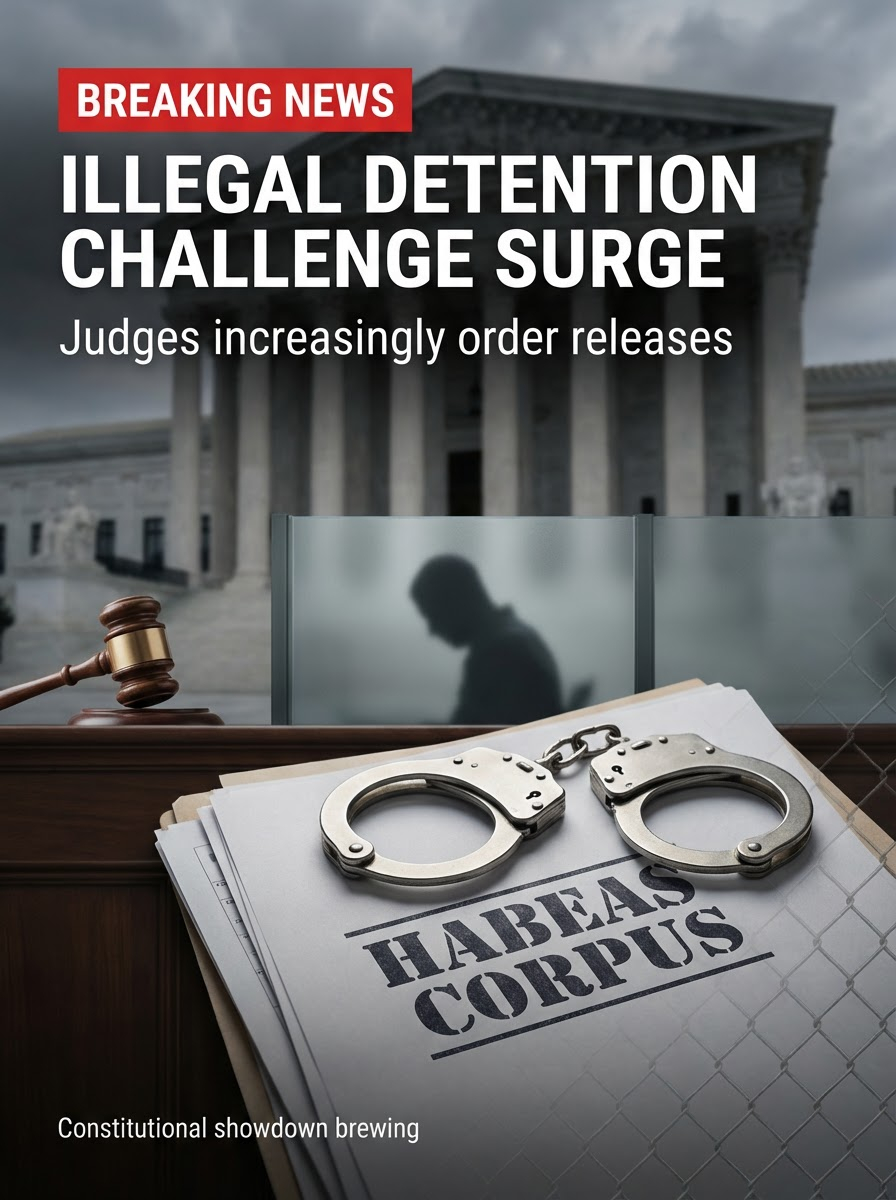
WASHINGTON — A historic wave of lawsuits from immigrants claiming they are being held in illegal detention is hammering federal courts, forcing judges to confront the Trump administration’s “zero-tolerance” detention posture in case after case. A Reuters investigation found federal courts have issued more than 4,400 rulings since October declaring that Immigration and Customs Enforcement has unlawfully jailed people — a stunning legal rebuke that has not slowed the detentions.
The legal engine driving the surge is habeas corpus, a centuries-old tool used to challenge unlawful confinement. According to reporting by The Texas Tribune, the number of habeas petitions filed by immigrant detainees has reached a historic high, with filings averaging hundreds per day nationally and major concentrations in districts in Texas and California. Judges have increasingly sided with detainees when the government cannot justify continued custody — including situations where detention clocks have expired or where removal is not realistically achievable.
A single case has become a national flashpoint: Kilmar Abrego Garcia, a Salvadoran national living in Maryland. A federal judge ruled this week that ICE cannot re-detain him because the government’s 90-day detention period had expired and officials had no viable deportation plan. The ruling criticized the government’s shifting removal efforts — including attempts to send him to third countries — while underscoring a core constitutional principle: immigration detention is not supposed to become indefinite punishment by another name.
Inside the courts, the tension is escalating. Judges are warning that the flood of filings is straining dockets and raising alarms about whether ICE is complying with release orders.
What’s emerging is a constitutional collision course: states and communities feel the pressure of enforcement, the administration pushes for maximum detention, and the judiciary is increasingly acting as the brake. The next rulings could define not just deportation policy — but the limits of government power over the undocumented in 2026.