The “$2,000 Stimulus Check” Rumor Returns — and Scam Networks Are Riding the Hype
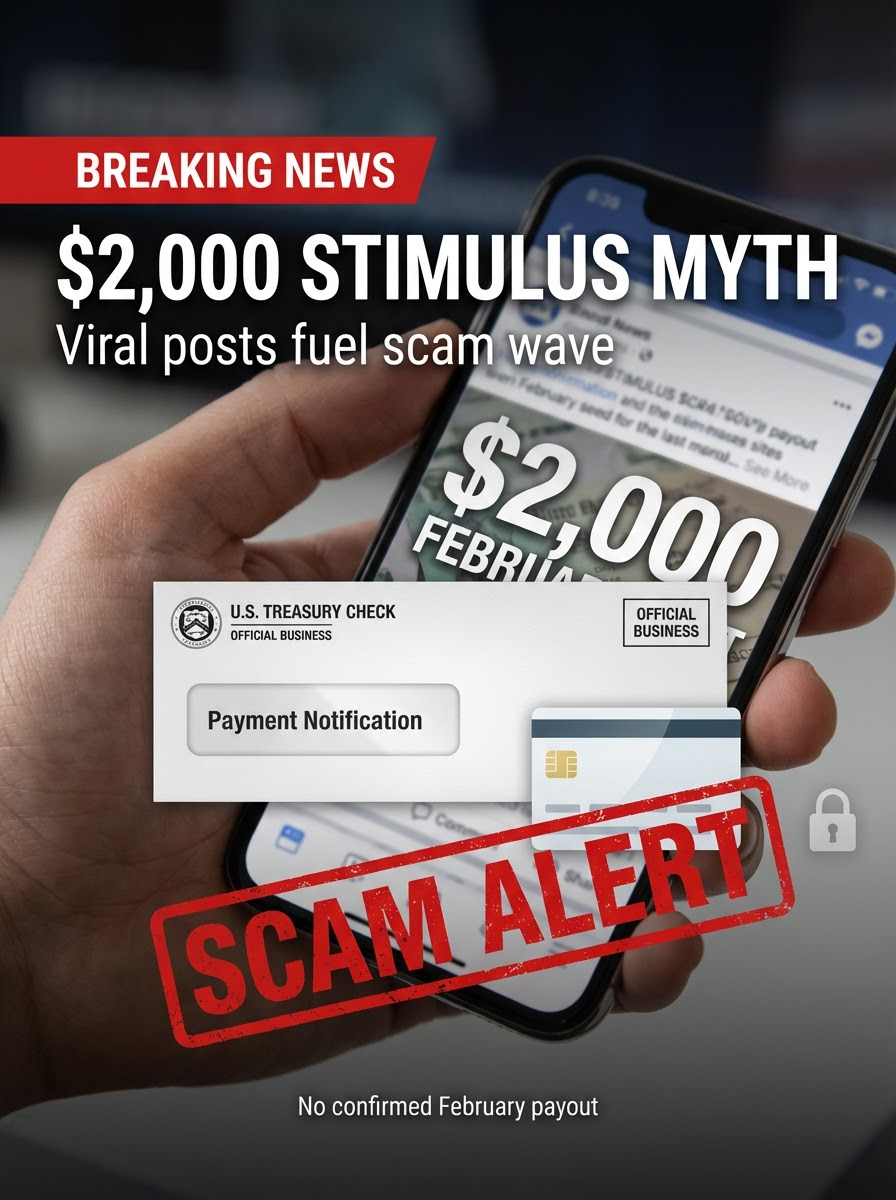
WASHINGTON — Viral posts claiming a new, universal $2,000 federal stimulus payment will arrive in February 2026 are spreading again across TikTok, Facebook and X, but there is no confirmed program approved by Congress or announced by the White House that would send a blanket check this month.
The confusion appears to be fueled by a swirl of look-alike narratives: tax refund season, routine benefits, and a separate political proposal that has been repeatedly reshared as if it were an active payment schedule. In recent months, President Donald Trump has promoted the idea of a $2,000 “tariff dividend” funded by tariff revenue — but reporting indicates the concept would still require a legislative path and faces major hurdles, making it not a February check and not an enacted universal relief plan.
Meanwhile, federal officials and tax experts are warning that “stimulus” buzz is a classic setup for fraud. The IRS has cautioned taxpayers about social-media-driven misinformation and scams, noting that bad advice and fake payment claims can be used to funnel people toward identity theft, phishing links, and fraudulent “verification” sites.
Fact-check reporting tied to the February rumor wave emphasizes the same pattern: sensational headlines and “direct deposit” countdowns circulate without any matching federal announcement, while scammers exploit the urgency to request Social Security numbers, banking details, or IRS account logins.
Why does the rumor keep coming back? Because it’s emotionally perfect: cash relief, a tight timeline, and just enough political noise to sound plausible. But the reality is colder. Until a bill passes Congress and an agency posts official guidance, a February “$2,000 stimulus” is not a program — it’s a viral trap.