Bayer’s $7.25 Billion Roundup Settlement: A Giant Payout, a Legal “Ceiling,” and a New Fight Over the Future
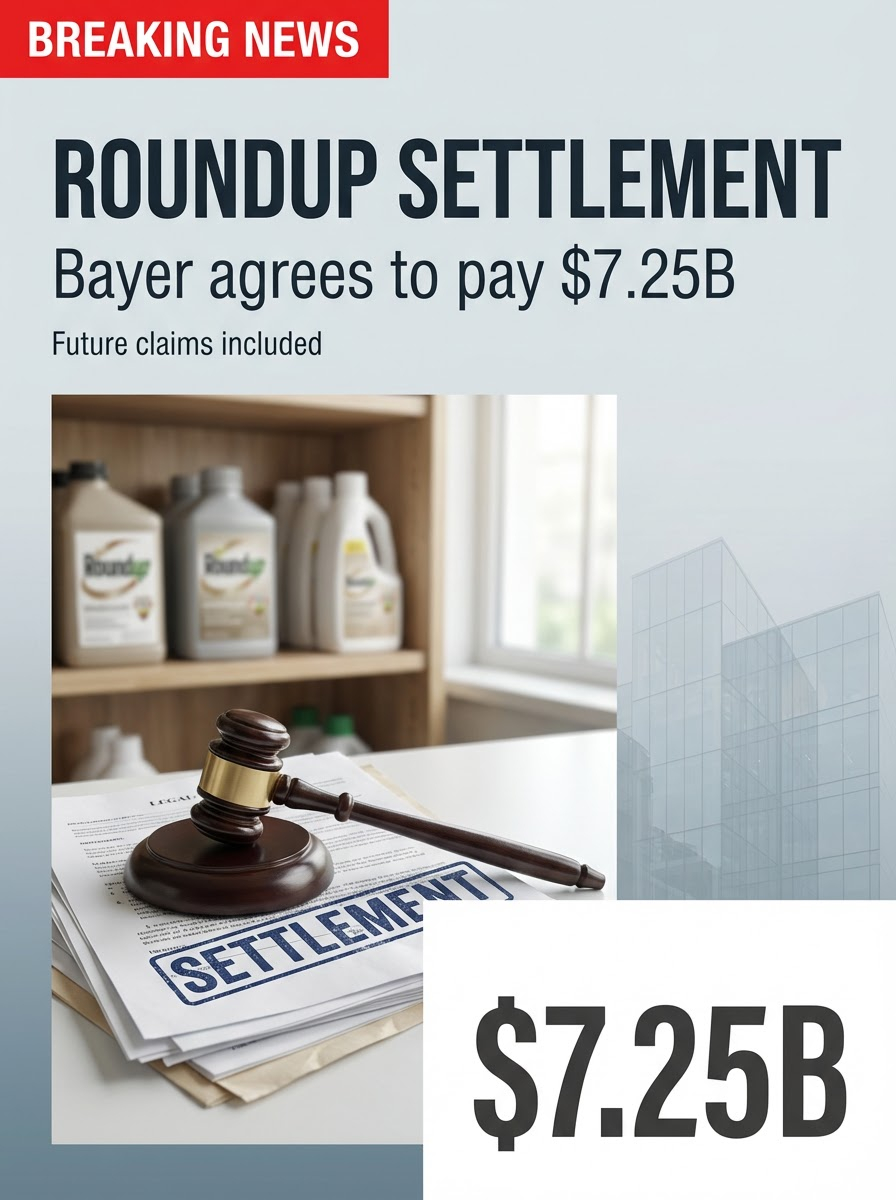
ST. LOUIS — Bayer has unveiled a proposed $7.25 billion settlement designed to cap one of the most punishing legal crises in modern corporate history: thousands of U.S. lawsuits alleging that Roundup, the glyphosate-based weedkiller inherited through Bayer’s 2018 Monsanto acquisition, caused non-Hodgkin lymphoma and other cancers.
The proposed deal, filed in Missouri state court, aims to resolve both current cases and future claims through a structured program that would run as long as 21 years, using declining, capped annual payments intended to give Bayer cost certainty and reduce the risk of runaway jury verdicts.
But the settlement’s most controversial element is exactly what makes it attractive to investors: the attempt to shape how future claimants are handled. Reports describe a compensation grid that could vary by factors such as exposure history, age at diagnosis, and disease severity—creating a standardized pipeline for payouts that critics argue could narrow options for people who have not yet filed suit.
Court approval is not guaranteed. The deal still faces a judge, and analysts warn that opt-outs, acceptance thresholds, and procedural hurdles could weaken or derail the plan—especially as Bayer simultaneously pursues relief at the U.S. Supreme Court on federal preemption arguments that could limit future “failure-to-warn” claims.
For victims, the settlement signals long-sought accountability and a path to compensation. For critics, it raises a darker question: whether a corporate giant can effectively purchase not just an end to past litigation, but a blueprint for the next generation of cancer claims—before they even reach a jury.