🇮🇷🇺🇸⚛️ Iran Open to Nuclear Talks With U.S., Rejects Broader Negotiations
- HoaiLinh
- February 18, 2026
🇮🇷🇺🇸⚛️ Iran Open to Nuclear Talks With U.S., Rejects Broader Negotiations
Iran signaled Wednesday that it is open to negotiations with the United States over its nuclear program, but firmly rejected expanding discussions to other military or regional issues.
The announcement comes at a delicate diplomatic moment, as U.S. President Donald Trump balances renewed outreach with increased military and political pressure in the Middle East. ⚖️
 ⚛️ Nuclear Talks — But Nothing Beyond
Iranian officials made clear that while Tehran is willing to discuss its nuclear activities, it will not allow negotiations to broaden into other areas such as:
-
🚀 Ballistic missile development
-
🌍 Regional military influence
-
🤝 Broader defense policies
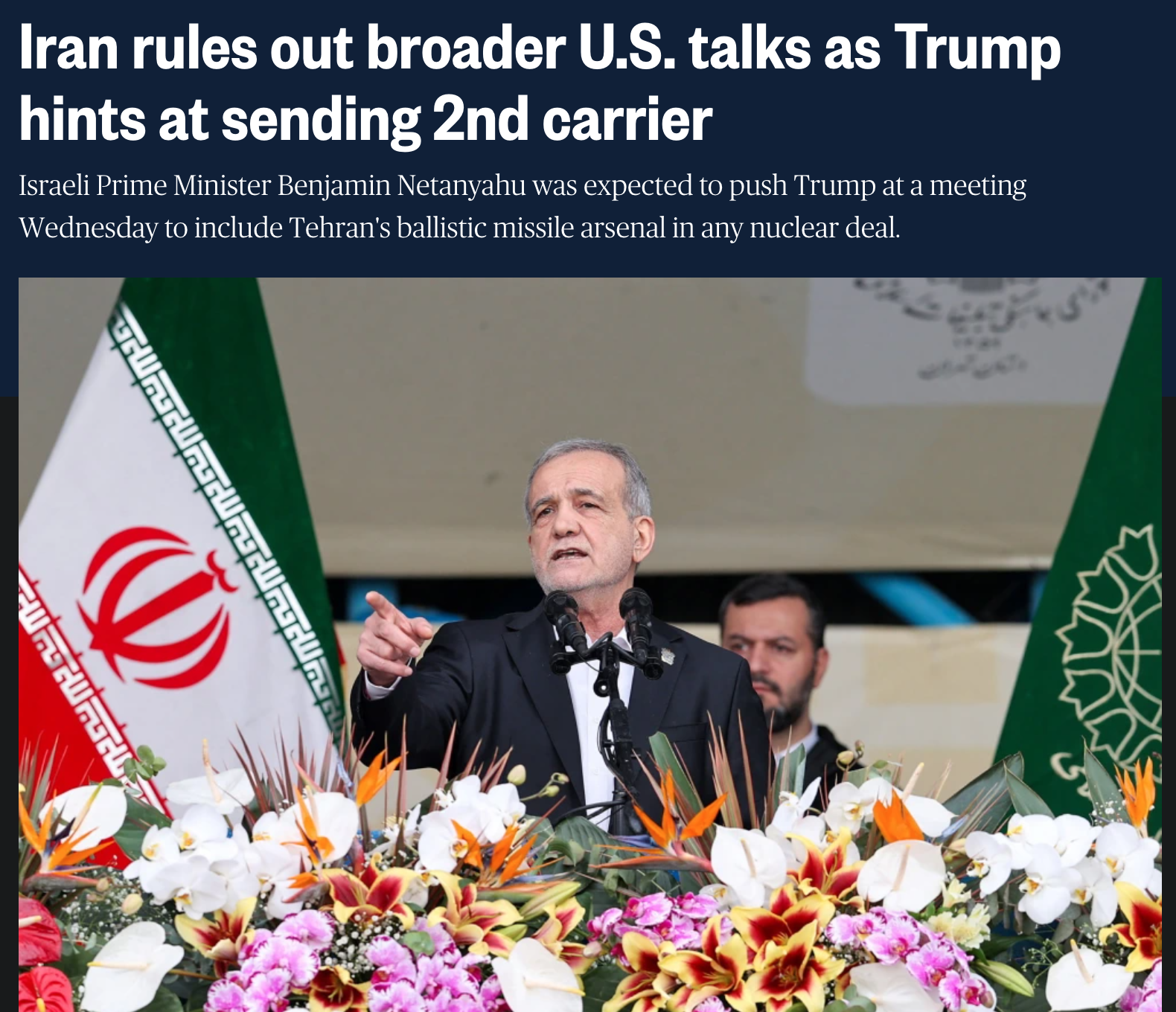
Speaking in Tehran, President Masoud Pezeshkian stated:
“We are not seeking nuclear weapons, and we are ready for any kind of verification.”
His comments came as Iran marked the 47th anniversary of the Islamic Revolution, a politically symbolic backdrop for any major diplomatic messaging.
🇺🇸 U.S. Pressure and Military Signaling
While pursuing potential talks, President Trump has simultaneously escalated pressure on Iran.
U.S. officials have signaled that another aircraft carrier strike group could be deployed to the Middle East — a move widely interpreted as a show of force intended to deter regional escalation.
Trump was also scheduled to meet Israeli Prime Minister Benjamin Netanyahu, with Israel expected to push Washington to expand negotiations to include Iran’s ballistic missile program.
Israel has long argued that limiting talks to nuclear enrichment alone would leave other strategic threats unaddressed.
🇮🇱 Israel’s Position on Broader Talks
Israel has consistently maintained that any future agreement must address:
-
Advanced missile systems 🚀
-
Proxy group support in the region
-
Long-term nuclear enrichment capabilities
Netanyahu’s meeting with Trump is expected to focus on ensuring that Israel’s security concerns are included in any diplomatic framework.
The divergence between Iran’s narrow negotiating scope and Israel’s broader demands adds complexity to potential talks.
🌍 A Fragile Diplomatic Window
Iran’s willingness to return to nuclear-focused discussions may signal a desire to ease economic sanctions and stabilize its economy.
However, Tehran’s firm rejection of broader negotiations highlights long-standing red lines in its foreign policy.
Adding another layer of sensitivity, President Pezeshkian acknowledged the “great sorrow” caused by the government’s crackdown on recent unrest — a rare public admission that may be aimed at addressing domestic and international criticism.
⚖️ Key Challenges Ahead
Several major obstacles remain before meaningful progress can occur:
-
Mutual distrust between Washington and Tehran
-
Disagreements over verification mechanisms
-
Pressure from regional allies
-
Domestic political constraints in both countries
Diplomatic experts note that even reopening formal negotiations would require careful coordination and confidence-building steps.
🕊️ Conclusion: Talks Possible, But Tensions Persist
Iran’s openness to nuclear negotiations with the United States suggests that diplomacy is not off the table. However, Tehran’s refusal to expand discussions beyond its nuclear program — combined with U.S. military signaling and Israeli pressure — leaves the path forward uncertain.
As regional tensions persist and strategic interests collide, the coming weeks may determine whether this fragile diplomatic opening leads to renewed dialogue or deeper confrontation. ⚛️🌍