DIED FOR A DIET? Influencer Death Reignites Fight Over Extreme “Clean Eating” and Online Health Myths
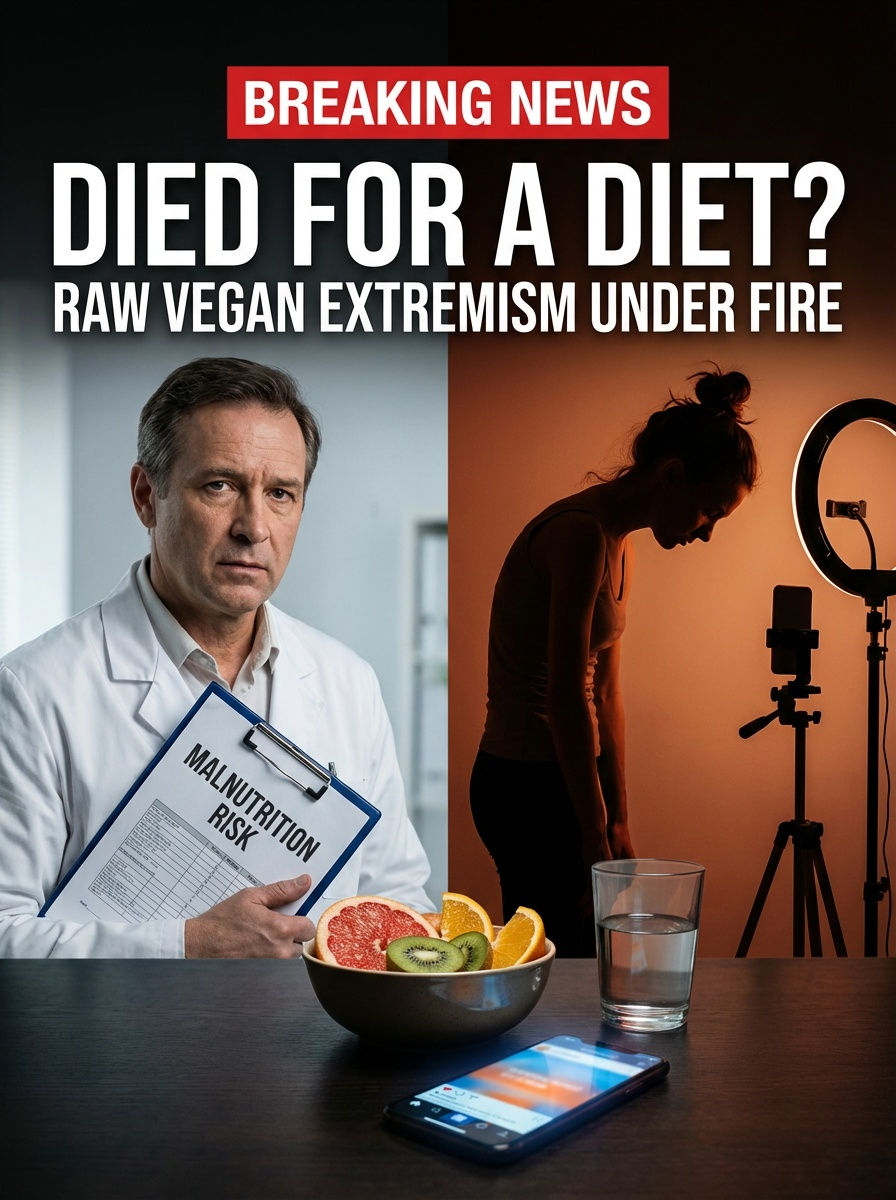
The death of raw-food influencer Zhanna Samsonova (Zhanna D’Art), 39, has returned to global headlines as a cautionary symbol in the collision between wellness branding and medical reality. Multiple reports said she died in Southeast Asia in July 2023 after years of promoting an extremely restrictive raw vegan/fruit-heavy diet online. But key outlets also noted that the official medical cause was not fully and publicly clarified at the time, even as family and acquaintances described severe physical decline and possible diet-related deterioration.
What is clear is the underlying health science: long-term restrictive eating can trigger serious nutrient deficits and systemic complications if not clinically supervised. The World Health Organization emphasizes that healthy diets protect against malnutrition in all forms—meaning both deficiency and excess—and warns that nutrient imbalance can become life-threatening. Peer-reviewed reviews on vegetarian/vegan patterns similarly note that poorly planned strict vegan diets may increase risk of deficiencies in nutrients such as B12, iron, zinc, calcium, and omega-3s.
The second fault line is digital amplification. Health claims that once stayed in niche communities now scale instantly through recommendation systems, creating powerful feedback loops around extreme routines. U.S. Surgeon General materials and related reporting have already warned that social media environments can intensify harmful behavioral patterns for vulnerable users.
This is why the argument has shifted beyond one influencer’s tragedy. Public-health experts increasingly frame the issue as dual accountability: creators must avoid presenting restrictive protocols as universal cures, and platforms must reduce algorithmic promotion of potentially harmful health misinformation.
The most uncomfortable conclusion may be the simplest: “natural” is not automatically safe, and “viral” is not evidence. In an attention economy that rewards extremity, the line between aspiration and medical risk can disappear fast—sometimes with irreversible consequences.