CALIFORNIA’S CHILD CARE COLLAPSE: A Labor Market Crisis Hiding in Plain Sig
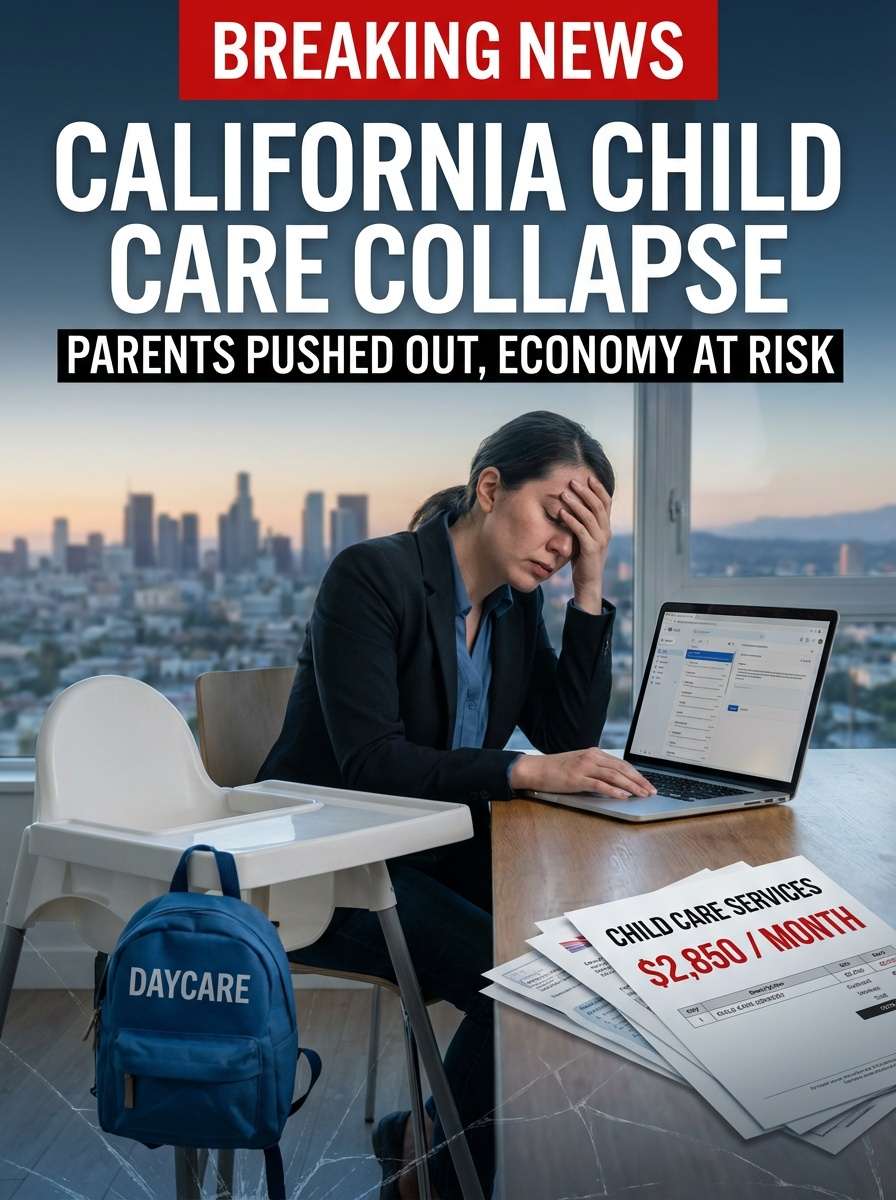
California’s child care system is under mounting strain, and economists warn the fallout is no longer confined to family life—it is becoming a statewide growth risk. New analysis highlighted by Stanford’s SIEPR estimates California’s child care market failures are tied to roughly $23 billion in annual lost economic output, largely through reduced workforce participation and productivity drag.
Affordability remains the primary fault line. A 2025 policy brief from the California Child Care Facilities Financing Authority and UCLA’s Center for Health Policy Research reports that in 2023, 7 in 10 households with children ages 0–5 spent $200+ per week on child care, and affordability was the leading reason families could not secure care. For parents working hourly or inflexible schedules, that gap can mean missed shifts, reduced hours, or exiting jobs entirely.
At the provider level, advocates say the business model is breaking down: wages remain low relative to the skill and licensing burden, while operating costs continue to rise. Berkeley’s 2025 “State of the Early Care and Education Workforce – California” describes persistent instability in the early educator workforce, reinforcing concerns that access cannot improve without better compensation and retention pathways.
Budget politics are now central to the crisis. While Governor Newsom’s January 2026 proposal says it protects prior childcare progress, recent reporting indicates the plan did not include funding for 44,000 previously promised subsidized child-care slots, leaving major waitlist pressure unresolved. Independent budget analysts also note that trade-offs in the 2026–27 framework may constrain how quickly access can expand.
The broader economic warning is familiar but sharper in California: when care is unavailable or unaffordable, parents are pushed out of work, employers lose reliability, and growth slows. National business groups and state advocates increasingly frame child care not as a private convenience, but as core economic infrastructure.
The policy question is no longer abstract—whether child care is a “right” or a “luxury” is now a direct test of how seriously California treats labor force stability, family mobility, and long-term competitiveness.