IHOP’S “HEALTHY” TRAP? Why Breakfast Labels and Real Nutrition Often Don’t Match
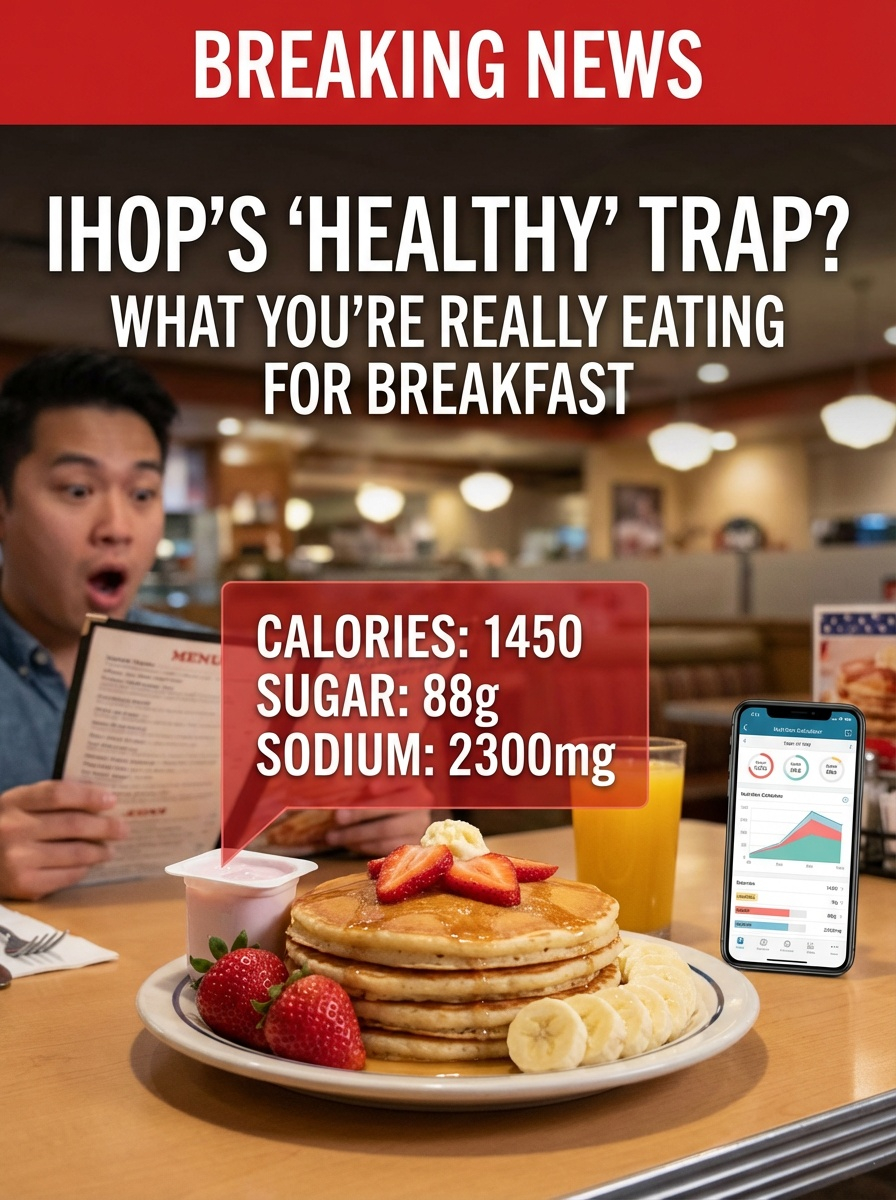
The “healthy breakfast” promise is back under scrutiny as nutrition experts warn that many restaurant choices marketed as lighter can still deliver far more sodium, added sugar, and calories than diners expect. At IHOP, the company’s own nutrition page directs customers to an interactive calculator—an important transparency tool, but one that still requires consumers to actively check totals item by item before ordering.
Public-health advocates say that gap—between menu language and what people actually consume—remains a core problem in U.S. dining culture. The Center for Science in the Public Interest has repeatedly flagged breakfast offerings across major chains for sodium loads that can consume most of a meal-time target in one sitting, even before beverages or add-ons are counted.
The stakes are not theoretical. CDC data show U.S. adult obesity prevalence at 40.3% (August 2021–August 2023), with severe obesity still a major concern—making routine restaurant decisions part of a larger national health equation. Recent CDC mapping also reports that in 2024, every U.S. state and territory had adult obesity prevalence at 25% or higher.
Cardiometabolic researchers emphasize that breakfast itself is not the enemy; the issue is composition and portion stacking: sweet drinks, syrup-heavy entrées, high-sodium sides, and “extras” that quietly turn a single meal into a daily-limit event for sugar or salt. That is why dietitians urge diners to treat menu claims like “fresh,” “fit,” or “simple” as marketing cues—not medical guarantees.
The bottom line in the IHOP debate is uncomfortable but clear: transparency exists, but responsibility is split. Chains must present clearer front-end nutrition signals, and consumers must use available data before ordering. In an obesity environment this severe, “I thought it was healthy” is no longer a minor misunderstanding—it is a public-health risk repeated millions of times each week.