HORROR IN TUMBLER RIDGE: Grace in Mourning, Pressure for Change Across Canada
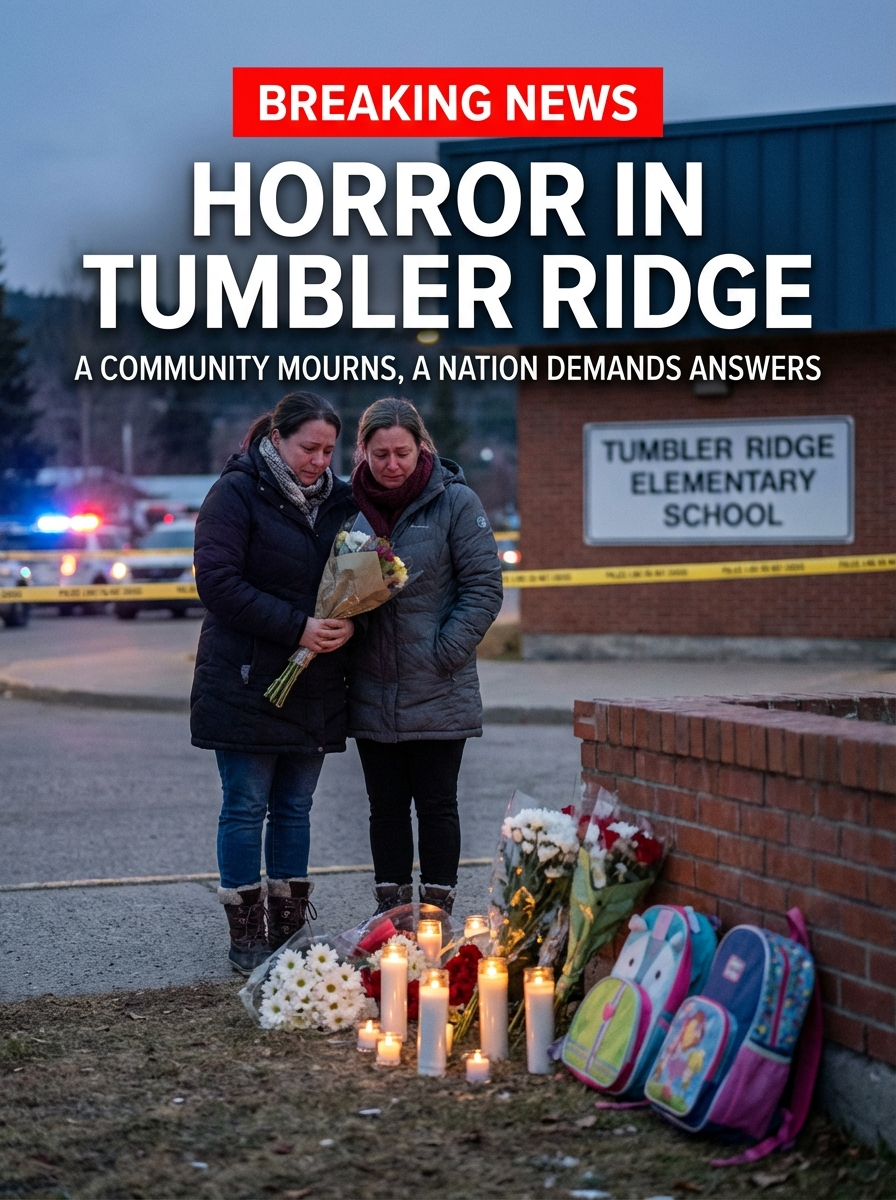
Tumbler Ridge, a remote British Columbia community of fewer than 3,000 people, is mourning after one of Canada’s deadliest school shootings in decades—an attack that has reignited national arguments over prevention, firearms access, mental-health intervention, and public safety. According to multiple reports, the violence on February 10 left eight people dead, including students and school staff, with additional victims at a nearby residence connected to the suspect.
In the days since, the town’s response has been marked by vigils, trauma support, and an outpouring of assistance from across the country. The Guardian reports volunteers and crisis teams arriving to provide counseling, food, and emotional care, while local leaders emphasize long-term healing for children, families, and first responders.
British Columbia RCMP say forensic teams continue processing the school, a nearby home, and a vehicle linked to the suspect, indicating that key investigative questions—especially motive and prior warning signs—remain unresolved.
That uncertainty is fueling a wider national reckoning. Some Canadians argue the tragedy exposes gaps in the way institutions respond to severe behavioral distress before violence occurs. Others focus on how small communities with limited services can be left vulnerable when warning systems fail under pressure. The political temperature is rising as officials face demands for a transparent timeline of known risk factors, prior interventions, and decision-making in the months before the attack.
For now, Tumbler Ridge is carrying two burdens at once: honoring lives lost and confronting hard questions no town should have to answer alone. The “grace” seen in public mourning has inspired the country—but many Canadians increasingly insist grace is not a substitute for structural reform. If this moment produces only sympathy, they warn, the next preventable tragedy may already be forming elsewhere.