THE GREAT DIVIDE: Canadian Boycott of U.S. Goods Hardens as Security Fears Rise
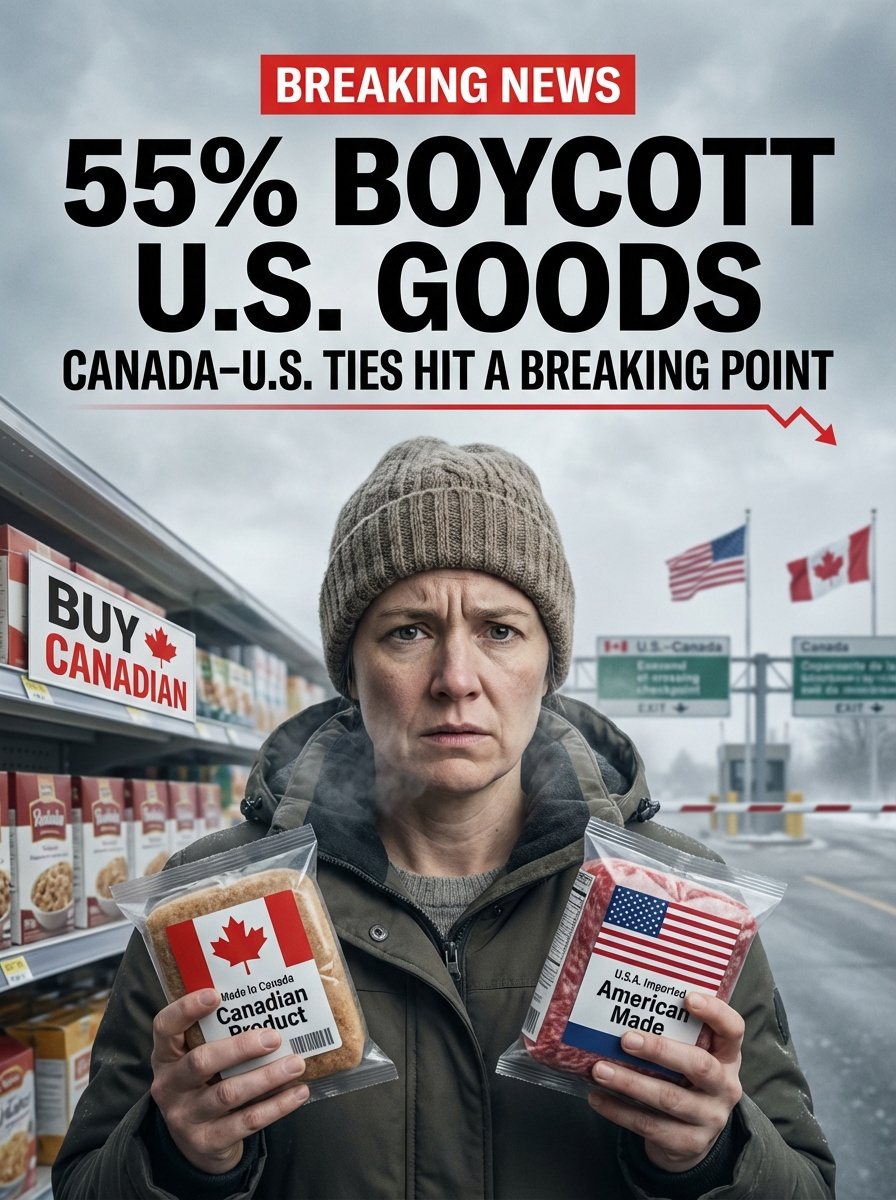
A new Canadian polling wave suggests the U.S.-Canada relationship is entering one of its most volatile phases in decades. According to Research Co.’s February 2026 findings, 55% of Canadians say they are avoiding U.S.-made goods when non-American alternatives are available—an unusually sustained consumer reaction tied to the latest tariff confrontation. The same dataset indicates that about half of Canadians now view the United States as a military threat, a stark indicator of collapsing trust.
The numbers point to more than a temporary “buy local” moment. They suggest a political-psychological shift: everyday purchasing decisions are becoming a proxy battle over sovereignty, economic pressure, and national dignity. What once looked like symbolic pushback now appears embedded in mainstream behavior, from grocery aisles to travel choices. Research Co. also reports that 34% of Canadians have cancelled planned U.S. trips, underscoring how quickly trade friction is spilling into people-to-people ties.
Policy signals from Ottawa are reinforcing that trajectory. Recent reporting says Canada is preparing a major defense-industrial pivot to route roughly 70% of procurement toward domestic firms, reducing historical dependence on U.S. suppliers and potentially creating more than 100,000 jobs over the next decade.
Meanwhile, Washington’s tariff strategy is facing internal strain. Reuters reports the U.S. House rejected an effort that would have blocked challenges to the tariff regime, opening space for votes aimed at rolling back duties on Canadian goods.
This combination—consumer boycott, defense decoupling, and legislative pushback—marks a dangerous new stage. If both capitals continue to frame economic disputes as tests of national resolve, North America’s most important bilateral relationship could drift from managed rivalry into structural estrangement, with consequences for prices, supply chains, and continental security for years to come.