Trump’s Gaza Aid: A Humanitarian Gesture or a Political Ploy?
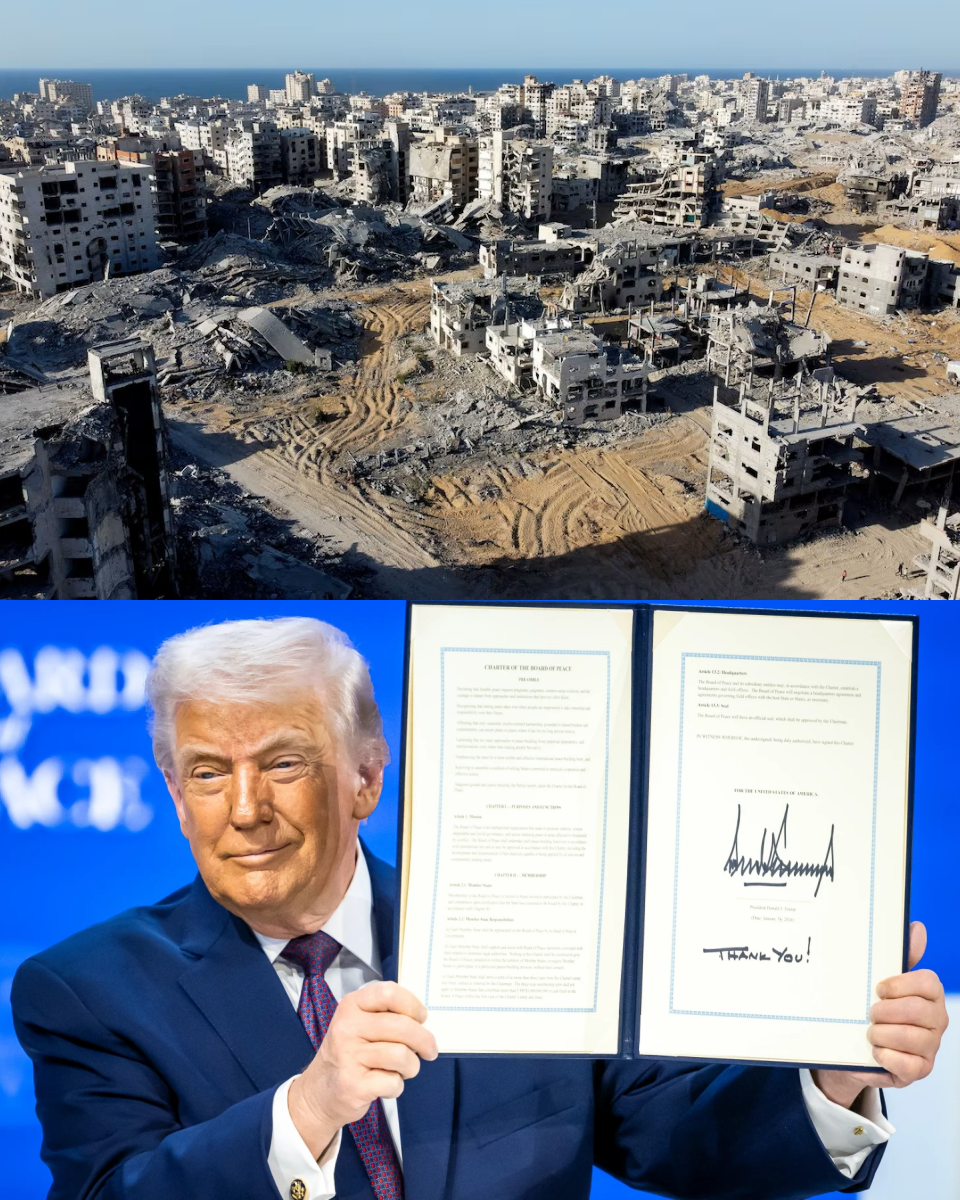
Washington — A newly announced $5 billion aid pledge for Gaza, unveiled by former U.S. President Donald Trump through his recently formed “Board of Peace,” is drawing global attention — and sharp debate — over whether the initiative represents genuine humanitarian outreach or strategic political positioning.
Trump said member states of the Board of Peace — an international body he established to support post-conflict stabilization — have collectively pledged more than $5 billion for humanitarian relief and reconstruction in the war-devastated Palestinian enclave. The funding commitment is expected to be formally presented at the organization’s inaugural meeting in Washington, where participating countries will also discuss security and governance arrangements for Gaza’s recovery.
The proposed aid arrives as Gaza faces staggering reconstruction needs following prolonged conflict. International institutions estimate rebuilding costs could exceed $70 billion, underscoring the scale of humanitarian devastation and infrastructure collapse. Trump has framed the pledge as proof that his diplomatic framework can mobilize resources faster than traditional multilateral channels.
Supporters argue the initiative could inject urgently needed funding into relief operations while accelerating ceasefire stabilization. Several regional and emerging powers — including Middle Eastern states and Asian partners — have reportedly joined the board or expressed willingness to contribute personnel and logistical support.
Yet skepticism remains widespread. Some Western allies have declined to participate, questioning the structure, governance, and political implications of the Trump-led body. Critics also note that donor countries and funding mechanisms have not been fully disclosed, raising transparency concerns about how funds will be administered and monitored.
The Board of Peace itself is controversial. Proposed in 2025 as part of Trump’s broader Gaza peace framework, it is designed to coordinate reconstruction, security, and diplomatic mediation in postwar zones. Some analysts view it as an attempt to supplement — or potentially rival — existing international institutions in conflict resolution.
Whether the $5 billion pledge proves transformative or symbolic will depend on implementation. For now, the announcement highlights a dual reality: humanitarian aid and geopolitical influence are often intertwined. As Gaza’s humanitarian crisis deepens, the world is left weighing not only the scale of promised relief — but also the political architecture behind it.