When Trust Takes Flight: The Captain Who Flew Without a Valid License
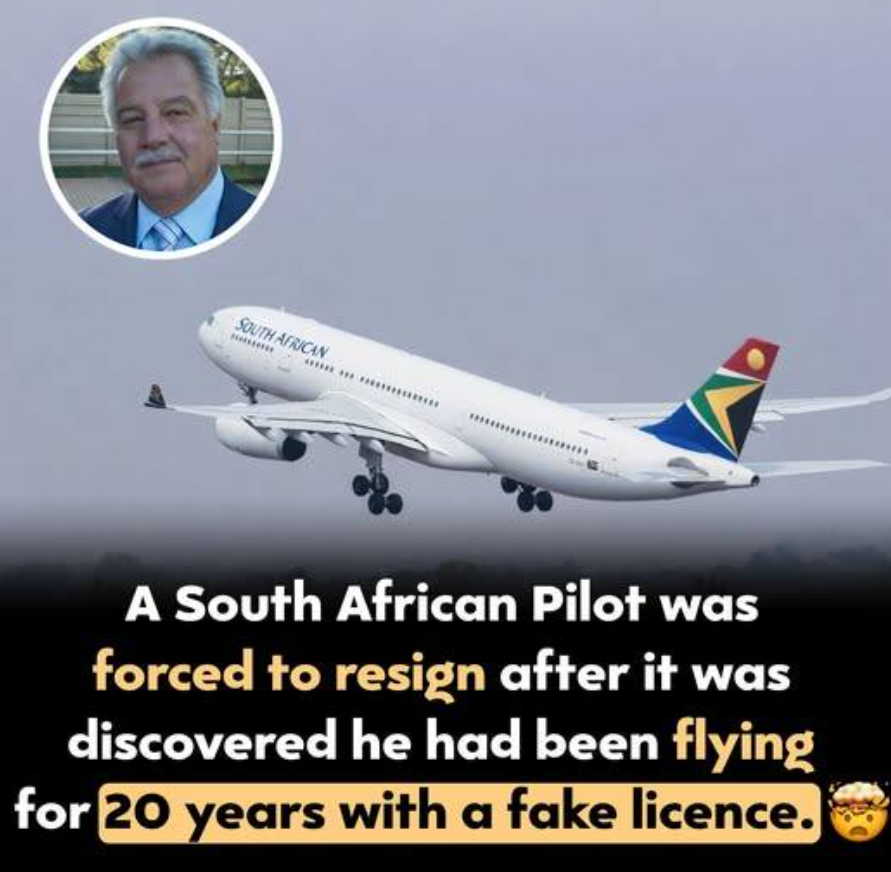
For more than two decades, a senior captain at South African Airways commanded commercial aircraft across international skies. Identified in reports as William Chandler, he was entrusted with the safety of hundreds of passengers on every journey. Colleagues respected his experience, passengers relied on his calm authority, and the airline industry saw him as a seasoned professional. Yet behind the polished uniform and confident announcements lay a truth that would eventually shake the foundations of aviation trust.
Investigators later uncovered a stunning revelation: his Airline Transport Pilot Licence (ATPL)—the highest level of pilot certification required to command large commercial jets—was fraudulent. The ATPL is not merely a document; it represents years of rigorous training, testing, and verified flight hours. It certifies that a pilot possesses the expertise and judgment necessary to handle the immense responsibility of commercial aviation. When authorities confirmed that this essential credential was invalid, the captain was immediately removed from duty and forced to resign.
The most startling aspect of the scandal was its duration. For over 20 years, Chandler reportedly flew without detection. Throughout that time, no crashes or direct safety incidents were linked to his command. Flights landed safely. Schedules were completed. Passengers disembarked unaware that a critical layer of regulatory assurance was missing. Yet the absence of disaster did not erase the gravity of the deception. Aviation safety depends not only on outcomes, but on strict adherence to verified standards.
The revelation sent waves of concern throughout the global aviation community. Airlines operate within high ly regulated systems designed to prevent precisely this kind of breach. Licensing authorities, regulatory agencies, and airline oversight departments are tasked with verifying credentials thoroughly. The fact that a fraudulent ATPL could go undetected for decades raised uncomfortable questions: Were verification systems insufficient? Were background checks improperly conducted? Or did procedural gaps allow the deception to slip quietly through the cracks?
Beyond the technical and regulatory implications lies a deeper issue—trust. Passengers board aircraft believing that every pilot in the cockpit has met the highest professional standards. They trust that airlines have confirmed qualifications with meticulous care. When that trust is shaken, even in the absence of tragedy, the psychological impact can be profound. The scandal served as a reminder that safety in aviation is built not only on skill, but on integrity and accountability.
In the end, this case was not about a single forged document; it was about the fragility of confidence in systems designed to protect lives. More than 20 years in command. A licence that wasn’t real. And a revelation that challenged faith in oversight mechanisms worldwide. While aviation remains one of the safest modes of transport, this incident underscores a timeless truth: vigilance must never become complacency, and trust must always be verified.