Justice Department Lawsuit Against Harvard Intensifies National Battle Over Race in Admissions
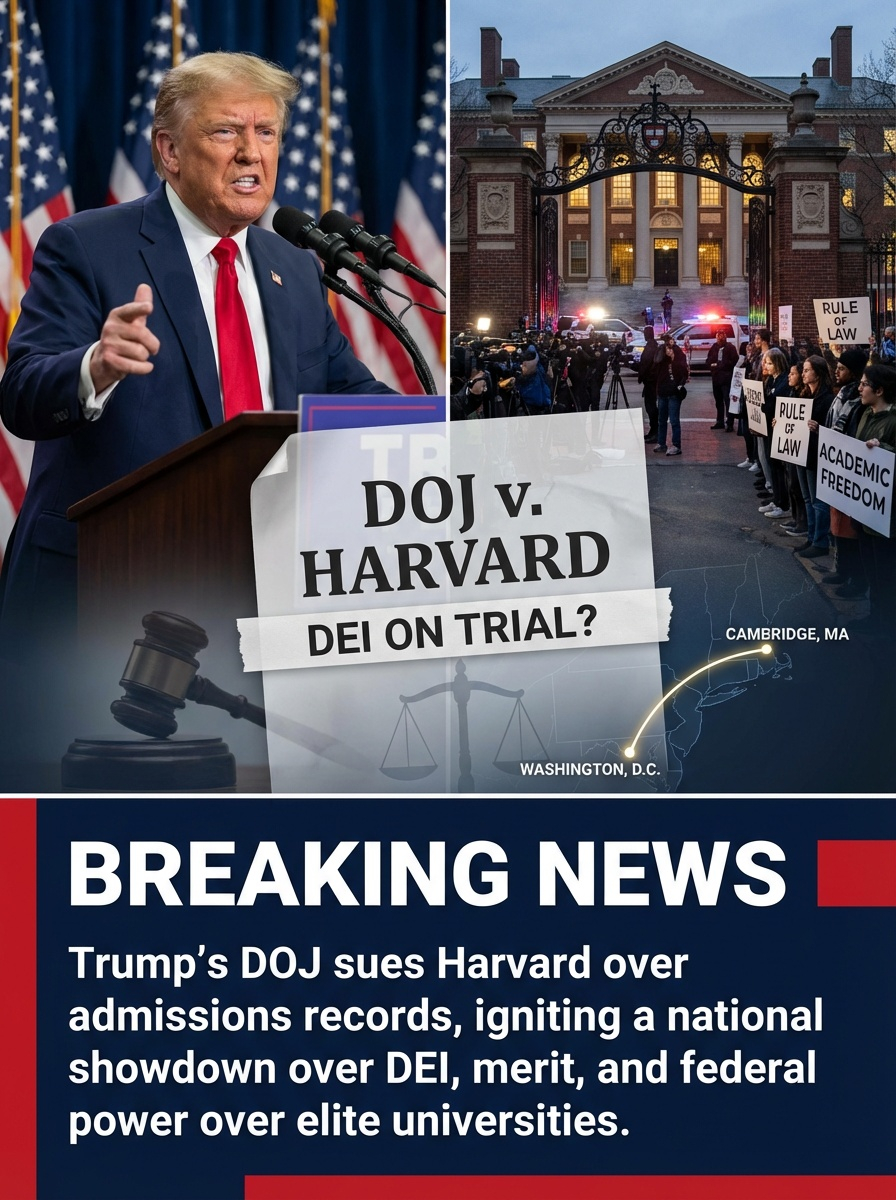
Washington / Cambridge, Massachusetts — The U.S. Department of Justice has filed a lawsuit against Harvard University, accusing the institution of failing to comply fully with federal requests for admissions records tied to an ongoing civil-rights investigation, marking a significant escalation in the Trump administration’s campaign against diversity, equity, and inclusion (DEI) policies in higher education.
Filed on February 13, 2026, the suit alleges that Harvard withheld race-related admissions data sought by federal investigators examining whether the university has continued to employ practices that violate the Supreme Court’s 2023 ruling banning race-conscious admissions. That landmark decision, which overturned decades of affirmative-action precedent, prohibited colleges receiving federal funds from considering race as a factor in student selection.
Justice Department officials framed the lawsuit as a straightforward enforcement action. In a statement, federal attorneys said universities must demonstrate compliance through transparency and documentation, arguing that incomplete disclosure obstructs lawful civil-rights oversight.
Harvard officials rejected the allegations, stating the university has cooperated with federal inquiries while also defending its legal obligations to protect student privacy and institutional autonomy. In court filings and public remarks, the university characterized the lawsuit as “government overreach” and suggested it may represent retaliatory pressure tied to broader political disputes over campus policy and federal funding.
The legal clash comes amid a wider federal push targeting DEI programs, research grants, and accreditation standards at elite universities. Several institutions have reported increased audits, funding reviews, and compliance inquiries tied to admissions, hiring, and scholarship programs.
Higher-education analysts say the Harvard case could become a defining test of how far the federal government can go in policing post-affirmative-action compliance. Civil-rights advocates argue aggressive enforcement is necessary to ensure race neutrality, while university leaders warn that federal intervention risks politicizing academic governance.
Legal experts expect the case to hinge on document scope, privacy law, and the interpretation of what constitutes demonstrable compliance under the Supreme Court ruling.
As litigation unfolds, the confrontation between the Trump administration and Harvard is poised to shape the next phase of America’s debate over merit, diversity policy, and federal authority in higher education.