Trump’s Post-Raid Rhetoric on Venezuela Fuels Global Debate Over U.S. Power and International Law
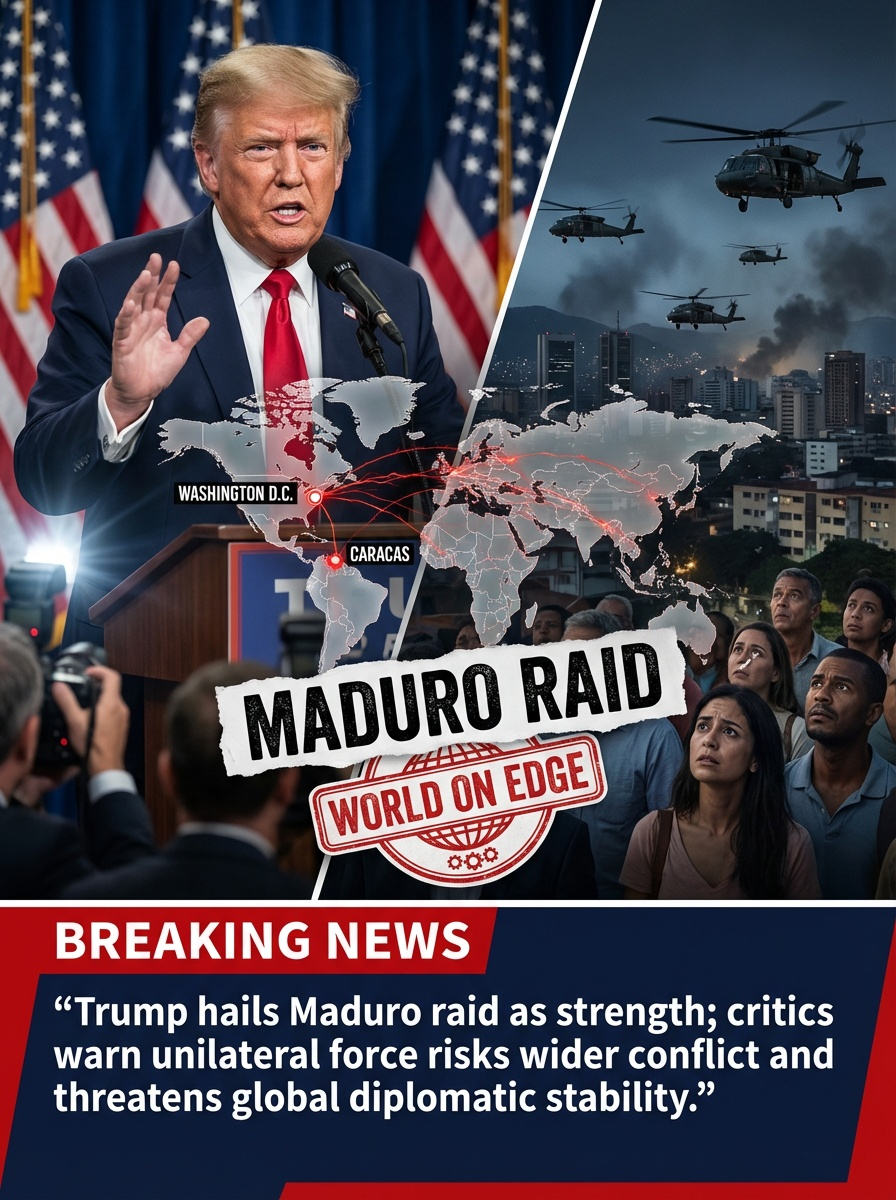
Washington / Caracas — The Trump administration’s messaging following the January 3, 2026 U.S. military operation targeting Venezuelan leader Nicolás Maduro has intensified international debate over the legality, strategic purpose, and geopolitical consequences of unilateral force.
The operation — widely reported as a coordinated special forces raid supported by airstrikes — resulted in Maduro’s capture and transfer to U.S. custody to face narcotics-related charges, according to U.S. officials. The mission followed months of military buildup and intelligence coordination across the Caribbean region.
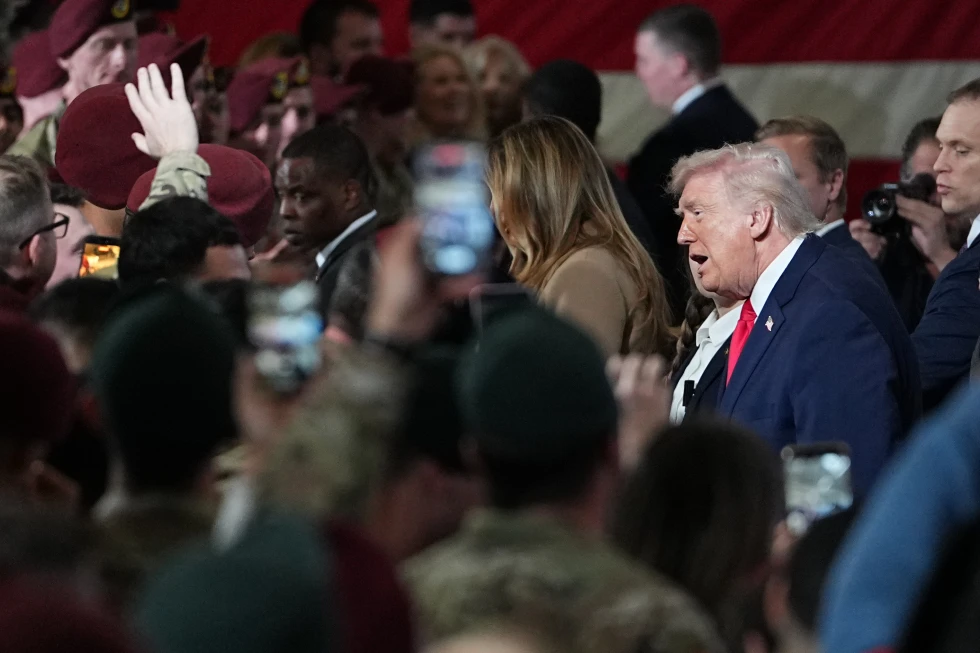
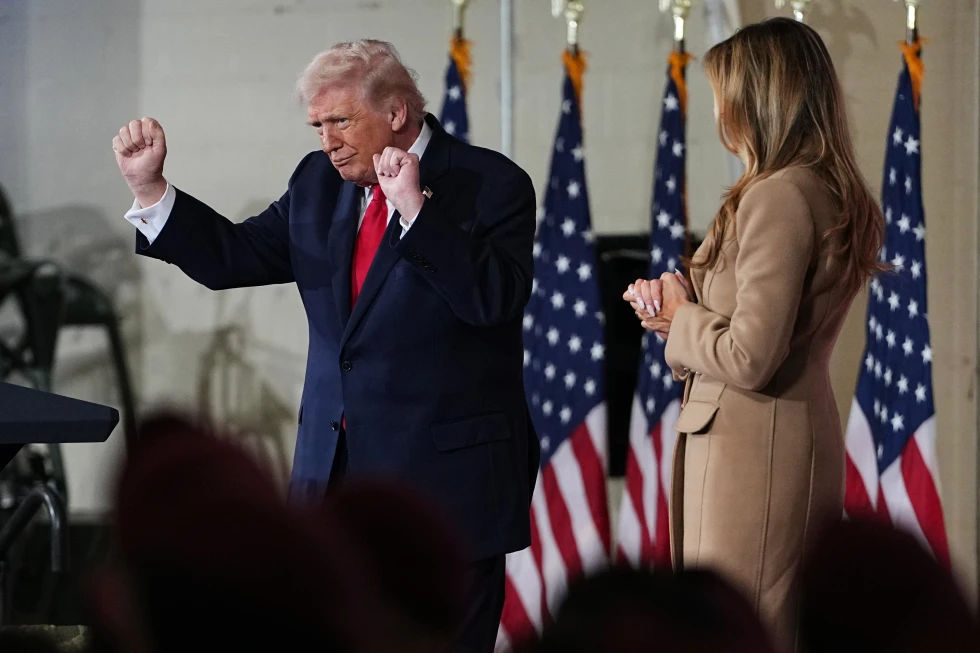
President Donald Trump has since framed the raid as a demonstration of American military supremacy. Speaking at Fort Bragg, he described the mission as proof of the United States’ “full military might,” arguing it signaled deterrence strength to adversaries worldwide. He has also declined to rule out further military action related to Venezuela’s political and security landscape, raising concerns among diplomats about potential escalation.
International reaction has been sharply divided. Some Western security analysts described the operation as a tactical success that removed an authoritarian leader accused by Washington of narco-terrorism ties. Others, including foreign ministries and legal scholars, warned the intervention could undermine global norms governing sovereignty and non-intervention.
Adding complexity, the United States has simultaneously adjusted elements of its Venezuela policy. Washington has explored easing certain energy sanctions and supporting oil-sector liberalization efforts amid leadership changes in Caracas, signaling a dual-track strategy combining military pressure with economic engagement.
Policy experts say the mixed approach reflects competing priorities: stabilizing energy markets, countering transnational crime, and reshaping regional political alignments.
Legal analysts note that the raid may face prolonged scrutiny under international law, particularly regarding jurisdiction, use of force, and the precedent set by cross-border apprehension of a sitting head of state.
As diplomatic fallout continues, the episode has become a defining test of U.S. intervention doctrine in Latin America — raising enduring questions about power projection, legitimacy, and the evolving boundaries of modern geopolitical conflict.