U.S. Military Strike on Suspected Drug Vessel in Caribbean Draws Scrutiny
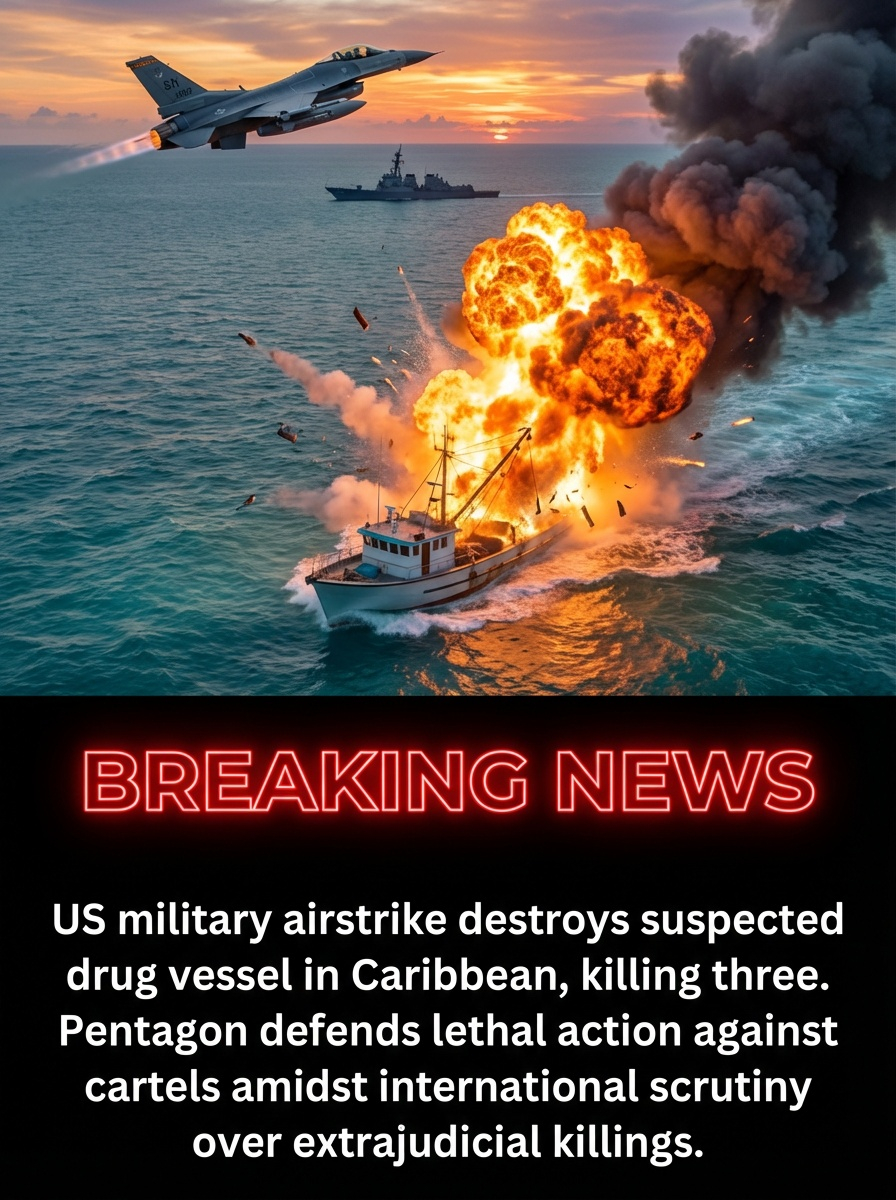
Washington / Caribbean Sea — The U.S. military has carried out another lethal maritime strike on a vessel suspected of drug trafficking in the Caribbean, killing three people aboard and intensifying debate over the expanding use of military force in counter-narcotics operations.
U.S. Southern Command confirmed the strike this week, stating that the targeted boat was operating along a well-known narcotics trafficking corridor used to transport cocaine and other illicit drugs toward North American markets. Military officials said the action was conducted as part of an ongoing campaign to disrupt cartel logistics networks at sea.
Video released by defense authorities shows the vessel engulfed in flames after the precision strike. Pentagon officials did not disclose the identities or nationalities of those killed but described them as individuals involved in transnational drug smuggling activity.
The operation forms part of a broader escalation that began in September 2025, when the United States launched a series of air and naval strikes on suspected trafficking boats across the Caribbean and eastern Pacific. Since then, at least 130 people have been killed in nearly 40 such operations, according to compiled defense and media reports.
The Trump administration has framed the campaign as an armed conflict against “narco-terrorist” organizations, arguing that traditional interdiction methods — such as Coast Guard seizures — are insufficient against heavily armed cartel networks. Officials say the strikes have disrupted smuggling routes and deterred traffickers.
However, legal scholars and human-rights advocates have raised concerns about the operations’ legality. Critics argue that targeting suspected traffickers without arrest attempts or judicial process may violate international law, particularly when conducted in international waters outside declared war zones.
Congressional oversight committees are reviewing the rules of engagement governing the strikes, while some lawmakers have called for greater transparency regarding intelligence standards used to authorize lethal force.
As maritime operations continue, the policy marks a significant evolution in U.S. counter-drug strategy — shifting from interdiction and prosecution toward direct military confrontation on the high seas.