☢️ A World Without Nuclear Limits? Global Security at Risk as New START Uncertainty Grows
☢️ A World Without Nuclear Limits? Global Security at Risk as New START Uncertainty Grows
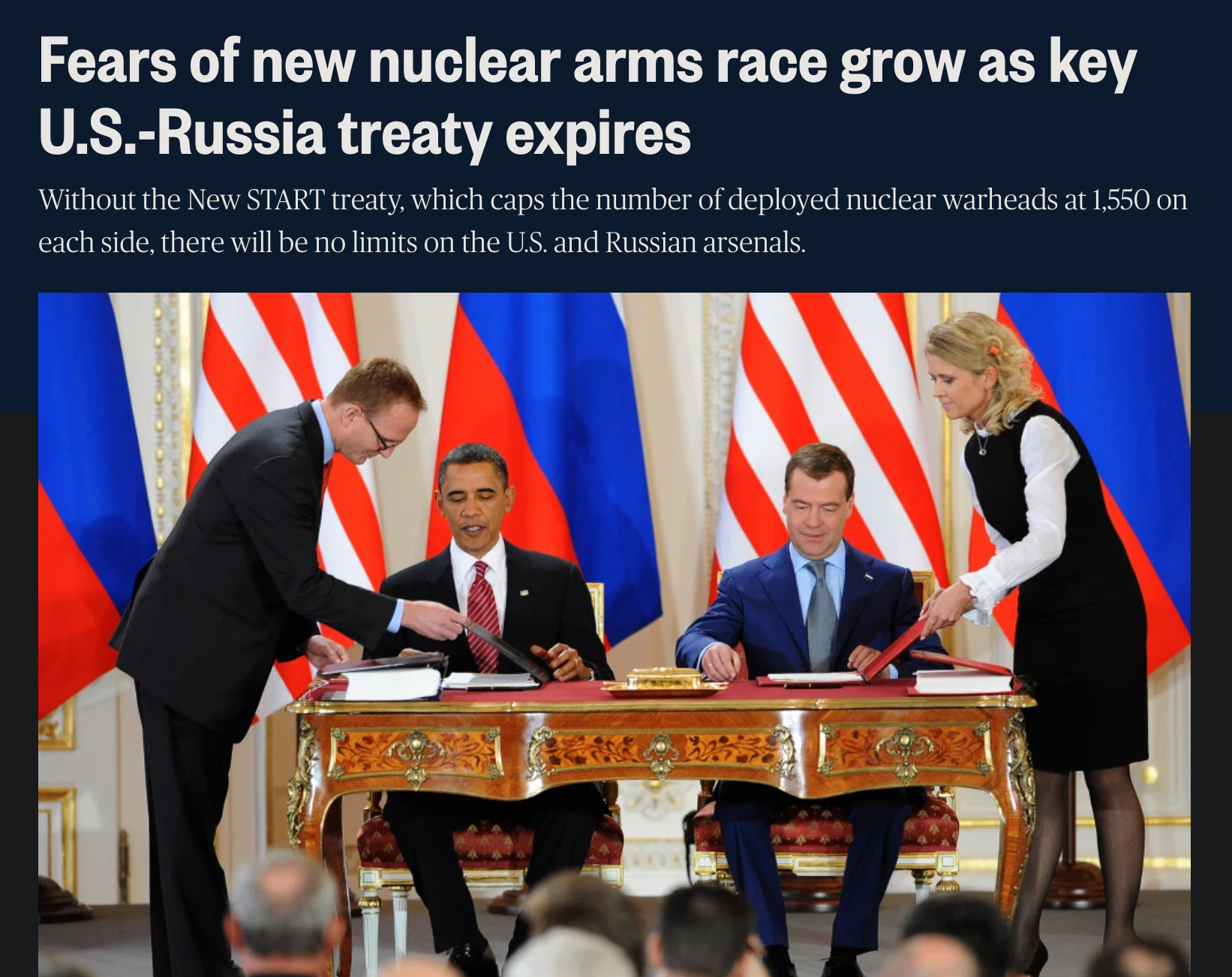
🌍 The future of global nuclear stability is facing serious uncertainty as concerns mount over what happens if the New START treaty expires without replacement. The agreement, which limits deployed strategic nuclear warheads to 1,550 per side for both the United States and Russia, has long served as a cornerstone of arms control between the world’s two largest nuclear powers.
Without New START, there would be no legally binding limits on U.S. and Russian nuclear arsenals for the first time in more than half a century. Experts warn that such a scenario could dramatically increase global security risks and potentially ignite a renewed nuclear arms race reminiscent of the Cold War era.
 📉 No Talks, Rising Uncertainty Between Washington and Moscow
Currently, there are no active negotiations between Washington and Moscow regarding a successor agreement. The absence of dialogue has fueled anxiety among security analysts who argue that transparency and verification mechanisms are critical to preventing dangerous misunderstandings.
Without mutual inspections and data exchanges, officials in both countries would be left estimating each other’s nuclear capabilities. This uncertainty increases the risk of miscalculations, false assumptions, and military escalation. Strategic ambiguity in nuclear policy can quickly spiral into defensive buildup, leading to heightened tensions and accelerated weapons development.
Security experts caution that a breakdown in nuclear arms control could revive competitive stockpiling not seen since the 1960s, when superpower rivalry pushed the world to the brink of catastrophe.
🌐 United Nations Warns of a “Grave Moment”
U.N. Secretary General António Guterres has described the current situation as “a grave moment” for international peace and stability. He emphasized that for the first time in over 50 years, there may be no binding limits on the two largest nuclear arsenals in the world.
Arms control agreements historically provided guardrails that reduced the likelihood of accidental war. Their absence could weaken global nonproliferation norms and undermine efforts to prevent the spread of nuclear weapons to additional states.
The erosion of established treaties also sends a signal to other nuclear armed nations that limits and transparency may no longer be priorities in international diplomacy.
🏛️ Political Debate Over the Future of Nuclear Agreements
Former President Donald Trump previously criticized the New START treaty as a “badly negotiated deal”, arguing that it failed to adequately address emerging military technologies and the growing capabilities of other nuclear powers. He suggested pursuing a new and modernized agreement that would reflect current geopolitical realities.
Supporters of New START, however, maintain that even an imperfect treaty provides critical oversight and predictability. They argue that abandoning formal limits without a clear alternative increases strategic instability and weakens long standing arms control frameworks.
The debate reflects broader divisions over how best to manage nuclear deterrence in an increasingly multipolar world.
📊 Global Nuclear Stockpiles: The Numbers Behind the Risk
According to the Stockholm International Peace Research Institute’s 2025 assessment, the scale of global nuclear arsenals remains staggering.
The United States and Russia together control nearly 90 percent of the world’s nuclear weapons, holding more than 10,500 warheads combined. These stockpiles include both deployed and reserve weapons capable of unprecedented destruction.
China, meanwhile, possesses approximately 600 nuclear warheads and has been expanding its arsenal by roughly 100 warheads per year since 2023. Analysts note that China’s rapid growth in nuclear capability introduces additional complexity to future arms control negotiations.
The destructive power contained within these arsenals is immense. Experts frequently point out that current global stockpiles are sufficient to wipe out life on Earth multiple times over, underscoring the stakes of maintaining effective nuclear restraint.
⚠️ Lessons From the Cold War
Former nuclear negotiator Mike Albertson has warned that history offers sobering lessons. During the Cold War, misjudgments, intelligence failures, and false assumptions repeatedly brought nuclear powers close to dangerous confrontation.
Arms control treaties were designed not only to limit weapons but also to build communication channels that reduce the risk of catastrophic error. Without structured dialogue and verification, strategic mistrust can escalate quickly.
As geopolitical tensions continue and technological advancements reshape military capabilities, the absence of binding nuclear limits could mark a pivotal shift in global security dynamics.
The coming months will be critical in determining whether diplomacy can reestablish guardrails or whether the world enters a new era of unconstrained nuclear competition.