🌍 U.S.–Armenia Deal Signals New Push for Regional Peace and Strategic Cooperation
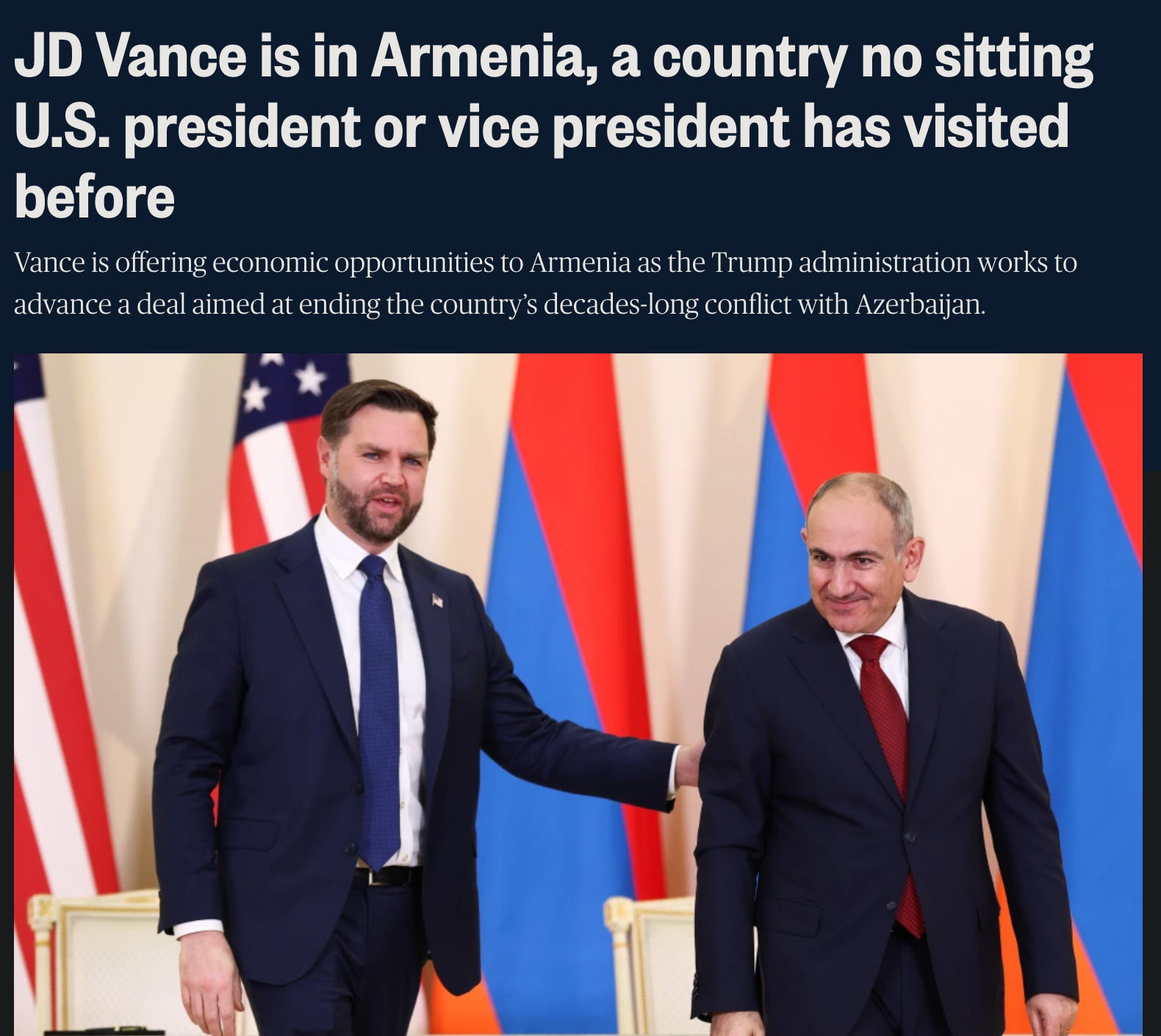
🌍 U.S.–Armenia Deal Signals New Push for Regional Peace and Strategic Cooperation
📍 Washington — A new agreement between the United States and Armenia is being viewed as a significant step toward deeper strategic cooperation and renewed efforts to stabilize the South Caucasus region. U.S. Vice President JD Vance and Armenian Prime Minister Nikol Pashinyan signed an agreement aimed at advancing discussions on a potential civil nuclear energy deal, signaling expanding bilateral ties.
The move comes at a delicate geopolitical moment, as Armenia and neighboring Azerbaijan continue working toward a long awaited peace treaty following decades of tension.
 ☢️ Civil Nuclear Energy at the Center of Cooperation
The newly signed agreement focuses on advancing talks surrounding civil nuclear energy cooperation. While details of the proposed framework remain under discussion, officials described the initiative as part of a broader strategy to strengthen Armenia’s energy security and economic resilience.
Expanding civil nuclear collaboration would potentially modernize Armenia’s energy infrastructure and diversify its partnerships. Analysts note that such cooperation also reflects Washington’s growing interest in playing a more active role in the South Caucasus.
🇺🇸 Expanded U.S. Support: Technology and Infrastructure Investment
Vice President Vance stated that the United States is prepared to deepen cooperation beyond energy. He announced that Washington is open to exporting advanced computer chips and surveillance drones to Armenia, technologies that could enhance both civilian innovation and national security capabilities.
In addition, the U.S. signaled readiness to invest in Armenia’s infrastructure, a move that could strengthen transportation networks, digital connectivity, and economic development. Strategic infrastructure support is often seen as a cornerstone of long term regional stability and integration.
The announcements underscore a broader U.S. effort to reinforce partnerships in strategically important regions amid evolving global competition.
🕊️ Momentum Toward Armenia–Azerbaijan Peace Treaty
The visit follows an August White House agreement between Armenian Prime Minister Nikol Pashinyan and Azerbaijani President Ilham Aliyev. The leaders reaffirmed their commitment to finalizing a comprehensive peace treaty aimed at resolving long standing disputes.
While foreign ministers have initialed the treaty text, the agreement still requires formal signing and parliamentary ratification in both countries. Diplomatic observers note that translating commitments into binding agreements remains a critical next step.
“Peace is not made by cautious people… Peace is made by people who are focused on the future,” Vance said ahead of a planned visit to Azerbaijan. His remarks reflect Washington’s intent to encourage continued dialogue and prevent setbacks in negotiations.
🚧 The “Trump Route for International Peace and Prosperity”
A central component of the August agreement includes plans for a major transit corridor known as the “Trump Route for International Peace and Prosperity.” The proposed corridor would connect Azerbaijan to its Nakhchivan exclave, which is currently separated from the rest of the country by a roughly 20 mile stretch of Armenian territory.
Supporters argue that the transit route could boost regional trade, improve cross border connectivity, and foster economic interdependence. Critics caution that implementation details, security arrangements, and sovereignty concerns must be carefully addressed to avoid renewed tensions.
If realized, the corridor could significantly reshape transportation and economic dynamics in the South Caucasus.
📊 Regional Implications and Strategic Outlook
The U.S.–Armenia agreement signals a broader strategic realignment in the region, combining energy cooperation, technological exchange, and diplomatic engagement. As Armenia and Azerbaijan move closer to a formal peace treaty, external support from Washington may help sustain momentum.
However, lasting peace will depend on careful implementation, domestic political support, and continued confidence building measures. The coming months will be critical in determining whether diplomatic commitments evolve into durable regional stability.