The Weight of the Silence
The hardest sound to get used to in the 4077th wasn’t the deafening roar of the incoming choppers. It wasn’t the frantic shouting in the compound, or the harsh, unforgiving wail of the siren cutting through the middle of the night.
The hardest sound was the heavy, ringing silence that fell over the Operating Room the moment a marathon shift finally came to an end.
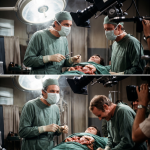
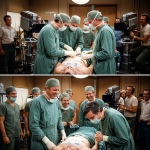
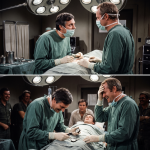
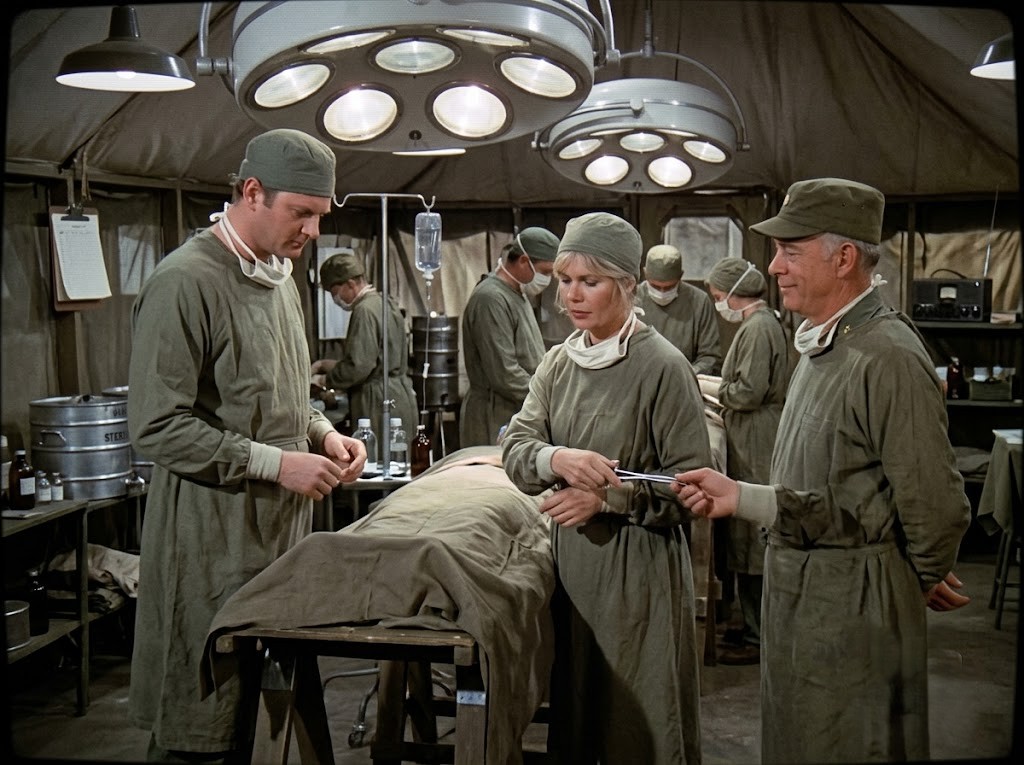
It had been eighteen straight hours of meatball surgery. The harsh overhead lamps felt less like lights and more like interrogation suns, baking the stale, iodine-soaked air inside the canvas walls. The hum of the camp generator outside was the only constant companion to the rhythmic, exhausted breathing of the medical staff.
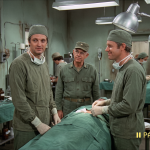
At table number two, Major Charles Emerson Winchester III finally reached up and pulled his surgical mask down around his neck. The snap of the elastic echoed sharply in the quiet room.
Charles didn’t complain about the suffocating heat. He didn’t offer a biting, sarcastic remark about the abysmal conditions of the mud-floored tent. He simply stood there, his broad shoulders slumped, staring blankly down at the empty surgical table.
His gloved hands, usually so swift and arrogant, rested heavily near his waist, trembling just a fraction of an inch from pure muscle fatigue. The aristocratic veneer of the brilliant Boston surgeon had been entirely stripped away, leaving behind a profoundly exhausted man running on absolute empty.
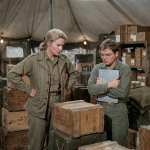
Standing across from him, Major Margaret Houlihan was running on the exact same fumes, but she was holding herself together with sheer, unyielding military discipline. Her blonde hair was plastered to her forehead with sweat, and her own mask hung loosely around her neck.
Margaret’s eyes scanned the tray of instruments. She picked up a pair of surgical scissors, a small, mundane task meant to keep her moving. If she stopped right now, she knew she might never get back up.
She held the instrument out toward the center of the table, offering it out of pure, exhausted habit. It was a tether back to reality, a silent prompt to begin the tedious process of cleaning up.
But Charles didn’t take it. He didn’t even seem to register that she was moving. His eyes remained unfocused, lost in the heavy, invisible toll of the last eighteen hours. He swayed on his feet, just slightly, the weight of the endless casualties threatening to finally pull him under.
The silence in the room suddenly stretched tight, thick with unspoken concern. Margaret held the scissors out, her hand freezing in mid-air. She watched Charles with wide, tired eyes, waiting to see if the proudest doctor in camp was about to collapse right onto the muddy floor.
“I’ll take those, Major,” Colonel Sherman T. Potter said.
His voice was a quiet, gentle rumble, completely empty of military brass or sharp command. It was the voice of a man who had seen too many wars, and knew exactly when his people had given every last drop of themselves.
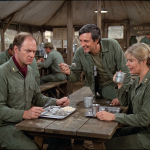
Potter stepped forward, his own green surgical gown stained from the long day. He didn’t bark an order at Charles to stand at attention. He didn’t reprimand him for staring off into space.
Instead, Potter reached across the table, his eyes soft and warm, and gently took the scissors from Margaret’s waiting hand. He offered her a small, grandfatherly smile as their fingers brushed.
The metallic clink of the scissors dropping into the sterilization basin seemed to finally break the spell holding the room hostage.
Slowly, the fog began to lift from Charles’s eyes. He blinked hard, pulling himself back to the reality of the damp canvas tent. He looked down at his own hands, realizing how deeply he had drifted away, and then looked up at Potter and Margaret.
A sudden, desperate flicker of his old defense mechanism tried to rise to the surface. Charles straightened his spine, though the effort clearly cost him.
“I… apologize, Colonel,” Charles rasped, his voice thick and gravelly with fatigue. “It seems the utterly barbaric ventilation in this oversized pup tent has finally managed to dull my usually impeccable reflexes.”
Potter didn’t buy the excuse for a single second, and he didn’t need to. The warm, tired smile touched the corners of the Colonel’s eyes as he looked at the Boston Brahmin. It was a look of pure, fatherly pride.
“No apology needed, Winchester,” Potter said softly, wiping his brow with the back of a tired hand. “I’d say a man who just spent six hours reconstructing a shattered artery with nothing but a prayer and a piece of silk has earned the right to stare off into space for a minute.”
Margaret didn’t snap at Charles for his lapse in attention. The old Margaret, the rigid Army nurse of years past, might have barked about protocol and sterile fields. But this Margaret just watched the arrogant doctor with a quiet, fierce protectiveness.
“That was beautiful work today, Charles,” Margaret said. Her voice was quiet, stripped of any rivalry or command. “The 8063rd would have given up on that boy three hours ago.”
Charles looked at her, his blue eyes softening. The compliment, offered so sincerely in the quiet aftermath of the O.R., landed squarely in his chest. He took a slow, deep breath, the last of his rigid tension finally leaving his body.
“Thank you, Margaret,” he said softly. For once, there was no sarcasm. There was no Boston superiority. There was only a profoundly tired doctor, deeply grateful for the incredible woman standing across from him.
They stood there for another long moment in the dim light of the surgical lamps. Three entirely different lifetimes, brought together over a canvas cot, bound by the relentless blood on their aprons and their stubborn refusal to let death win the day.
They weren’t just an army unit anymore. They were a family, quietly keeping each other standing in the worst place on earth.
Potter clapped his hands together, a single, gentle sound that signaled the true end of the shift.
“Alright, you two,” Potter said, his voice filled with warm affection. “Go scrub the war off your hands. Get some sleep before the choir starts singing again. That’s an order.”
Margaret offered a tired nod, turning toward the scrub sinks. Charles took one last look at the empty table, a quiet sigh escaping his lips, before he followed her out into the cool Korean evening.
Potter stayed behind for just a second longer, watching them go. He looked at the discarded instruments, the empty plasma bottles, and the tired, muddy boots of his staff shuffling away. He smiled to himself, grateful once again for the everyday miracles worked by exhausted, magnificent people.
They came from different worlds, but in the quiet aftermath of the O.R., they all shared the exact same weary, beautiful heart.