The Quietest Duty in the 4077th
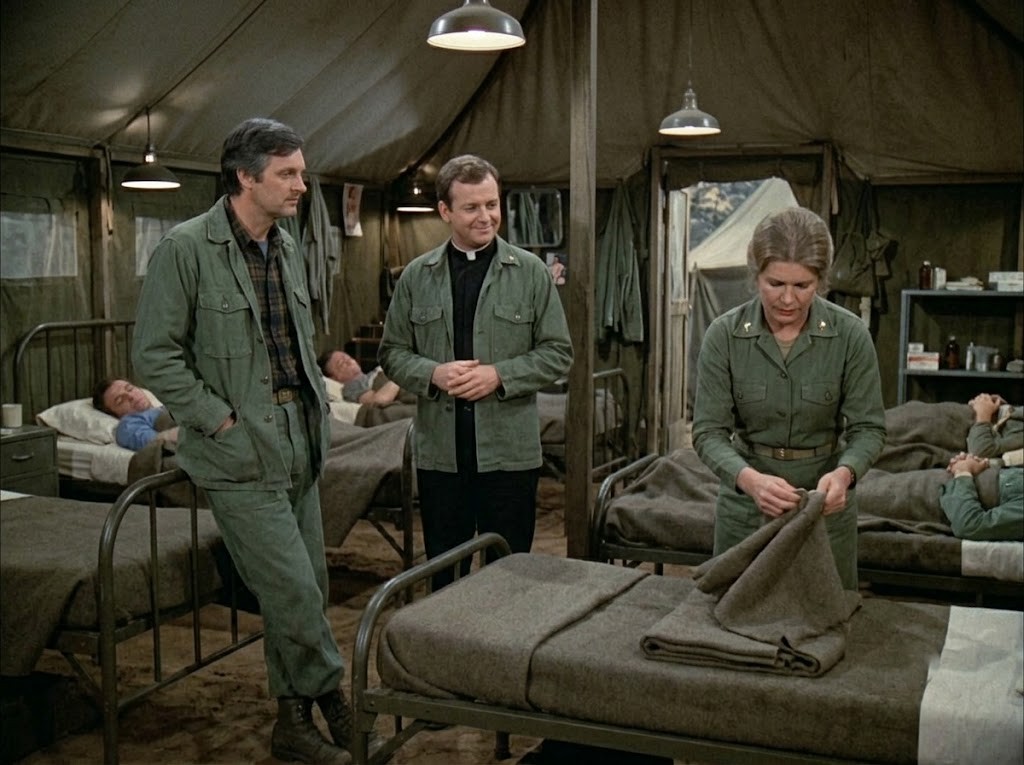
The rain had finally stopped, leaving the camp in that heavy, damp silence that felt louder than the shelling. Inside the recovery tent, the air was thick with the scent of antiseptic, damp wool, and the exhausted breathing of sleeping men. It was the kind of hour where the war felt like a distant, bad dream, and the reality was nothing more than four walls of canvas.
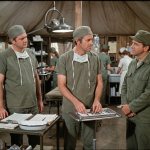
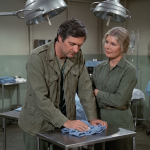
B.J. Hunnicutt stood by one of the cots, his hands tucked deep into his pockets, his posture loose but his eyes weary. He was watching Major Margaret Houlihan. She wasn’t barking orders or checking charts with her usual military snap. Instead, she was standing at a vacant cot, her fingers working with slow, deliberate precision as she folded a heavy olive-drab blanket.
Father Mulcahy stood a few feet away, his expression soft, his hands clasped gently in front of him. He wasn’t praying, not exactly. He was just witnessing. There was a profound, almost sacred weight to the way Margaret smoothed the rough wool, turning the corners with an obsessive, tender care that defied her usual tough exterior.
In the dim light of the tent, she looked less like a head nurse and more like a mother trying to make a home out of a tragedy. B.J. shifted his weight, his boots crunching slightly on the dirt floor, breaking the spell of the quiet room. Margaret didn’t look up, but her hands paused for a fraction of a second, her shoulders tightening just enough to betray the armor she was trying to maintain.
“You don’t have to do that, Margaret,” B.J. said, his voice barely a whisper, thick with a gentle, tired compassion. “The orderlies will get to it in the morning. You’ve been on your feet for eighteen hours. You need to sleep.”
Margaret finished the fold, her face obscured by the curtain of her hair as she tucked the edge in. She stayed bent over the bed, her knuckles white against the dark fabric. When she finally looked up, her eyes weren’t angry or defiant. They were red-rimmed, glassy, and starkly human, holding a terrifying level of exhaustion that made the air in the tent feel suddenly, dangerously thin.
“I know the orderlies will get to it, BJ,” she replied, her voice steady but brittle, like thin ice over a deep river. “I just… I want it to be right. He was so young. He shouldn’t have had to wake up in a place that looked like a disaster zone.”
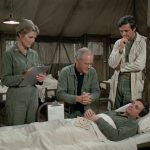
Father Mulcahy stepped forward, placing a warm, steady hand on her arm. He didn’t offer a platitude or a scripture. He simply held the space with her, acknowledging the unspoken reality of the boy who had occupied that cot just an hour before.
“The care you’ve shown him, Margaret,” Mulcahy said softly, “is the only peace he’s going to take with him from this place. That isn’t a small thing. It’s a holy one.”
Margaret let out a long, shuddering breath, the kind that seemed to rattle her very frame. She reached down, brushing a speck of dust off the perfectly folded blanket, her touch lingering on the fabric. It was a small, private act of defiance against the chaos outside the tent flaps—a way to impose order on a world that insisted on breaking everything it touched.
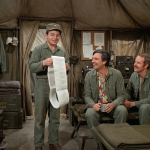
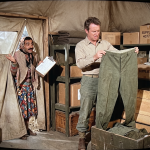
B.J. walked over to the adjacent cot, sinking down onto the edge of his own bunk. He looked at the scene in the image “P (36).jpg,” seeing the way the light from the overhead bulbs cast long, lonely shadows across the cots. He understood the need to fold the blanket. It was the only thing they could control. When the medicine failed and the prayers felt thin, you folded the blanket. You made the bed. You ensured that, at the very least, a man left this world with a little bit of human dignity tucked around him.
“You’re a good nurse, Margaret,” B.J. said, and for once, there was no sarcasm, no jest, just the simple, tired truth of two people who had seen too much.
Margaret finally let her shoulders drop. The tension that had held her upright throughout the shift seemed to evaporate, leaving her looking small and remarkably young. She looked over at the sleeping soldiers in the other cots, then back at the folded blanket. She nodded once, a sharp, decisive movement that seemed to signal the end of the day’s long, bitter war.
“I’m just a nurse, BJ,” she whispered, picking up her clipboard with fingers that still trembled slightly. “I just don’t like things to be messy. Not when there’s so little we can do to fix the real mess.”
They stood there for a long moment in the quiet of the tent. Outside, the distant rumble of a truck echoed through the valley, but inside, the world remained still. There was no victory here, no heroic closing speech, just a group of people who had been pushed to the edge and had decided to hold each other up, one folded blanket at a time.
It wasn’t a perfect life, and it certainly wasn’t the life they had dreamed of back home, but as the lights hummed above them, it was enough. In the quiet, dusty expanse of the 4077th, they were exactly who they needed to be for one another.
FINAL LINE: Sometimes, the greatest act of love in a war zone is simply making sure someone is tucked in when they leave.