The Art of Letting Go
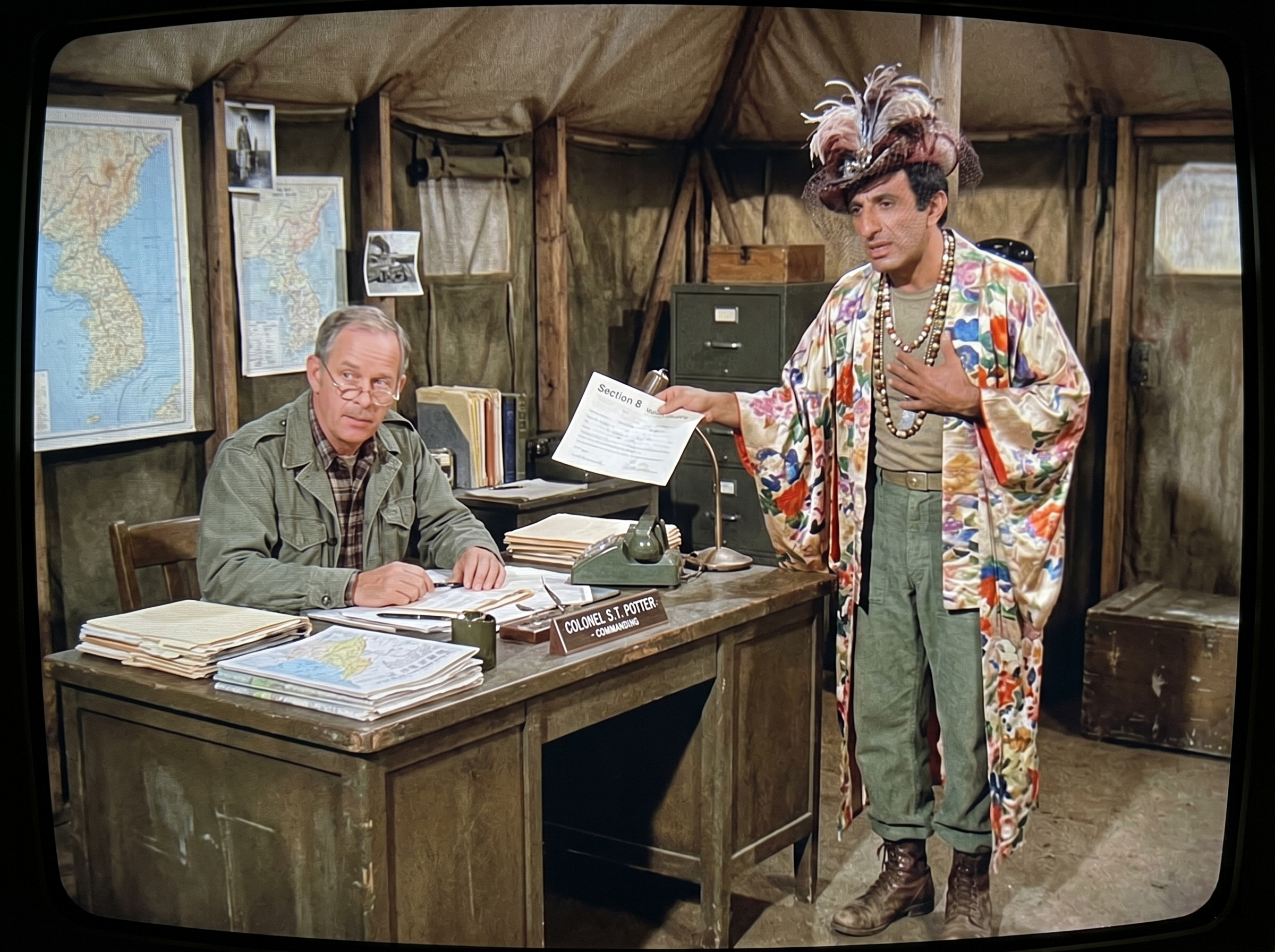
The afternoon heat inside the tent was thick enough to chew, a humid mixture of dust, floor wax, and the lingering, metallic scent of the OR. Colonel Potter sat behind his desk, the steady, rhythmic tapping of his pen against the blotter the only thing keeping the silence from becoming deafening. He looked tired, the deep lines around his eyes mapping out years of command that stretched far beyond the borders of Korea.
Then, the flap of the office door snapped open.
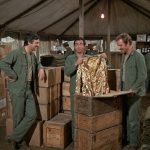
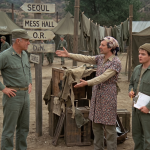
In walked Corporal Maxwell Klinger, a vision in floral silk, his hat a jaunty, feathered masterpiece that defied the military dress code by several thousand miles. He didn’t just walk into the room; he made an entrance, the vibrant fabric of his kimono rippling like a flag of defiance.
Without a word, Klinger glided toward the desk. His expression was one of profound, theatrical solemnity, his hand pressed firmly against his chest as if he were presenting a holy relic rather than a piece of government paperwork.
He slid the document across the desk. It landed with a soft *thud* against the wood. “Section 8, Colonel,” Klinger whispered, his voice trembling with a practiced, desperate sincerity. “The time has finally come. The doctors have weighed my soul, and found it wanting—or perhaps, simply too fabulous for the infantry.”
Potter didn’t look at the paper immediately. He looked at Klinger, truly looked at him, over the rim of his spectacles. The Colonel’s jaw tightened, not in anger, but in that familiar, weary realization that even the most colorful threads in the fabric of the 4077th might be pulled loose.
“Klinger,” Potter grunted, his voice a low, gravelly hum. “You know I can’t sign this without talking to the boys in psych first.”
“They’ve seen me, Colonel,” Klinger replied, his eyes wide and pleading beneath the brim of his hat. “They said I was a singular case. They said… well, they said I was ‘uniquely unfit’ for service.”
The air in the room suddenly went brittle. Potter reached out, his hand hovering over the paper, his fingers poised to change the course of a man’s life forever.
Potter’s hand stopped. He didn’t pick up the pen. Instead, he leaned back, the wooden chair creaking in protest, and sighed a sound that seemed to carry the weight of every casualty list he’d ever had to sign.
“Uniquely unfit,” Potter repeated, his tone softening until it was barely more than a murmur. “You’ve spent more time in that getup than some of these kids have spent in their boots, Klinger. You’ve played the madman, the queen, the court jester. But looking at you right now… you don’t look like a man trying to get home. You look like a man who’s afraid that if he takes off that hat, he won’t know who he is anymore.”
Klinger’s theatrical posture faltered. The hand on his chest dropped to his side. The bravado, the carefully constructed mask of the “Section 8” hopeful, cracked, revealing the tired, genuinely brave soldier who had kept the morale of the 4077th afloat with nothing but a bit of silk and a lot of nerve.
“I just want to go home, Colonel,” Klinger said, his voice stripped of the affectation. “But… it’s awful quiet out there. And there’s no one else to make them laugh when the shelling starts.”
Potter stood up slowly, moving around the desk. He didn’t reach for the paperwork. He reached out and, with a fatherly, awkward grace, straightened the lapel of Klinger’s kimono.
“You’ve been a thorn in my side, a distraction, and a headache,” Potter said, a small, genuine smile tugging at the corners of his mouth. “But you’ve also been the glue. When things get dark, you’re the one who reminds us that we’re still human beings. Not just dog tags and blood types.”
Klinger blinked, his eyes shining. He looked at the Section 8 form, then back at the Colonel. The paper, once a gateway to freedom, suddenly looked like just another piece of paper in a war that had defined them all.
“If I sign this,” Potter continued, “you’re gone. You’ll be in Toledo before the week is out. You’ll be safe. But you’ll be leaving behind a family that’s grown used to your particular brand of chaos.”
Klinger looked around the office—the map of Korea on the wall, the clutter of daily survival, the man who had become a reluctant father figure. He thought of the mess tent, the sound of the chopper blades, and the way the others relied on him to be the one who stayed weird, stayed funny, and stayed present.
With a slow, deliberate movement, Klinger reached out and pulled the paper back from the desk. He didn’t tear it up; he simply folded it once, tucked it into the sleeve of his robe, and adjusted his feathered hat.
“Maybe… maybe the doctors were wrong about me being unfit,” Klinger said, his voice quiet, steady. “Maybe I’m exactly what this place needs.”
Potter nodded, a silent acknowledgment of the choice made. “Report back to the mess, Corporal. And for heaven’s sake, don’t let me catch you wearing those shoes with that print again. It’s a fashion crime.”
Klinger gave a small, genuine salute, his face holding a peace that the Section 8 form could never have provided. He turned and walked out the door, the silk of his robe catching the light one last time, leaving the office feeling a little less like a command post and a little more like a home.
In the heart of the 4077th, the most courageous act wasn’t leaving, but choosing to stay together.