The Hat That Didn’t Quite Fit the War
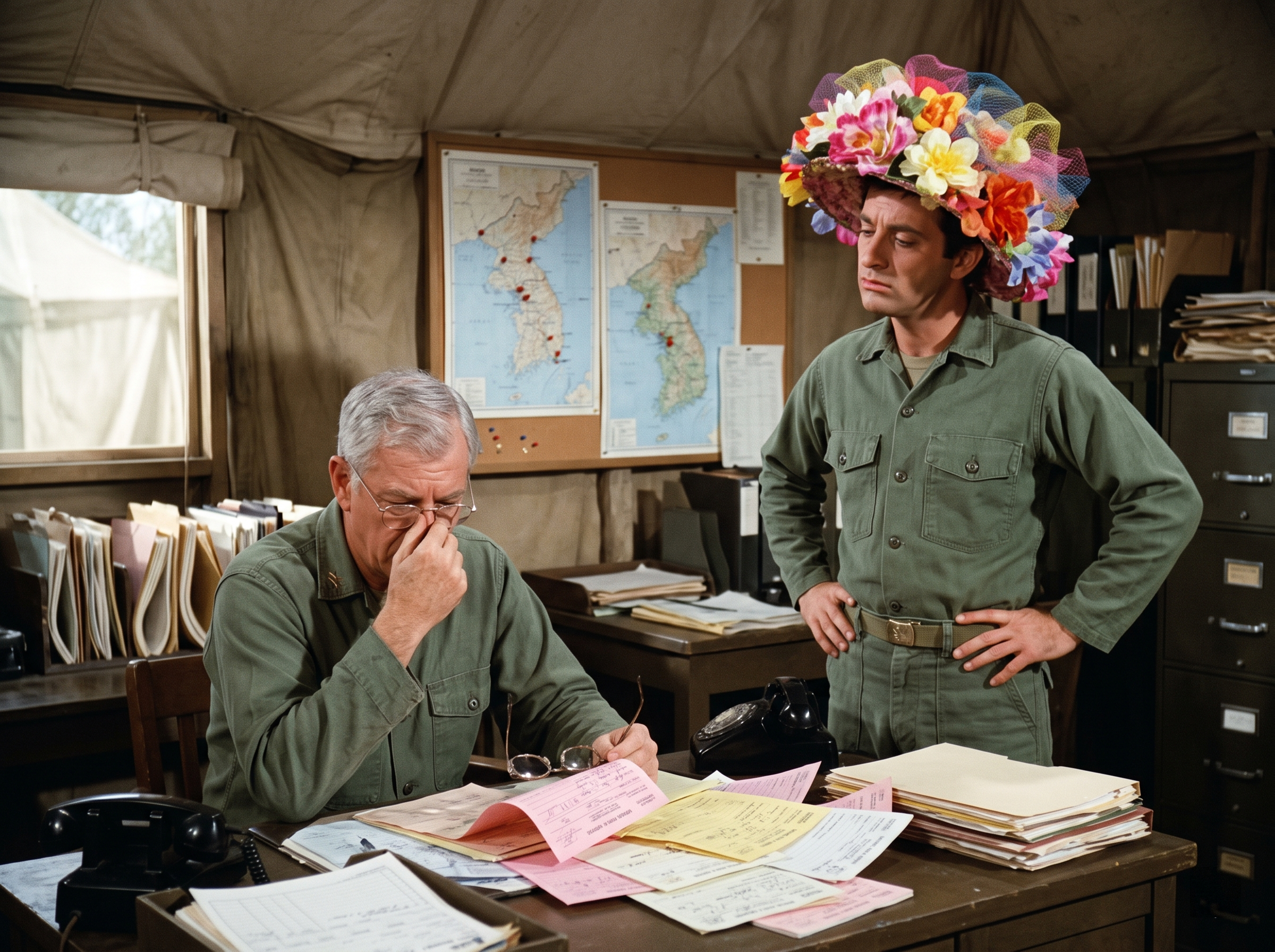
The tent air was thick, heavy with the scent of wet canvas, stale coffee, and the lingering, invisible exhaustion that never quite left the 4077th. Colonel Potter sat at his desk, the bridge of his nose pinched tight between his thumb and forefinger. In front of him, a mountain of morning requisitions threatened to bury his sanity. It was another long, grinding day where the only thing keeping the world together seemed to be endless paperwork and sheer stubbornness.
Then, the tent flap rustled. Corporal Klinger didn’t just walk in; he made an entrance. He stood there, hands on his hips, wearing a hat that looked like an explosion in a botanical garden. It was a chaotic, vibrant crown of artificial daisies, lilies, and neon-colored tulle, perched defiantly atop his regulation olive-drab uniform.
Klinger didn’t say a word. He just stood there, waiting for the inevitable explosion.
Potter finally cracked. He looked up, his glasses dangling from one hand, his face a map of weary disbelief. He stared at the floral masterpiece, then at Klinger’s completely deadpan expression, and let out a long, shuddering sigh that sounded like a collapsing dam.
“Klinger,” the Colonel whispered, his voice dangerously low. “Tell me you didn’t just walk through the mess hall like that.”
Klinger tilted his head, the fake roses swaying precariously. “Sir, it’s a morale booster. People need color, Colonel. They’re tired of seeing nothing but brown tents and grey skies. I’m just providing a little… visual nutrition.”
Potter’s jaw set. The tension in the room was palpable, a live wire stretched tight between the weight of his command and the absurdity of his corporal. He reached for his glasses, his hand trembling just a fraction, the silence stretching until it felt like it might snap.
“Take that thing off,” Potter commanded, his voice shaking with the effort to suppress a smile, “or I’ll have you cleaning the latrines with a toothbrush until the end of the Korean conflict.”
Klinger stood his ground, his eyes wide and innocent, yet there was a flicker of something deeper beneath the theatrics—a plea for a moment of normalcy in a place that had forgotten the meaning of the word.
The Colonel’s eyes remained fixed on Klinger, but the sharp edges of his authority were beginning to soften. He wasn’t really angry. How could he be? He had seen enough carnage in his life to know that sometimes, a man wearing a flower-covered monstrosity on his head was the only thing preventing the madness from setting in permanently.
Klinger’s expression shifted. The theatrical bravado faltered, replaced by a quiet, human vulnerability. “Colonel,” he said softly, losing the comedic edge of his voice, “the guys… they’re worn thin today. Even Winchester didn’t have a comeback when I walked past him. If I can get one person to laugh—or even just to shake their head—then I’ve done my duty.”
Potter looked down at the paperwork—the casualty lists, the supply shortages, the endless, grinding tally of a war that refused to end. He looked back at Klinger, standing there like a neon sign in a dark alleyway.
“You’re a menace, Klinger,” Potter said, though the bite was gone from his tone. He reached out and picked up his glasses, slowly placing them back on his face. “A complete and utter menace. But you’re a menace that happens to be right.”
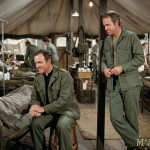
The Colonel didn’t order him to take the hat off. Instead, he leaned back in his chair, the squeak of the wood breaking the suffocating stillness of the office. He gestured to the chair across from him. “Sit down, Klinger. Before you start drawing enemy fire with that thing.”
Klinger sat, the flowers rustling as he moved. For a few minutes, they didn’t talk about the war or the paperwork. They didn’t talk about the patients or the sirens. They just sat in the quiet of the office, the Colonel rubbing his tired eyes, and Klinger, the eternal jester of the 4077th, watching the maps on the wall with a strange, somber focus.
It wasn’t a big moment. It wouldn’t make the history books or turn the tide of the conflict. But in that small, crowded tent, the absurdity of the hat had served its purpose. It had broken the cycle of fatigue. It had reminded two men that underneath the uniforms and the rank, they were still just people trying to make it to the next sunrise, together.
Potter reached out and tapped a folder on his desk, his expression weary but gentle. “Keep the hat for now, Corporal. But if I see you wearing it in the operating theater, I’m putting you on permanent KP.”
Klinger gave a mock salute, the fake petals dancing. “Yes, sir. Thank you, sir.”
As Klinger walked back out into the bright, harsh glare of the afternoon, the Colonel turned back to his desk. He was still exhausted, and the war was still waiting outside the flap, but for the first time that day, his shoulders didn’t feel quite so heavy. The 4077th would go on, as it always did, carried forward by the people who knew exactly when to be serious, and exactly when to put on a hat made of flowers just to see a friend smile.
Sometimes, the bravest thing you can do is wear a smile—or a ridiculous hat—when the world is at its darkest.