The Gift of Feathers and Forgiveness
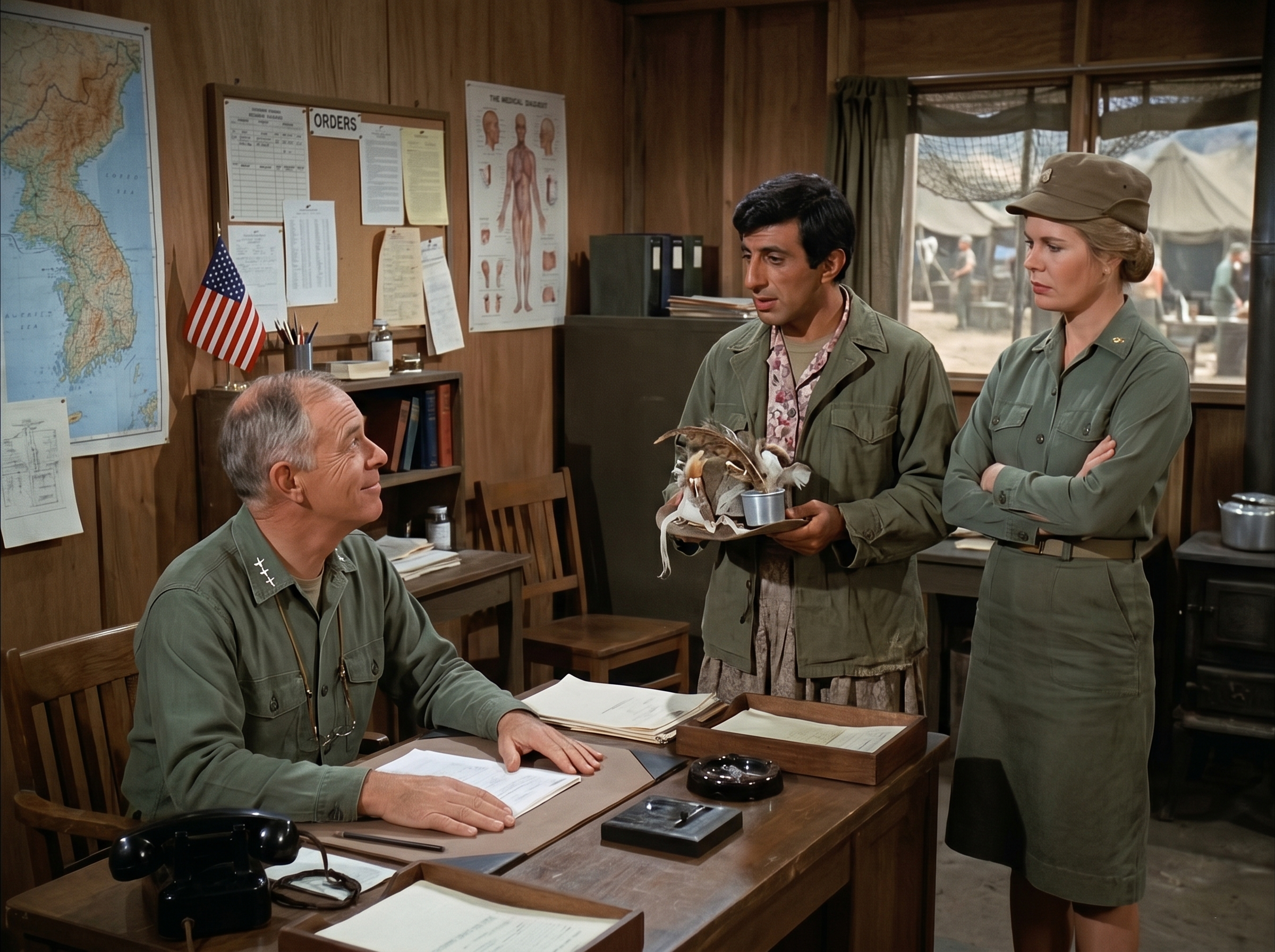
The afternoon light in Colonel Potter’s office always seemed to hold a specific kind of dust—the kind that settled on your soul after a long shift in the OR.
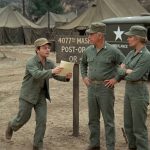
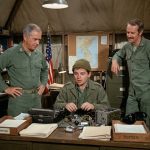
It was quiet, or as quiet as it ever got at the 4077th. Colonel Potter sat behind his desk, his posture a masterclass in controlled fatigue, his gaze fixed on the two figures standing before him.
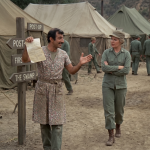
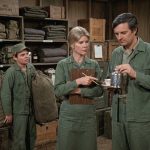
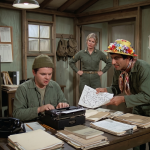
Corporal Klinger was there, presenting something that looked less like a military request and more like a bizarre artistic endeavor. In his hands, he held a hat laden with an assortment of feathers—some wild, some possibly pilfered from a very confused chicken—and a small metal container tucked into the brim.
Standing beside him, Major Margaret Houlihan held her arms crossed firmly against her chest, her expression caught somewhere between military disapproval and a profound, bone-deep exhaustion.
The room held its breath. Klinger’s face was earnest, almost pleading, a stark contrast to his usual schemes for a Section 8.
“Colonel,” Klinger began, his voice surprisingly soft. “It’s not a uniform violation. It’s… a gesture. For the nurses’ station. A little bit of home, in the middle of this mess.”
Potter looked at the hat, then up at Klinger, his brow furrowed in that familiar, questioning arch. Margaret shifted, her eyes softening just a fraction, the tension in her shoulders betraying how much she actually wanted this ridiculous thing to work.
“Klinger,” Potter started, his voice a gravelly rumble that could just as easily turn into a roar as it could a chuckle. “If I say yes, you’re promising me this isn’t going to turn into a parade of oddities? Because my head is already spinning.”
Klinger took a step forward, his eyes shining with a sudden, uncharacteristic vulnerability that stopped the Colonel cold. “I swear, sir. Just a little color to remind them that the world isn’t all blood and bandages.”
Potter sighed, a long, weary sound that seemed to deflate the entire office. He looked at Margaret, searching for an answer, and for a heartbeat, the power dynamic of the entire camp felt like it was resting on the tip of a feather.
“Major,” Potter asked, his voice low. “What do you think? Are we looking at a morale booster, or a psychiatric evaluation?”
Margaret uncrossed her arms, her hands trembling almost imperceptibly as she looked at the hat. The silence stretched, tight as a suture, until she finally met the Colonel’s eyes with a look that wasn’t about regulations at all.
“Colonel,” she whispered, her voice cracking, “I think we’ve all forgotten what it’s like to see something beautiful.”
The words hung in the air, heavy and true. The sharp, metallic scent of the office—the ink, the files, the old wood—suddenly felt a hundred miles away.
Colonel Potter leaned back, his chair creaking in the stillness. He looked at Klinger, then at Margaret, and the stern lines around his mouth softened into a weary, genuine smile.
“Well,” he grunted, reaching out a hand to inspect the chaotic masterpiece. “It’s certainly… something.”
He tapped the metal container with a calloused finger. It gave a hollow *clink* that sounded, for all the world, like a bell ringing in a distant chapel.
“I suppose,” Potter continued, his voice dropping to a conspiratorial whisper, “if the nurses’ station is in need of a little brightness, who am I to stand in the way of a fashion statement? But keep it away from my desk, Klinger. I have enough trouble with my own paperwork as it is.”
Klinger’s face lit up, a brilliant, genuine grin that transformed his features. “Yes, sir! Thank you, sir! I won’t let you down.”
Margaret let out a breath she seemed to have been holding since the last casualty list came in. She stepped forward and reached out, gently straightening a wayward feather on the side of the hat.
Her touch was light, motherly, and fleeting. For a second, the two of them—the Corporal and the Major—shared a look of perfect, silent understanding.
They weren’t just a soldier and a nurse anymore. They were two people who had seen too much, trying to carve out a tiny pocket of sanity in a world that insisted on madness.
“It’s really quite lovely, Klinger,” Margaret said, her voice steady and warm. “In its own way.”
As Klinger carefully carried his creation toward the door, he looked back once, caught the Colonel nodding, and then turned to go. The afternoon sun caught the feathers, turning them into little flickers of gold against the drab olive of the camp.
Potter turned his attention back to his desk, picking up a pen, but he didn’t start writing. He just sat there, listening to the muffled sounds of the 4077th coming to life outside his window—the hum of the generator, the distant bark of a dog, the laughter of someone who had just found a reason to smile.
He leaned forward and took his glasses off, rubbing the bridge of his nose. The weight of the command was still there, the war was still waiting, and the mud was still thick on their boots.
But the office felt lighter.
He looked at the empty space where the hat had been and felt a strange, quiet peace. They were a ragtag family of misfits, broken pieces of people held together by duty and gallows humor, but in moments like this, they were whole.
They were simply human, surviving, and finding grace in the most impossible of places.
“Good man,” he whispered to the empty room, a small, tired smile gracing his face before he went back to the business of saving lives.
Sometimes, even in the middle of a war, the simplest things are the ones that save us.