A Crisis of Faith on a Tin Tray
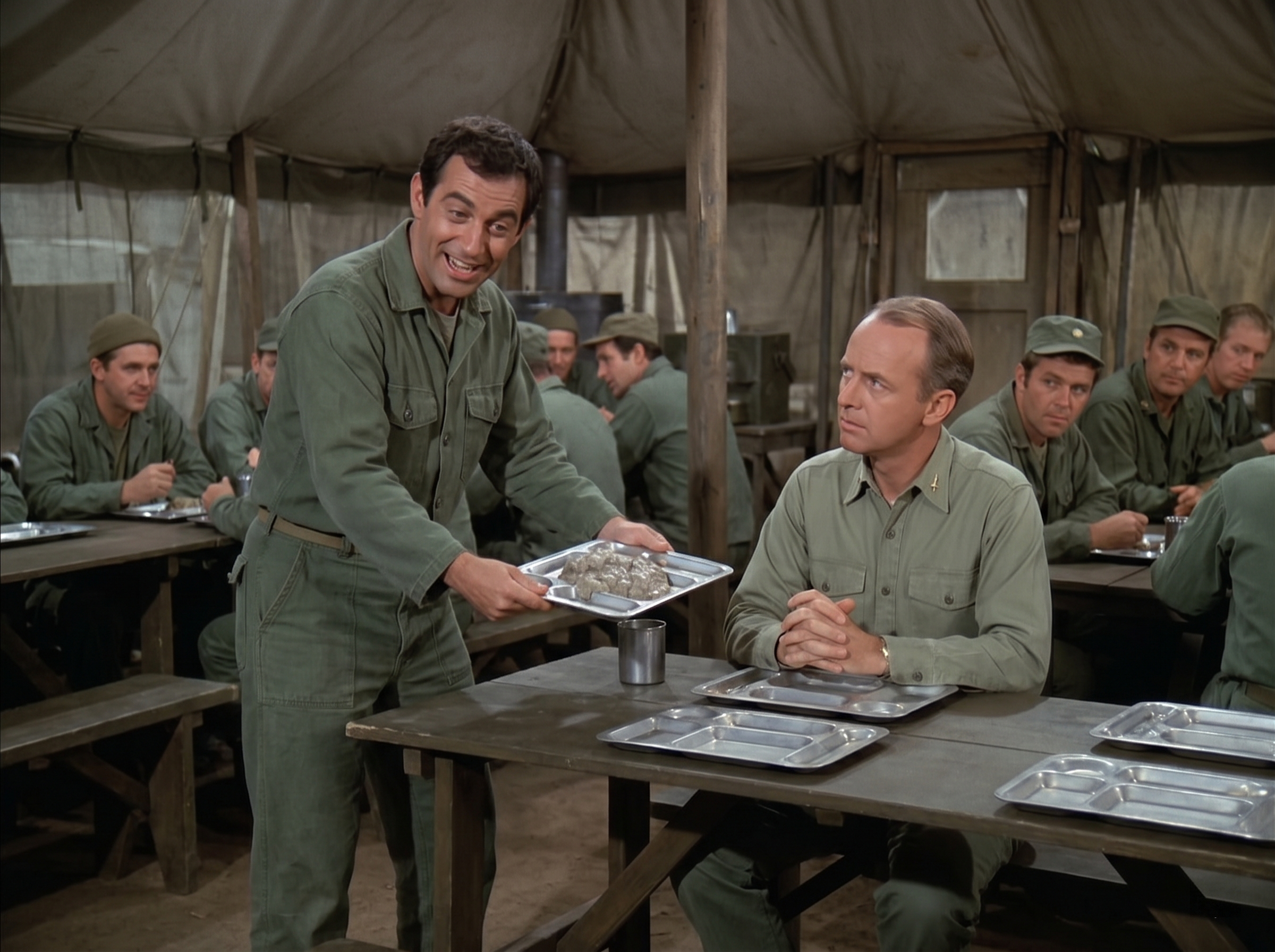
The mess tent of the 4077th Mobile Army Surgical Hospital was a place where miracles were routinely begged for, but rarely granted.
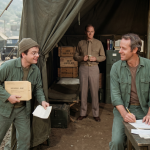
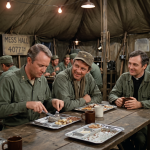
It was a damp, drafty canvas room filled with the unmistakable aroma of stale coffee, powdered eggs, and whatever unholy concoction the United States Army Quartermaster Corps had deemed fit for human consumption that week. For the doctors, nurses, and enlisted men of the camp, it was a sanctuary of sorts. It wasn’t comfortable, and it certainly wasn’t appetizing, but it was the one place where nobody was actively bleeding.
The morning had been brutally, mercifully quiet following a thirty-six-hour stretch of back-to-back casualties. The heavy scent of ether and antiseptic still clung to the fabric of their fatigues, a grim perfume they could never quite wash out.
Father John Patrick Mulcahy sat alone near the end of a long, scarred wooden table. His green wool shirt was neatly buttoned, the small silver cross on his collar catching the dull light filtering through the mesh windows. He had his hands politely clasped together, resting softly on the wood.
He was staring at his empty metal tray, enjoying a rare, uninterrupted moment of absolute silence. In a war zone, silence was a precious commodity. It was a space to pray, to reflect, or simply to forget where he was for just five minutes.
But silence at the 4077th was always temporary.
The heavy canvas flap of the mess tent parted, and the quiet was instantly broken by the unmistakable, heavy-footed stride of a surgeon who had finally shed his bloody gown.
Captain “Trapper” John McIntyre practically bounced into the room. This was a man who had been up to his elbows in shrapnel and despair for a day and a half, yet he carried himself with the manic, dangerous energy of a teenager who had just successfully hotwired a jeep.
Trapper marched straight to the serving line, whistling a tune that was entirely too cheerful for the hour.
Mulcahy watched him from the corner of his eye. He knew that kind of energy. It was the desperate, artificial high that came right after the adrenaline of the operating room finally began to crash. It was a defense mechanism, a way to keep the horrors of the surgical floor at bay by leaning heavily into the absurd.
A moment later, Trapper turned away from the serving line and made a beeline straight for the Padre’s table.
In his hands, he carried a standard-issue metal tray. On that tray sat a mound of something truly spectacular in its sheer awfulness. It was a gelatinous, lumpy mass of gray and beige. It looked less like food and more like something that had been mixed in the motor pool to patch a leaky radiator.
Trapper came to a sudden halt right beside the priest. He leaned in, bending at the waist, presenting the tray with the theatrical flourish of a maitre d’ at the finest restaurant in Paris.
A massive, unrestrained grin split Trapper’s face. His eyes were wide, dancing with mischievous intent.
“Padre,” Trapper announced, his voice practically singing with exaggerated delight. “I bring you tidings of great joy. I believe Igor has finally done it. He has managed to cook something that fundamentally violates the laws of physics.”
Father Mulcahy did not un-clasp his hands. He did not move away. He simply tilted his head, his eyes traveling from Trapper’s manic, grinning face down to the unidentifiable gray disaster sitting inches from his nose.
A profound look of polite skepticism, mixed with genuine pastoral concern, settled over the priest’s features. He stared at the tray, waiting for the substance to either speak or attempt to crawl away.