One More Minute on the Calendar
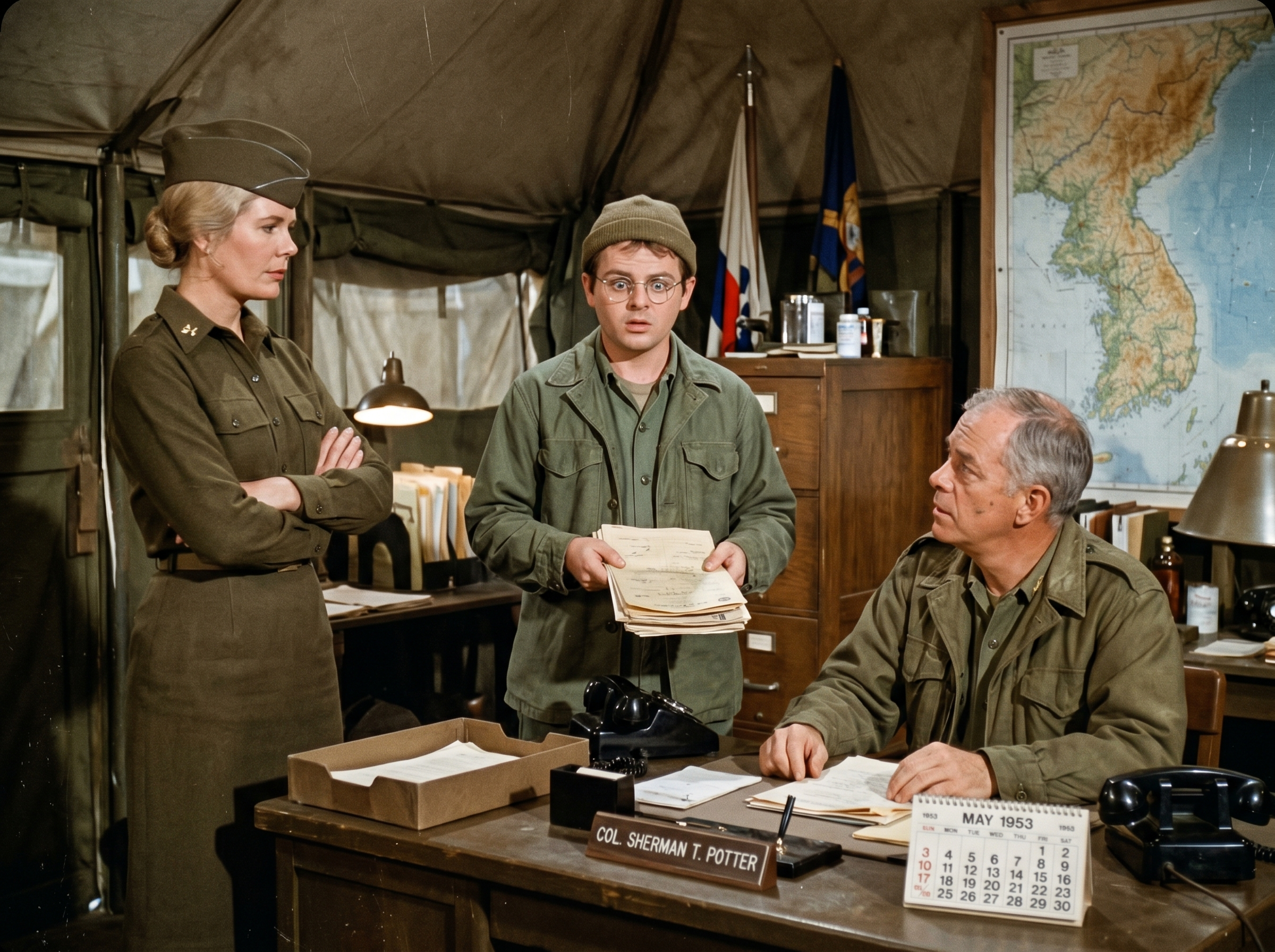
The calendar on Colonel Potter’s desk didn’t lie. May 1953. Another month gone, another month older, and still 5,000 miles from home.
The office felt tighter than usual, and it wasn’t just the spring humidity creeping through the canvas walls. It was the silence. The heavy, pressurized silence before the dam breaks.
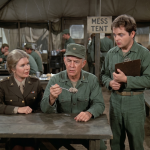
The tension radiated from the three figures centered in the image. Major Margaret Houlihan stood off to the left, arms crossed like iron bars across her chest. Her face, in profile, was a statue of professional discipline.
She’d just delivered news from the nursing staff, and it hadn’t gone down well. Not with the pressure coming from Seoul. But she wouldn’t back down. Not on nursing standards.
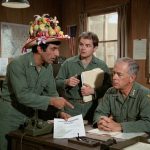
In the center, Radar O’Reilly looked ready to disappear into his own oversized beanie. He clutched a thick stack of files and mail—a heavy burden in hands that usually moved with speed and grace.
The files represented people, soldiers, and lives waiting for a single signature. His wide eyes darted nervously between the Colonel and the Major, caught between two of the army’s most immovable objects.
He swallowed hard, the sound a quiet click in the room. Radar hated it when the chain of command was under strain. It made his stomach hurt worse than Klinger’s meatloaf.
Colonel Sherman T. Potter sat at his desk, the anchor of the 4077th. He looked up at Radar, his gaze stern but weary. His fingers rested on papers already spread across the desk.
His eyes were fixed not on Radar, but on the files, seeing the mounting paperwork that signified an unrelenting war. He was a man who handled regular army stupidity with dry patience, but today was testing him.
“Well, son?” Potter said, his voice quiet but with the weight of authority. “Is that a delivery, or are you hoping those files will simply learn to sign themselves?”
The silence returned, heavier. Margaret subtly tightened her crossed arms. Radar’s knuckles whitened around the papers.
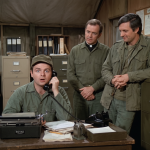
The phone rang. It was the black phone directly on Potter’s desk. The I Corps phone.
It was the fifth time it had rung in the last hour. Every time it rang, the world in the office shrunk just a little bit more. Everyone knew who was on the other end, and nobody wanted to answer.
Potter didn’t move. He continued to stare at the phone. For one long, agonizing minute, the phone screamed its mechanical, demanding ring into the tense, small space of the 4077th’s command tent. It was a sound that broke hearts and started battles.
The black phone on Colonel Potter’s desk was the boss. In a tent defined by its canvas walls, that phone was a steel door that could swing open to chaos. Right now, it was ringing, insistent and cruel.
Radar’s eyes, already wide, seemed to stretch the fabric of his face. He’d seen people frozen by incoming shells, but he’d rarely seen the Colonel frozen by a phone call.
Potter slowly reached out his hand, but not to answer. Instead, he simply pressed his palm flat on the desk, right next to the howling instrument, as if applying pressure to a bleeding artery.
“Radar,” Potter said, his voice calmer now, but low. “That call is from I Corps. It’s General MacArthur’s chef. He’s looking for the recipe for our famous potato salad. Tell him we mailed it two months ago. If he hasn’t received it, the postal service has fallen into enemy hands.”
Margaret’s lips thinned, the mask of discipline straining against a smile that almost broke. She knew better. Radar, confused, blinked. “Chef, sir? General MacArthur’s chef?”
Potter nodded, his face serious. “Yes, son. He claims the general’s mood is entirely dependent on the texture of his starch. Now, do you think you can handle that level of culinary intelligence without compromising national security?”
Radar glanced nervously at the ringing phone, then back to Potter, his anxiety now mixed with a desperate need to be part of the absurd game. “Yes, sir! Potato salad recipe. Mailed two months ago.”
“Good boy,” Potter said, a quiet warmth returning to his eyes. He motioned to the stack of files. “Now, what’s that, the supply orders?”
The spell was broken. Radar stumbled forward, handing the thick packet to Potter. The phone finally went dead, its silence now feeling like a small victory.
Potter sighed as he took the papers. “Supply orders. Another mountain of red tape. The supply clerk in Seoul must be paid by the inch of paperwork. We need sutures, penicillin, and X-ray film. But what we’ll get is 200 left-foot boots and a case of chocolate pudding.”
“Speaking of pudding,” Margaret said, her voice softer as she finally uncrossed her arms and rested one hand lightly on the edge of the desk. “Corporal Klinger has requested extra canned fruit again. He says his artistic vision for tomorrow’s ‘fruit salad of peace’ cannot be realized without it.”
Potter’s face broke into a full smile for the first time in an hour. “Peace? From canned peaches? That boy’s optimistic. Give him the peaches, Margaret. If canned fruit brings peace, I’ll recommend him for the Medal of Honor.”
He looked up at the May 1953 calendar on his desk. “Only twenty days left in this month. Twenty days, twenty mountains of paperwork, twenty phone calls from idiots with chefs.” He picked up a pen. “Let’s sign the mountains.”
He looked back at Radar, who was now straightening the pencils on the desk. “Radar. In the future, if a phone call like that comes from a general’s kitchen, you can tell him that Colonel Sherman T. Potter is personally making sure the potato salad is safe.”
“Yes, sir,” Radar said, his shoulders finally relaxing. The office didn’t feel so small anymore. The tension was gone, replaced by a shared quiet understanding. They weren’t just a unit; they were a family, forged in fire and file cabinets.
Potter bent over his desk, the scratch of his pen the only sound. Margaret stayed for a moment longer, watched the paper trail, and for that minute, May 1953 didn’t feel so heavy. Home was far away, but for now, this was home.
They say time heals all wounds, but in the 4077th, time was just the thing you were trying to survive, one paper at a time.