A Quiet Moment in the Ward
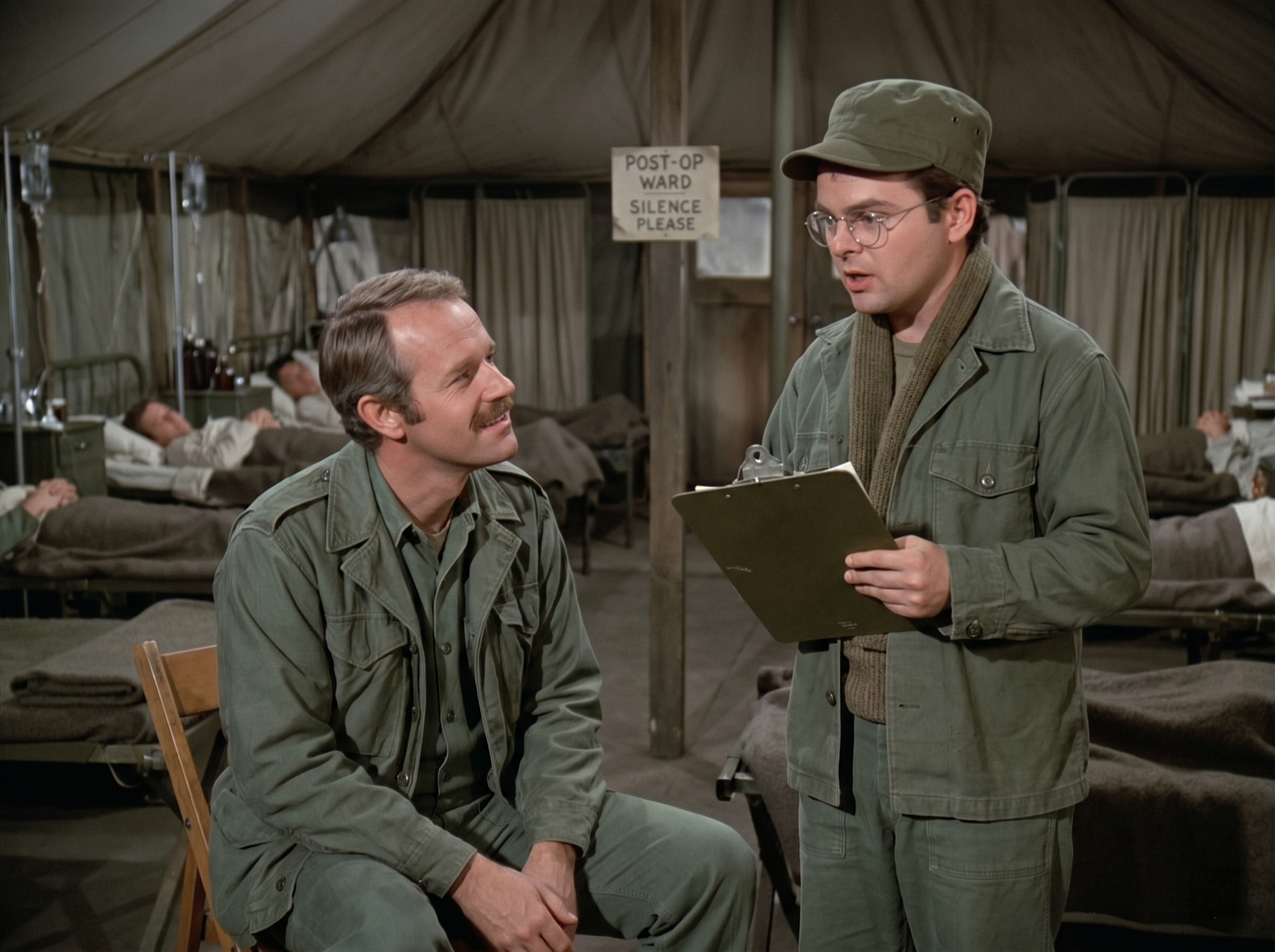
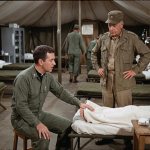
The Post-Op ward was usually a symphony of pained groans and the rhythmic, hollow drip of saline bags. Tonight, however, it held a strange, heavy stillness.
It was 3:00 AM, and the only light came from the flickering bulb near the nurses’ station, casting long, weary shadows against the canvas walls.
Captain B.J. Hunnicutt sat on a plain wooden chair, his shoulders slumped with the kind of bone-deep exhaustion that no amount of coffee could ever touch. His mustache looked a little more tired than usual, his eyes tracking the gentle rise and fall of the chests of the sleeping soldiers nearby.
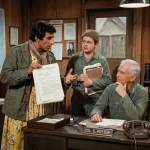
Radar O’Reilly approached him softly, his boots making almost no sound on the packed dirt floor. He clutched his clipboard against his chest like a shield, his glasses catching the dim light.
There was a frantic edge to Radar’s breathing, even though he was trying to stay calm. He stopped just a few feet from B.J., clearing his throat with a sound that seemed loud enough to wake the dead.
“Captain?” Radar whispered, his voice trembling just a fraction. “I… I think I’ve made a terrible mistake with the inventory for the morning surgery list. I’ve gone over it three times, and I keep getting a different number.”
B.J. looked up, offering a tired, lopsided smile that didn’t quite reach his eyes. He motioned for Radar to come closer, his expression softening as he saw the genuine panic on the young corporal’s face.
“Slow down, Radar,” B.J. said gently, his voice a low hum. “You’ve been up for eighteen hours. The supplies aren’t going to vanish into thin air, and neither are the patients.”
Radar stepped closer, hovering near the end of a cot. He looked down at his clipboard, then back at B.J., his brow furrowed in genuine distress.
“But sir, if I messed up the count, they won’t have what they need when the next chopper lands,” Radar insisted, his voice cracking. “And if that happens, it’s on me. It’s all on me.”
B.J. reached out, resting a steady hand on the edge of the clipboard to keep it still. He saw the look of utter helplessness in Radar’s eyes, the realization that in this place, a simple paperwork error felt as heavy as a mortar round.
“Radar,” B.J. said, his voice sharpening just enough to command attention. “Listen to me. You are the heart of this camp. You keep us running when we’re too busy losing our minds to remember our own names. If you made a mistake, we fix it together. But right now, you need to stop shaking before you drop that board on someone’s foot.”
Radar stared at him, his mouth opening to argue, but the words died in his throat. He looked at the clipboard, then at the sleeping men, and suddenly, the weight of the war seemed to cave in on him. His lower lip quivered, and for the first time, the boy who knew everything that happened before it even occurred looked completely lost.
B.J. didn’t let go of the clipboard. Instead, he pulled the chair slightly to the side and patted the air, signaling Radar to sit for a moment.
“Sit,” B.J. commanded softly. “The ward is quiet. Everyone is resting. For the next five minutes, the war is taking a coffee break. And you are too.”
Radar reluctantly sank onto the edge of a nearby cot, his posture rigid. He kept his eyes fixed on the blank forms, his knuckles white as he gripped the plastic frame of the clipboard.
“I just want to get it right,” Radar whispered, staring at his boots. “Just once, I want to feel like I’m actually doing something that makes this whole thing make sense.”
B.J. leaned back, his own fatigue momentarily forgotten as he watched his friend. He thought about his daughter, Erin, and the quiet peace of the California coast, and then he looked at the stark reality of the canvas walls around them.
“Radar,” B.J. said, his voice warming. “You think you’re just counting bandages and surgical sponges. But look around. These guys? They’re sleeping because they trust us. And they trust us because you make sure we’re ready. You’re the reason we can be surgeons instead of just people with knives in our hands.”
Radar looked up, his eyes searching B.J.’s face for a hint of sarcasm. Finding only sincerity, the boy’s shoulders finally dropped an inch or two. The frantic, nervous energy began to bleed out of him, replaced by a weary, hollow relief.
“You really think so?” Radar asked, his voice barely audible.
“I know so,” B.J. replied. “Now, give me that clipboard. Let’s look at this disaster together.”
They spent the next ten minutes working in a comfortable, hushed silence. There was no grand solution, no sudden epiphany that made the war disappear. They simply corrected the tally, rearranged a few numbers, and double-checked the stock.
It was a small, mundane task, but in the middle of a conflict that tore the world apart, it was a moment of order. It was a moment of connection.
As they finished, Radar let out a long, shuddering sigh. He looked at the ward, then at B.J., and the small, earnest smile returned to his face—the look of a boy who had been reminded that he was part of a family.
“Thanks, Captain,” Radar said, standing up and tucking the clipboard securely under his arm.
“Anytime, Radar,” B.J. answered, watching him walk toward the exit. “Get some sleep. That’s an order.”
Radar nodded, gave a quick, respectful salute that was more habit than protocol, and slipped out into the night. B.J. remained in the chair for a moment longer, listening to the steady, rhythmic breathing of the men in the ward.
The air was still heavy with the scent of antiseptic and damp earth, and the war was still waiting just outside the canvas walls. But for a few minutes, there had been nothing but two friends helping each other carry the load.
It wasn’t a victory, and it wasn’t a cure. But as B.J. finally leaned his head back and closed his eyes, he knew it was enough for one night.
In the quiet of the 4077th, the smallest kindnesses were always the ones that kept us whole.