🌕🚀 Apollo 11: The Astronaut Who Orbited Alone and the Perspective That Still Fascinates the World
- HoaiLinh
- February 22, 2026
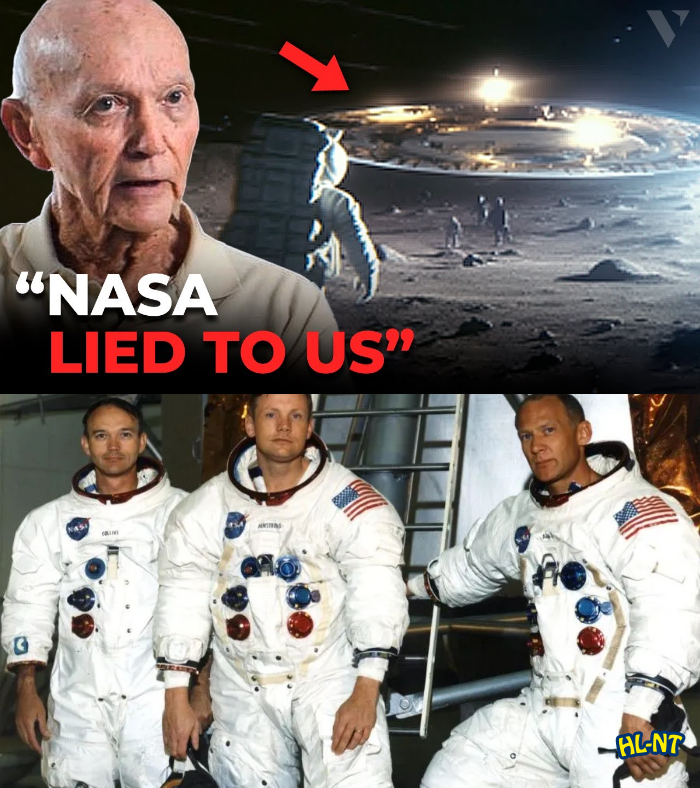
🌕🚀 Apollo 11: The Astronaut Who Orbited Alone and the Perspective That Still Fascinates the World
Meta Description:
Apollo 11 made history in 1969 when humans first landed on the Moon. While Neil Armstrong and Buzz Aldrin walked on the lunar surface, Michael Collins orbited alone — a role that remains one of the most extraordinary in space history.
 🌎 A Giant Leap for Humanity
In July 1969, Apollo 11 achieved what once seemed impossible: landing humans on the Moon and returning them safely to Earth.
The mission, led by NASA, marked a defining moment of the Space Race and a turning point in human exploration.
Most people remember the iconic images:
👨🚀 Neil Armstrong stepping onto the lunar surface
🌕 Buzz Aldrin following shortly after
🎙️ The unforgettable words: “That’s one small step for man, one giant leap for mankind.”
But the success of Apollo 11 depended on a third astronaut — one whose role required immense precision, composure, and courage.
🛰️ Michael Collins: The Man in Lunar Orbit
While Armstrong and Aldrin explored the Moon’s surface, Michael Collins remained aboard the Command Module Columbia, orbiting approximately 60 miles above the lunar surface.
His responsibilities were critical:
🚀 Piloting the Command Module alone
📡 Maintaining communication systems
🧭 Preparing for rendezvous with the Lunar Module
🛠️ Ensuring safe return procedures were ready
Without Collins’ flawless execution, Armstrong and Aldrin would have had no ride home.
🌌 The Most Isolated Human in History?
As the Command Module passed behind the Moon during each orbit, Collins temporarily lost radio contact with both Earth and the Lunar Module.
For roughly 45 minutes at a time:
🌑 No communication with mission control
📻 No contact with his crewmates
🌍 No direct connection to Earth
During these silent intervals, Collins was arguably the most isolated human being ever — separated from every other person by the mass of the Moon itself.
Yet, in later interviews, he rejected the idea of loneliness. Instead, he described:
✨ A profound sense of responsibility
🌎 Awe at the sight of Earth rising over the lunar horizon
🧠 Deep reflection on humanity’s place in the universe
🚀 The Engineering Precision Behind the Mission
Apollo 11 was not just a symbolic achievement — it was a masterclass in engineering and teamwork.
The mission required:
🛰️ Precise orbital calculations
⏱️ Split-second timing for docking maneuvers
⚙️ Redundant safety systems
📡 Continuous coordination between astronauts and mission control
Collins’ role demanded absolute concentration. If docking procedures had failed after the Moonwalk, Armstrong and Aldrin would have been stranded.
His steady performance ensured the historic splashdown in the Pacific Ocean on July 24, 1969.
🌕 Why Michael Collins’ Story Still Resonates
In 2025, renewed interest in Apollo 11 has brought greater attention to Collins’ extraordinary experience. His perspective offers a powerful reminder:
👣 History celebrates first steps —
🛠️ But success often depends on unseen guardians.
Collins embodied calm professionalism. He later authored memoirs reflecting on the mission, sharing insights about courage, teamwork, and perspective beyond Earth.
His role underscores a timeless truth: exploration is never a solo act, even when someone is physically alone.
🌎 A New Perspective on Earth
One of the most enduring images from Apollo missions is Earth seen from space — small, fragile, and unified.
Collins described seeing Earth as:
🌍 A tiny blue sphere in vast darkness
💙 A reminder of shared humanity
🌌 A symbol of both vulnerability and resilience
That perspective continues to influence modern space exploration, environmental awareness, and philosophical reflection.
🗝️ Conclusion: Beyond the First Step
Apollo 11 will always be remembered for the first footprints on the Moon. But the mission’s success was equally dependent on the astronaut who never left orbit.
🚀 Neil Armstrong took the first step.
🌕 Buzz Aldrin expanded the exploration.
🛰️ Michael Collins ensured they came home.
Together, they demonstrated that greatness in exploration comes not only from bold action — but from trust, precision, and teamwork.
👇 What part of the Apollo 11 mission fascinates you most — the Moon landing itself, the engineering triumph, or Collins’ solitary orbit above the far side of the Moon?