Kung Fu Robots: The Terrifying Evolution of Humanoid Machines
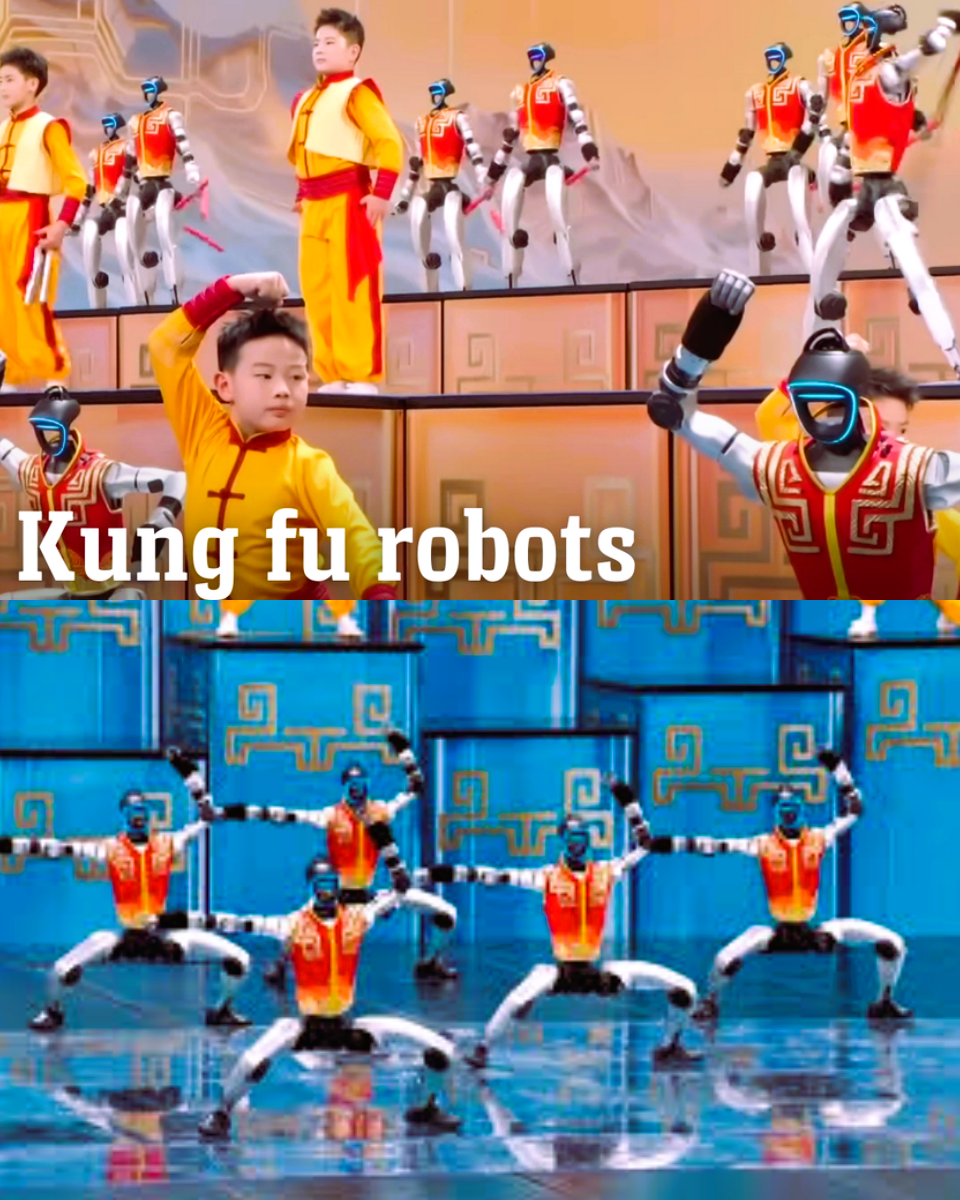
BEIJING — The clip that looks like a deleted scene from a sci-fi thriller is real: during China’s 2026 Lunar New Year celebrations, humanoid robots executed fast kung fu routines, synchronized strikes, and aerial flips on one of the country’s biggest broadcast stages. The footage—shot during the annual Spring Festival Gala—has ricocheted across global social media, not just because it’s flashy, but because it signals how quickly China’s humanoids are graduating from “viral stumbles” into athletic, coordinated machines that can move like trained performers.
Observers say the most startling part isn’t a single kick or flip—it’s the rate of improvement. Reports note the robots’ 2026 routine was a dramatic leap beyond last year’s comparatively simple, entertainment-style movements, which drew both curiosity and mockery online. This time, the machines looked stable at speed, recovered from momentum shifts, and stayed in formation with a level of precision that resembles professional choreography rather than a lab demo.
The robots were identified in multiple reports as models from Unitree Robotics, including the G-series humanoids seen in earlier viral kung fu demonstrations. Unitree itself posted full performance footage online, describing the event as a “fully autonomous” multi-robot kung fu routine.
So how did the machines learn to move like that so fast? Coverage of the gala performance points to a familiar modern recipe: better hardware plus better training. Engineers have been pairing improved motors, balance control, and sensing (such as lidar-based localization) with AI training methods that let robots practice movements repeatedly—often in simulation—before refining them in the real world. In other words, what looks like “learning overnight” is frequently the result of machines running thousands of attempts in accelerated virtual environments, then transferring the best policies to real legs and joints.
The viral reaction has split into two competing emotions: awe and dread. Fans see a new era of robotics entertainment and future workplace helpers. Critics see a preview of machines that could one day operate in chaotic environments—factories, warehouses, disaster zones—with a speed and endurance humans can’t match. Analysts caution that flips don’t automatically translate into economic impact, but they do prove something important: humanoids are getting closer to general physical competence, the kind of mobility that makes them adaptable beyond a single task.
That’s where the real debate begins. These robots are still expensive and hard to scale, and mass deployment depends on cost dropping sharply. But when a humanoid can vault, recover, and coordinate with a group—on live television—one message becomes impossible to ignore: the “clumsy prototype” phase is ending faster than the public expected. And once the world accepts that machines can move like athletes, the next question won’t be “Can they?” It’ll be: Where do we let them?