Breaking News: “Brain Rot” Panic Meets a Real Fix — The 10-Minute Focus Reset Experts Say Actually Works
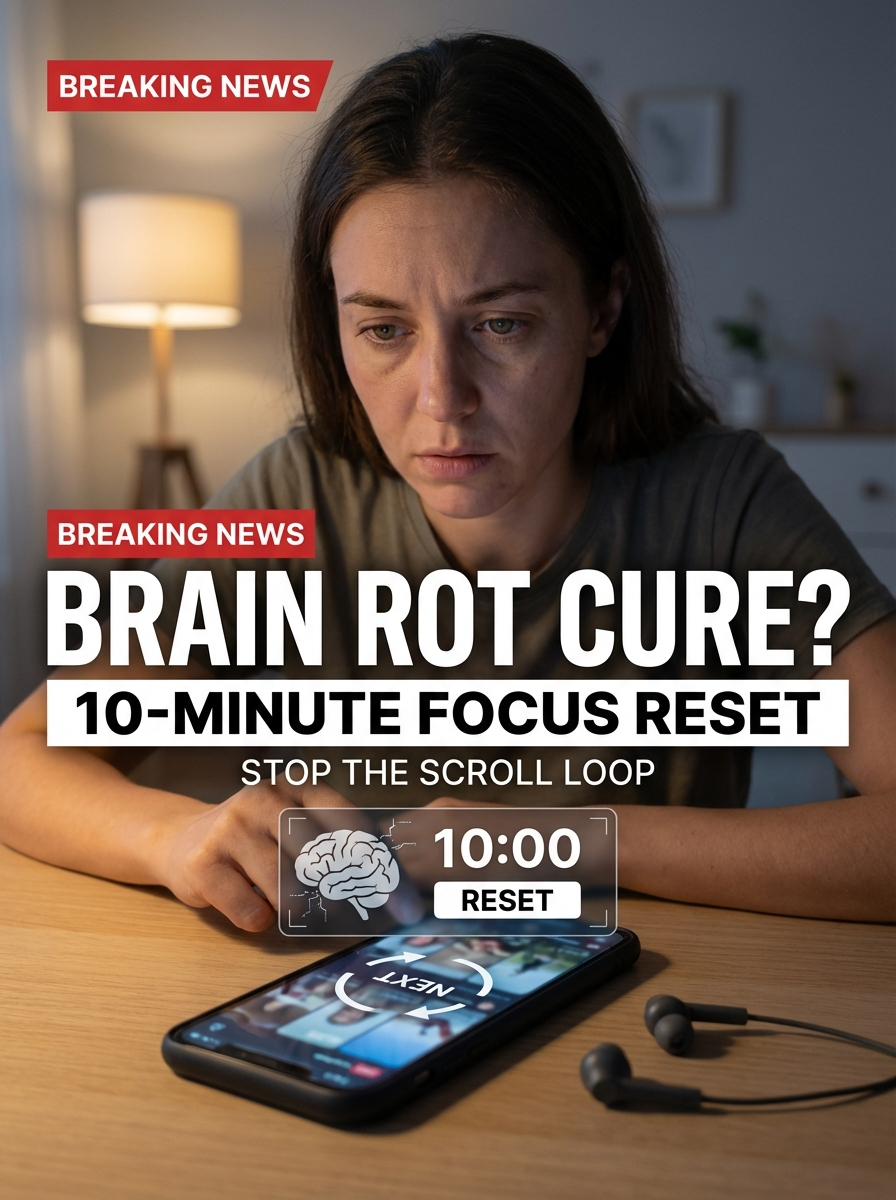
If your brain feels like it’s buffering—jumping from thought to thought, craving the next hit of noise—you’re not imagining it. “Brain rot,” the internet’s favorite insult for fried attention, was officially crowned Oxford’s Word of the Year (2024), reflecting growing anxiety about what endless low-value scrolling does to the mind.
Now the uncomfortable part: the science is catching up to the feeling.
A major 2025 meta-analysis in Psychological Bulletin found short-form video use is linked with measurable cognitive correlates, including reduced attention control, alongside mental-health associations—fueling concerns that algorithmic “feeds” may train the brain toward constant novelty and away from sustained focus.
A 2024 study in Frontiers in Psychology similarly reported that higher tendencies toward short-video addiction were associated with weaker self-control and diminished executive control in attention-related tasks.
But the “cure” isn’t a miracle supplement or a detox retreat.
One of the most striking findings in attention research is how quickly the brain can re-stabilize when you interrupt the scroll loop with a targeted exercise. A peer-reviewed study reported that a single 10-minute guided mindfulness session improved executive attentional control, even in people with no meditation experience.
The key is not mysticism—it’s practice: forcing your mind to notice drift, then calmly return to one target, again and again. That’s the opposite of short-form video design.
Experts caution this doesn’t “erase damage overnight.” But it’s a fast, repeatable lever—ten minutes that can flip your brain from stimulation-chasing back into control.
And that is exactly what the scroll doesn’t want you to learn.