🌠🔭 Cosmic Alert: Could James Webb Space Telescope Uncover Signs of Life Beyond Earth?
- HoaiLinh
- February 19, 2026
🌠🔭 Cosmic Alert: Could James Webb Space Telescope Uncover Signs of Life Beyond Earth?
💬 “Can you feel the excitement in the air? The universe may be hinting at something extraordinary.”
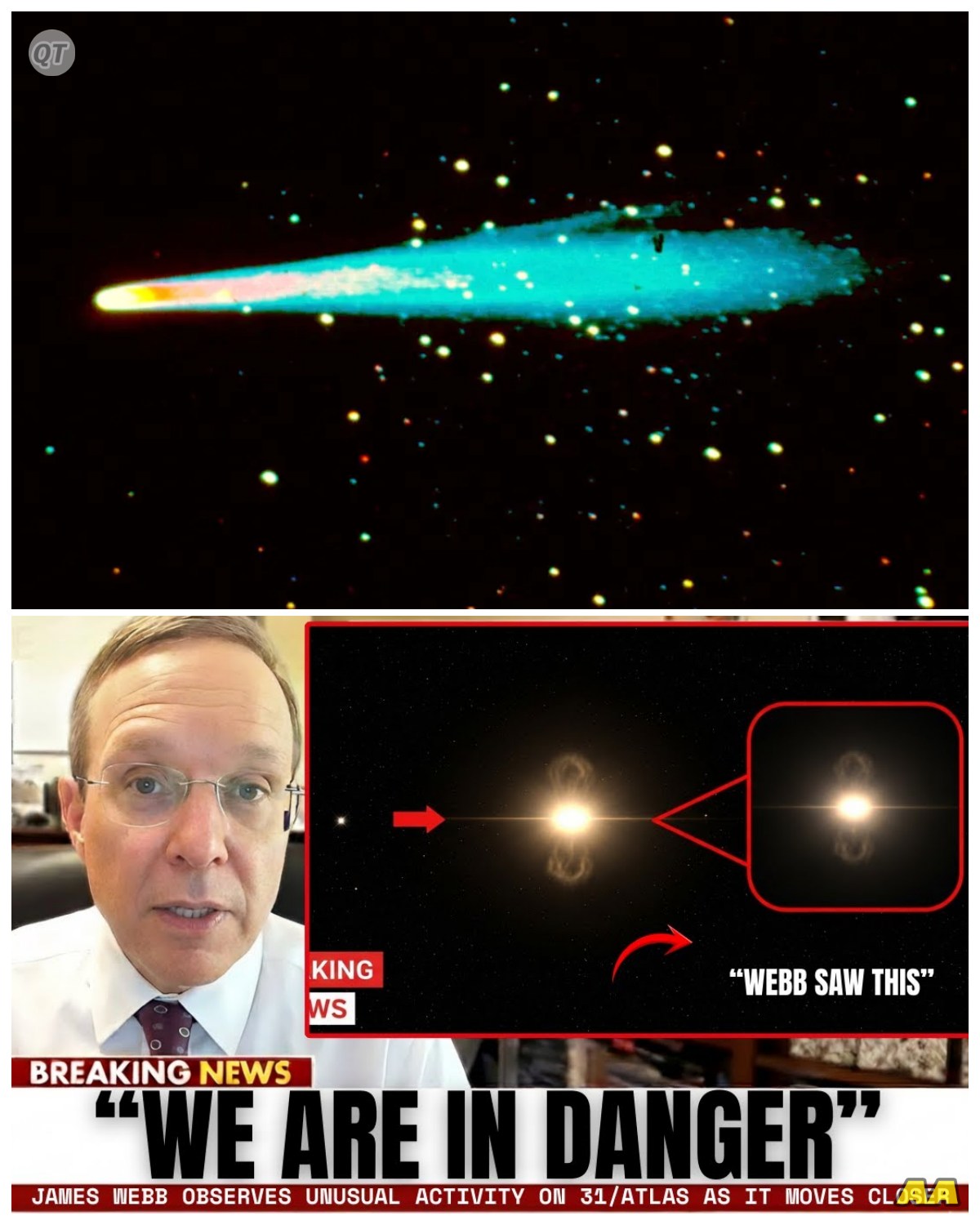
Recent deep-space observations from the James Webb Space Telescope (JWST) have reignited global conversations about one of humanity’s oldest questions: Are we alone in the universe? 🌌 While no confirmed discovery of extraterrestrial life has been announced, the powerful infrared capabilities of JWST are allowing scientists to analyze distant exoplanets and cosmic phenomena with unprecedented clarity.
 🛰️ Why the James Webb Telescope Is a Game-Changer
Launched as a joint mission between NASA, European Space Agency, and Canadian Space Agency, the James Webb Space Telescope is designed to:
-
🔬 Study the atmospheres of distant exoplanets
-
🌡️ Detect chemical signatures such as methane, carbon dioxide, and water vapor
-
🌟 Observe the earliest galaxies formed after the Big Bang
-
🪐 Analyze planetary systems hundreds of light-years away
Unlike previous telescopes, JWST can peer deeper into space — and further back in time — thanks to its advanced infrared instruments.
🧪 Searching for Biosignatures
One of the most exciting developments involves the detection of potential biosignatures — chemical markers that may indicate biological activity. Scientists are particularly focused on:
-
🌊 Water vapor in exoplanet atmospheres
-
🌿 Methane combined with oxygen (a possible indicator of life processes)
-
🧬 Complex organic molecules
While none of these findings confirm life, they narrow down the list of promising candidates where life could exist.
👨🚀 Voices in the Scientific Community
Astrophysicist Avi Loeb has long argued that unusual interstellar objects — such as the mysterious visitor ʻOumuamua — may hold clues about advanced civilizations. Though his ideas remain debated within mainstream science, they contribute to the broader conversation about how we interpret cosmic anomalies.
The scientific consensus remains cautious. Extraordinary claims require extraordinary evidence. However, JWST’s data is undeniably expanding our understanding of what is chemically and physically possible beyond our solar system.
🌍 Are We Prepared for First Contact?
If definitive proof of life beyond Earth were discovered, the implications would be profound:
-
🏛️ Governments would need coordinated global communication strategies
-
🧠 Scientists would face decades of follow-up research
-
🌎 Religious, philosophical, and cultural institutions might reassess long-held beliefs
-
📈 Markets and media would likely react dramatically
Experts suggest that preparation for such a revelation involves not only scientific readiness, but also psychological and societal resilience.
🌌 The Bigger Picture: A Universe Full of Possibilities
The Milky Way galaxy alone contains an estimated hundreds of billions of stars, many with planetary systems. With each new JWST discovery, the probability that Earth is unique becomes a deeper scientific inquiry rather than just philosophical speculation.
The telescope’s mission is far from over. In fact, many of its most ambitious exoplanet studies are just beginning.
🚀 What Happens Next?
For now, the search continues — carefully, methodically, and guided by evidence. While headlines may spark excitement, scientists emphasize patience and precision.
But one thing is certain: the universe still holds countless mysteries waiting to be revealed. And with tools like the James Webb Space Telescope, humanity is closer than ever to unlocking them.
👇 Stay curious. The next discovery could truly change everything.