U.S. Strikes Sink Three “Drug Boats,” Killing 11 — and Igniting a New Storm Over Shoot-to-Kill Tactics
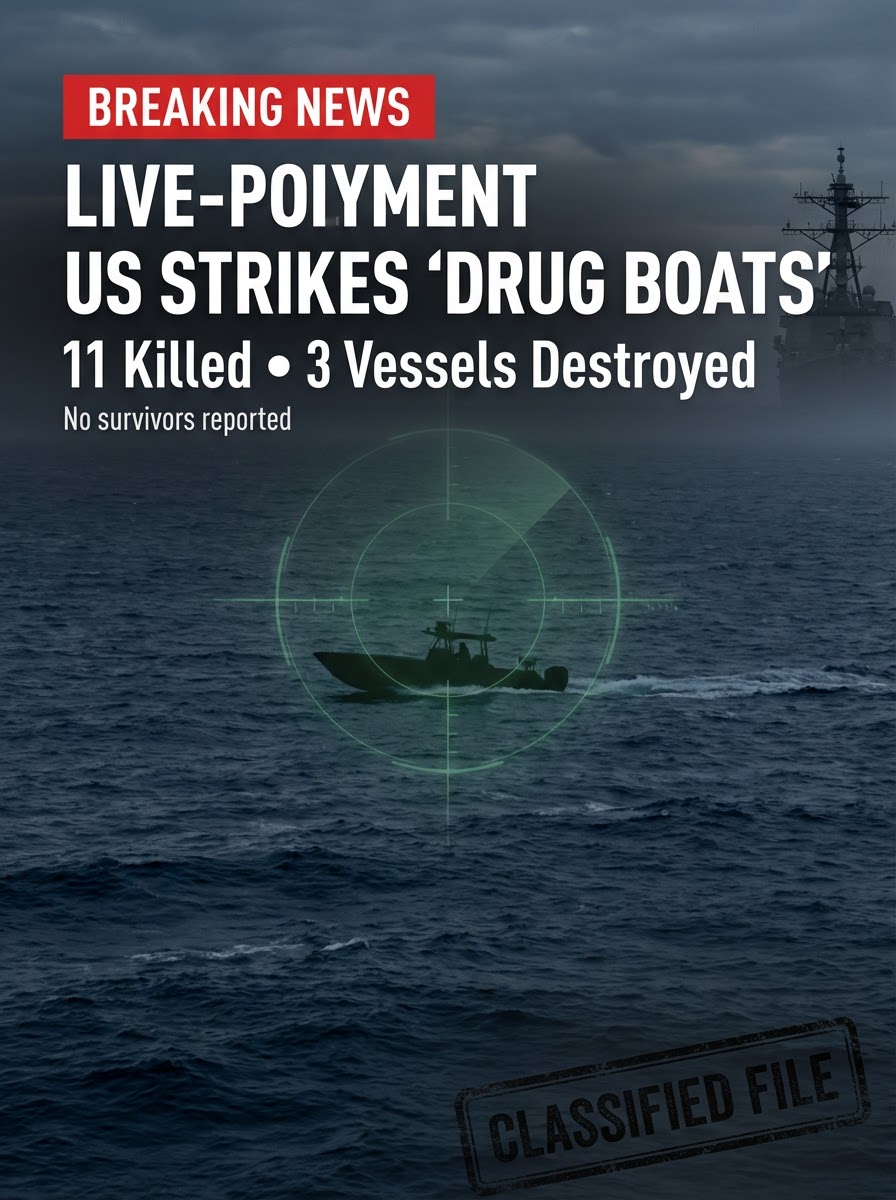
SAN JUAN / MIAMI — The U.S. military says it carried out three lethal strikes in the eastern Pacific and the Caribbean Sea, destroying vessels it described as drug-trafficking “narco-terrorist” boats and killing all 11 people onboard — one of the deadliest single-day actions in an expanding maritime campaign that has already drawn fierce international backlash.
U.S. Southern Command said the targets were small vessels suspected of smuggling drugs, and it released video clips showing the boats moments before impact and then erupting into debris. Critics say those images raise the most uncomfortable question of all: if people were visible on deck, why was there seemingly no attempt to stop or capture, and why were there no survivors?
The strikes are part of the Trump administration’s broader posture describing an “armed conflict” with cartels — a framing that supporters argue deters traffickers and disrupts smuggling networks at sea. But civil liberties and human-rights groups have warned that lethal force in alleged trafficking cases risks becoming extrajudicial killing, especially when authorities do not publicly provide evidence of contraband and when the targets are not confirmed combatants.
In the eastern Caribbean, fishing communities say fear is spreading fast: if Washington is striking suspected smuggling boats based on surveillance assessments, how do ordinary fishermen prove they are not the next blip on a screen? Regional leaders have demanded answers, while advocacy groups have questioned the legality of attacks that resemble warfare more than law enforcement.
For now, the administration is signaling escalation, not restraint. And as the death toll rises, so does the pressure for a public accounting: who was killed, what evidence justified the strikes, and where the boundary lies between interdiction and execution on the open sea.