☢️🌍 New START Treaty Expires, Ending Nuclear Caps Between U.S. and Russia
☢️🌍 New START Treaty Expires, Ending Nuclear Caps Between U.S. and Russia
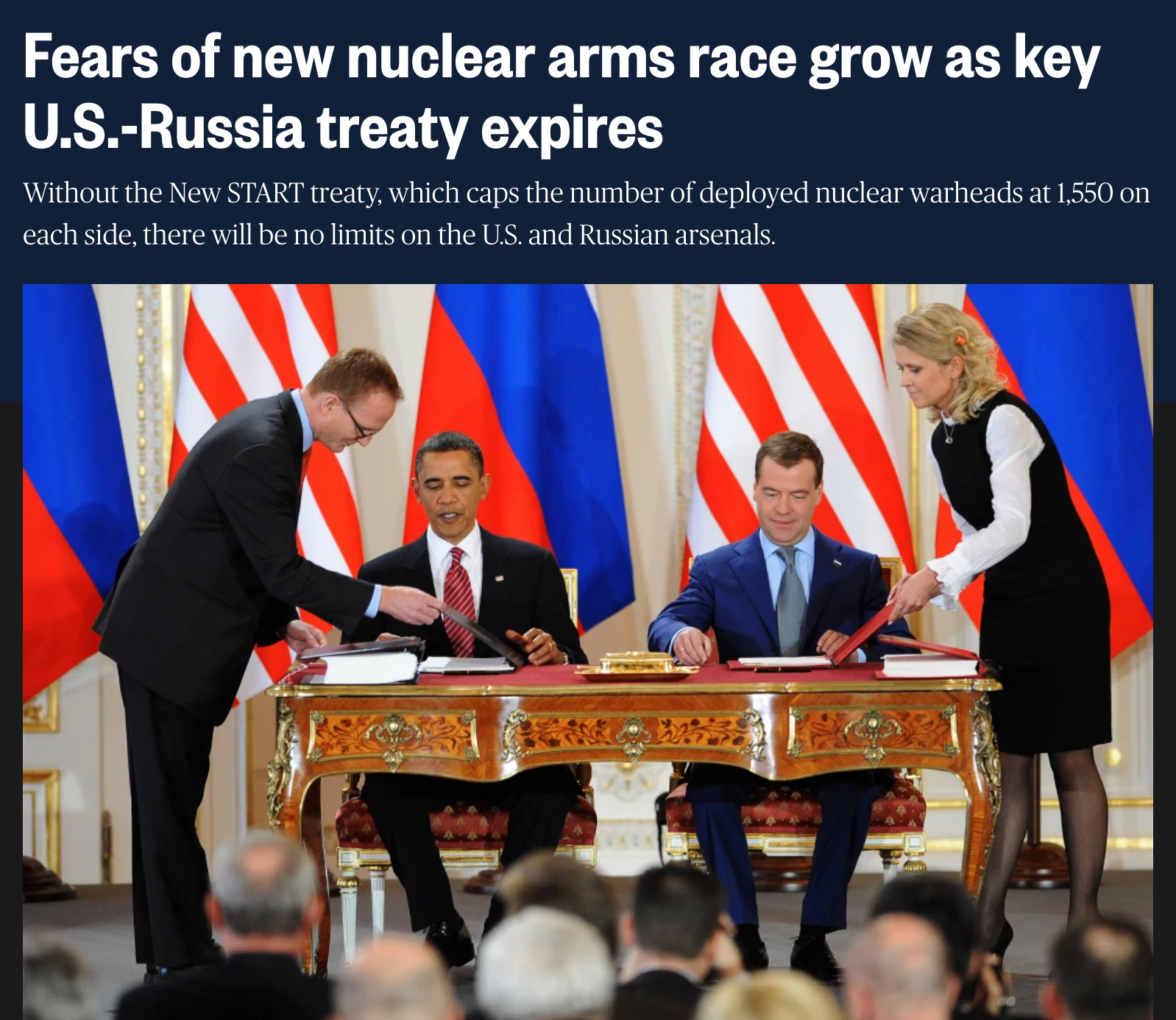
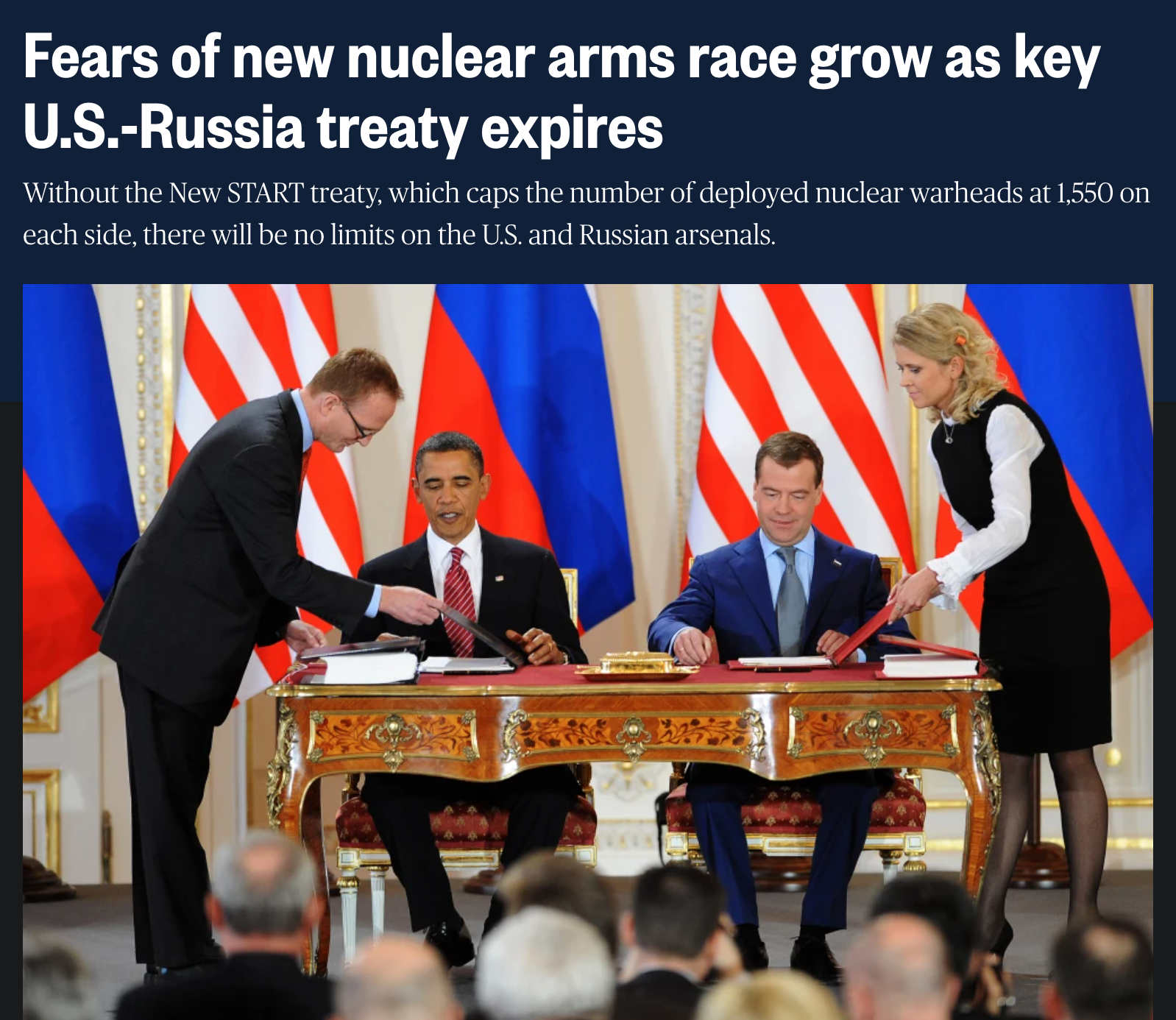
The last major nuclear arms control agreement between the United States and Russia — the New START — expires Thursday, officially removing binding limits on the world’s two largest nuclear arsenals.
With no replacement treaty in place and no active negotiations underway, security experts warn that the expiration could open the door to a renewed nuclear arms race, raising global instability to levels not seen since the Cold War. ⚠️
 📜 What New START Limited
Signed in 2010, New START placed strict caps on deployed strategic nuclear weapons, including:
-
☢️ A maximum of 1,550 deployed nuclear warheads per country
-
🚀 Limits on deployed intercontinental ballistic missiles (ICBMs)
-
✈️ Restrictions on submarine-launched ballistic missiles and heavy bombers
-
🔍 Verification mechanisms, including on-site inspections
The treaty also provided transparency measures designed to reduce mistrust and prevent miscalculation between Washington and Moscow.
With its expiration, no binding restrictions remain on the number of deployed strategic nuclear warheads held by either country.
🌍 A “Grave Moment” for Global Security
U.N. Secretary-General António Guterres described the treaty’s expiration as a “grave moment” for international security.
For the first time in more than 50 years, there will be no active limits on strategic nuclear arsenals between the two nuclear superpowers.
Arms control agreements dating back to the Cold War — including SALT, START, and New START — had established ceilings and verification systems that helped stabilize nuclear competition.
Now, those guardrails are gone.
🇺🇸 Trump Calls Treaty “Badly Negotiated”
President Donald Trump criticized New START as a “badly negotiated deal,” arguing that it failed to address evolving global threats.
Trump has called for experts to draft a new and modernized agreement, potentially including additional nuclear powers such as China.
However, no formal talks toward a replacement treaty have been announced, leaving uncertainty about the path forward.
📊 The Global Nuclear Balance
According to the Stockholm International Peace Research Institute (SIPRI):
-
🇺🇸 The United States and 🇷🇺 Russia together possess over 10,500 nuclear warheads, accounting for nearly 90% of the world’s total
-
🇨🇳 China holds approximately 600 warheads and is expanding its arsenal faster than any other country
China’s rapid modernization has been cited as one reason U.S. officials argue for a broader multilateral arms control framework.
⚠️ Risk of a Renewed Arms Race
Without legally binding limits or verification mechanisms:
-
🔺 Strategic uncertainty increases
-
🔺 Military spending could rise
-
🔺 Transparency declines
-
🔺 Risk of miscalculation grows
Arms control experts warn that the absence of constraints may encourage both Washington and Moscow to expand or modernize their arsenals more aggressively.
The Cold War demonstrated how unchecked nuclear competition can fuel dangerous escalation and global instability.
🕊️ What Comes Next?
The expiration of New START does not automatically mean immediate expansion of arsenals, but it removes legal safeguards that had capped deployment levels for over a decade.
Key questions now include:
-
Will Washington and Moscow reopen negotiations?
-
Could a broader agreement include China?
-
How will NATO and other nuclear states respond?
-
Can diplomatic channels prevent renewed escalation?
🌐 Conclusion: A Turning Point in Nuclear Arms Control
The end of New START marks a historic shift in global security architecture. With no treaty limiting the strategic arsenals of the United States and Russia, the international community faces renewed uncertainty.
As geopolitical tensions remain high and new nuclear powers expand capabilities, experts warn that rebuilding arms control frameworks may be more urgent — and more difficult — than ever before. ☢️🌍