🇨🇦🇺🇸 Alberta Secession Group Meets Trump Officials to Discuss Split From Canada
🇨🇦🇺🇸 Alberta Secession Group Meets Trump Officials to Discuss Split From Canada
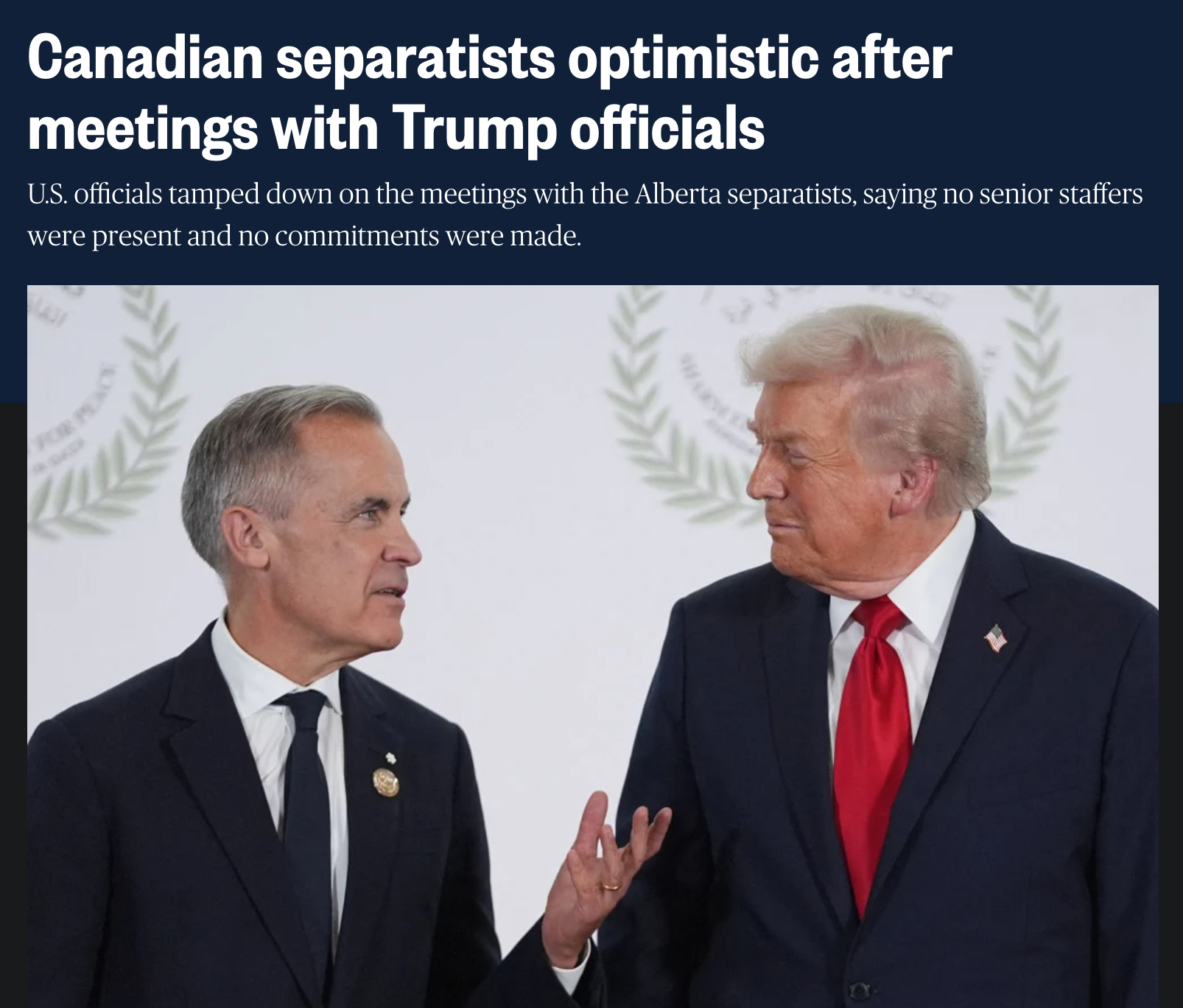
Leaders of the Alberta Prosperity Project say they have held three meetings with officials from the United States Department of State to explore the possibility of Alberta separating from Canada — and how such a move might align with U.S. interests.
The discussions, described by organizers as preliminary, have sparked controversy on both sides of the border. ⚖️
 🗳️ Push for Alberta Referendum in 2026
The Alberta Prosperity Project is advocating for a provincial referendum this year to determine whether Alberta should pursue independence.
Often referred to as the “Texas of Canada” due to its strong energy sector and conservative political base, Alberta has periodically seen separatist movements fueled by disputes over federal energy policies, taxation, and regional autonomy.
Supporters argue that independence would allow Alberta to:
-
Control its natural resources more directly ⛽
-
Set its own tax and trade policies 📊
-
Reduce perceived federal interference 🏛️
However, critics warn that secession would involve enormous economic, legal, and diplomatic complexities.
🇺🇸 Talks in Washington: Currency, Borders, and Logistics
According to co-founder Dennis Modry, discussions with U.S. officials included:
-
💵 Potentially switching to U.S. currency
-
🚧 Border security arrangements
-
📦 Transition logistics for sovereignty
A fourth meeting in Washington, D.C. is reportedly being planned, though no formal schedule has been confirmed.
Modry claimed that U.S. representatives expressed openness or support toward Alberta becoming sovereign.
🏛️ U.S. Officials Downplay Involvement
Despite the claims, both the U.S. State Department and the White House have minimized the significance of the discussions.
Officials stated:
-
❌ No senior officials were involved
-
❌ No commitments were made
-
❌ No further meetings are currently planned
A senior State Department official also clarified that the conversations did not reflect official U.S. policy.
Notably, none of the parties involved have publicly identified which American officials attended the meetings.
🇨🇦 Secession Remains Highly Controversial
The idea of Alberta leaving Canada remains deeply divisive. Constitutional experts note that secession would require:
-
A clear referendum result
-
Complex negotiations with Ottawa
-
Constitutional amendments
-
Economic and trade restructuring
Canada’s Supreme Court has previously ruled that while provinces cannot unilaterally secede, a clear democratic mandate would obligate negotiations.
Public opinion in Alberta remains mixed, with support fluctuating depending on economic conditions and federal-provincial tensions.
🌍 Economic and Geopolitical Implications
If Alberta were to pursue sovereignty, the implications would be far-reaching:
-
Energy exports and pipeline agreements 🔌
-
Trade under USMCA 📦
-
Currency stability 💵
-
International recognition 🌐
Given Alberta’s significant oil and gas reserves, any shift in political status could affect North American energy markets.
🕊️ Conclusion: A Long Road Ahead
While the Alberta Prosperity Project claims progress in discussions with U.S. officials, the proposal remains speculative and politically sensitive.
With no confirmed commitments from Washington and no guaranteed referendum outcome, Alberta’s path toward independence — if pursued — would face significant legal and political hurdles.
For now, the secession effort highlights ongoing regional tensions within Canada and raises broader questions about sovereignty, federalism, and cross-border diplomacy in North America.