🇬🇧⚖️ UK High Court Says Ban on Palestine Action Was Unlawful — Appeal Pending
- HoaiLinh
- February 18, 2026
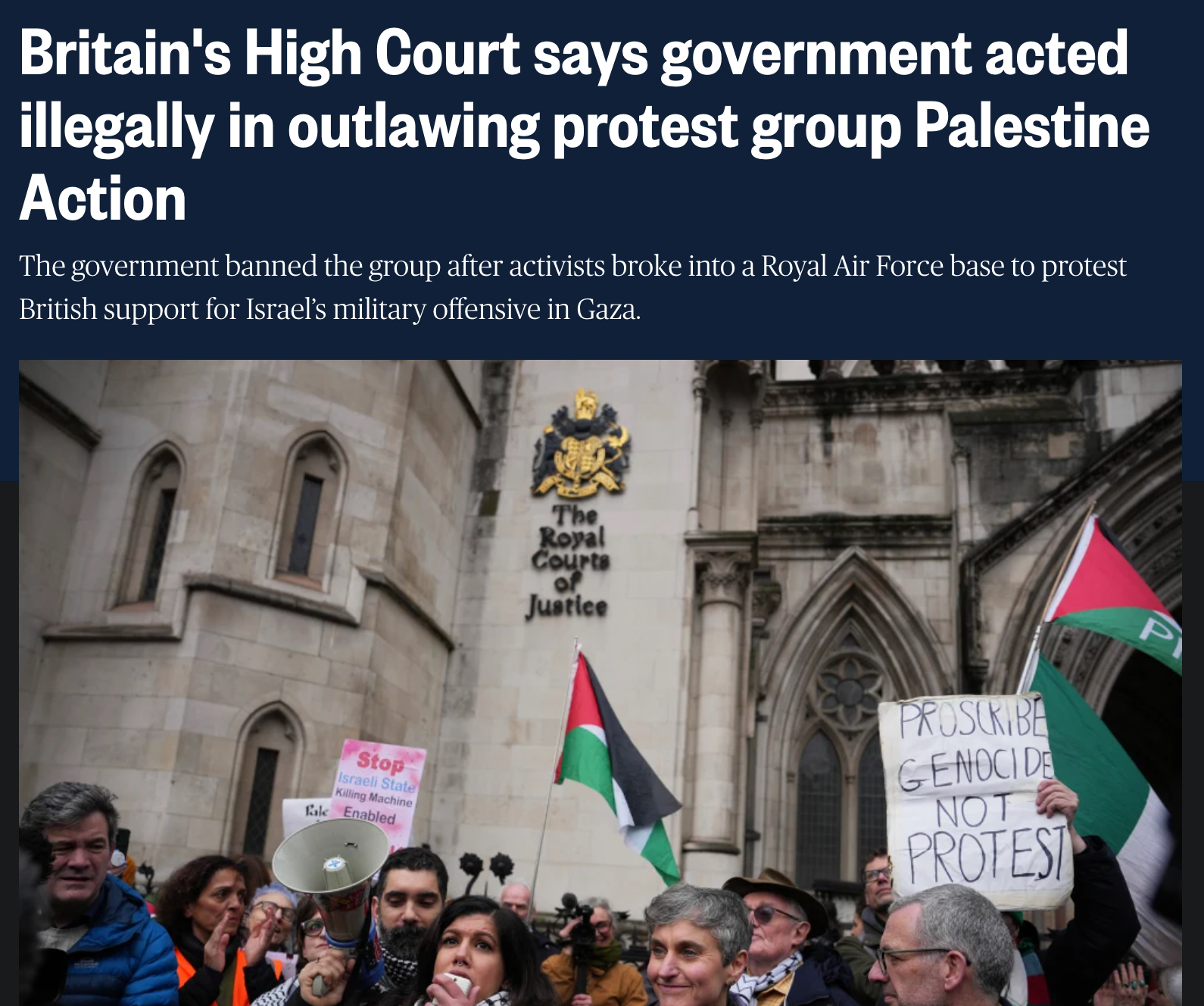
🇬🇧⚖️ UK High Court Says Ban on Palestine Action Was Unlawful — Appeal Pending
Britain’s High Court has ruled that the government acted unlawfully when it banned the protest group Palestine Action as a terrorist organization. However, despite the ruling, the ban will remain in force while the government prepares an appeal.
The decision marks a significant development in an ongoing legal and political battle over how the United Kingdom defines terrorism and balances national security with civil liberties. ⚖️
 👩⚖️ Judges Call Ban “Disproportionate”
The panel of judges — Victoria Sharp, Jonathan Swift, and Karen Steyn — concluded that the group’s activities did not meet the legal threshold required for proscription under terrorism legislation.
In their ruling, the judges stated that Palestine Action’s actions lacked the necessary “level, scale and persistence” to justify designation as a terrorist organization. They described the government’s decision as “disproportionate.”
The judgment suggests that while the group’s actions may have been unlawful or disruptive, they did not rise to the level required for terrorism classification under UK law.
✈️ RAF Base Protest Triggered Ban
The government initially imposed the ban after activists entered a Royal Air Force base in June. The protest was aimed at opposing Britain’s support for Israel’s military campaign in Gaza against Hamas.
Officials argued that the breach of a military installation demonstrated serious national security concerns and justified the group’s designation under terrorism laws.
Under the proscription order, Palestine Action was placed alongside internationally recognized terrorist organizations such as al-Qaida, making membership or material support a criminal offense punishable by up to 14 years in prison.
📊 Thousands Arrested Under Terrorism Laws
Since the ban was enacted:
-
🚨 More than 2,700 people have been arrested for holding signs expressing support for Palestine Action
-
⚖️ Over 250 individuals have been formally charged under terrorism-related legislation
Civil liberties advocates have criticized the scale of arrests, arguing that the designation blurred the line between protest activity and terrorism offenses.
The High Court’s ruling now raises questions about whether those arrests and charges may face further legal scrutiny.
🏛️ Government to Appeal Decision
Despite the court’s finding that the ban was unlawful, the proscription remains in effect pending the government’s appeal.
Officials have indicated they will challenge the ruling, maintaining that the designation was necessary to protect national security and prevent further unlawful actions.
The appeal process could extend the legal uncertainty surrounding the group’s status and the broader implications for protest rights in the UK.
🔎 Broader Debate: Security vs. Civil Liberties
The case highlights an ongoing debate in Britain over:
-
The scope of anti-terror legislation
-
The definition of extremist activity
-
The limits of protest and direct action
-
The proportionality of government response
Legal experts say the outcome of the appeal could set an important precedent for how activist groups are treated under UK counterterrorism law.
🕊️ Conclusion: A Legal Battle Far From Over
The High Court’s ruling that the ban on Palestine Action was unlawful represents a significant moment in Britain’s legal landscape. However, with the ban still active pending appeal, the final outcome remains uncertain.
As the government prepares its next legal move, the case continues to test the balance between national security and the protection of democratic protest rights in the United Kingdom.