🇩🇪🇫🇷☢️ Merz Discusses Joining France’s Nuclear Deterrence Program at Munich Security Conference
🇩🇪🇫🇷☢️ Merz Discusses Joining France’s Nuclear Deterrence Program at Munich Security Conference
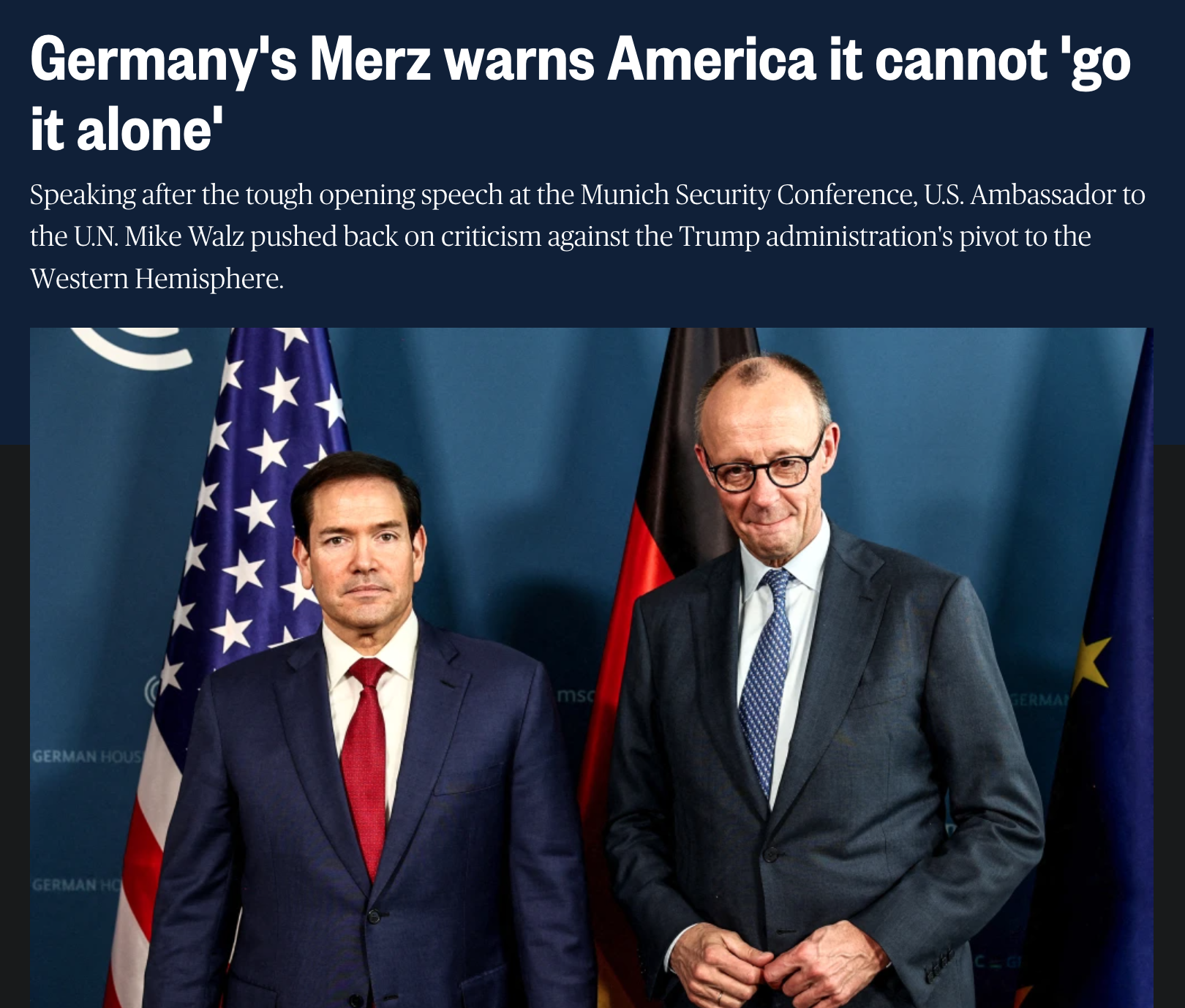
At the high-profile Munich Security Conference, German Chancellor Friedrich Merz revealed that he has held discussions with French President Emmanuel Macron about the possibility of Germany joining France’s nuclear deterrence program.
The remarks mark a significant moment in European defense policy, as some allies begin reassessing their long-standing reliance on the U.S. nuclear umbrella amid shifting geopolitical dynamics. ☢️🌍
 🇫🇷 France’s Nuclear Arsenal and Europe’s Strategic Debate
France is currently the European Union’s only nuclear-armed state, with an estimated 290 nuclear warheads. Its independent nuclear deterrent — known as the “force de dissuasion” — has long been a pillar of French strategic autonomy.
Germany, by contrast, never developed its own nuclear weapons program after World War II. As a member of NATO, Germany has instead relied on the alliance’s collective defense framework, including U.S. nuclear deterrence commitments.
Merz’s comments suggest Berlin may now be exploring deeper integration into a European-based deterrence structure — potentially reshaping the continent’s security architecture.
🛡️ Rethinking the U.S. Nuclear Umbrella
For decades, Europe’s security strategy has rested heavily on U.S. military guarantees, particularly under NATO’s Article 5 collective defense clause.
However, evolving global tensions and political uncertainty have prompted some European leaders to consider strengthening strategic autonomy — including in the nuclear realm.
Merz emphasized that Germany remains fully committed to NATO, but he also delivered a clear warning:
🗣️ “Even the U.S. will not be powerful enough to go it alone.”
His remarks underline concerns that transatlantic trust must be reinforced, rather than taken for granted.
🇩🇪 Germany’s Strategic Position
Germany has historically adopted a cautious approach toward nuclear weapons due to its post-war constitutional and political constraints. It participates in NATO’s nuclear-sharing arrangements, hosting U.S. nuclear weapons under alliance agreements, but does not control its own arsenal.
Joining or formally aligning with France’s deterrence framework would represent a significant policy shift — both politically and strategically.
Such a move would likely require:
-
Constitutional and parliamentary review
-
Coordination within NATO
-
Negotiations on command and control structures
-
Broader European consensus
🇪🇺 Toward Greater European Defense Integration?
Macron has long advocated for stronger European defense sovereignty, including discussions about extending France’s nuclear deterrence umbrella to protect European partners.
Merz’s confirmation of talks suggests that Berlin is now engaging more seriously with these proposals.
Supporters argue that:
-
A stronger European deterrent could enhance stability
-
It would reduce overdependence on Washington
-
It signals unity in the face of global threats
Critics caution that:
-
It could complicate NATO cohesion
-
It may trigger regional tensions
-
Nuclear policy shifts require careful international coordination
🌐 Transatlantic Relations at a Crossroads
Merz stressed that weakening NATO would not only harm Europe but also the United States. His message reflects a broader effort to repair and reinforce transatlantic trust while encouraging Europe to take greater responsibility for its own defense.
The debate comes at a time when global security concerns — including conflicts in Eastern Europe and the Middle East — are prompting renewed discussions about deterrence and alliance structures.
🕊️ Conclusion: A Turning Point for European Security?
Germany’s exploration of France’s nuclear deterrence program marks a potentially historic moment in European defense strategy. While Berlin remains committed to NATO, the conversation itself reflects shifting geopolitical realities.
As European leaders gather at international forums like the Munich Security Conference, one message is clear: Europe is reassessing its security framework — and considering how best to balance alliance commitments with greater strategic autonomy. ☢️🇪🇺