🇵🇪⚖️ Peru’s Congress Ousts President José Jerí After Just Four Months
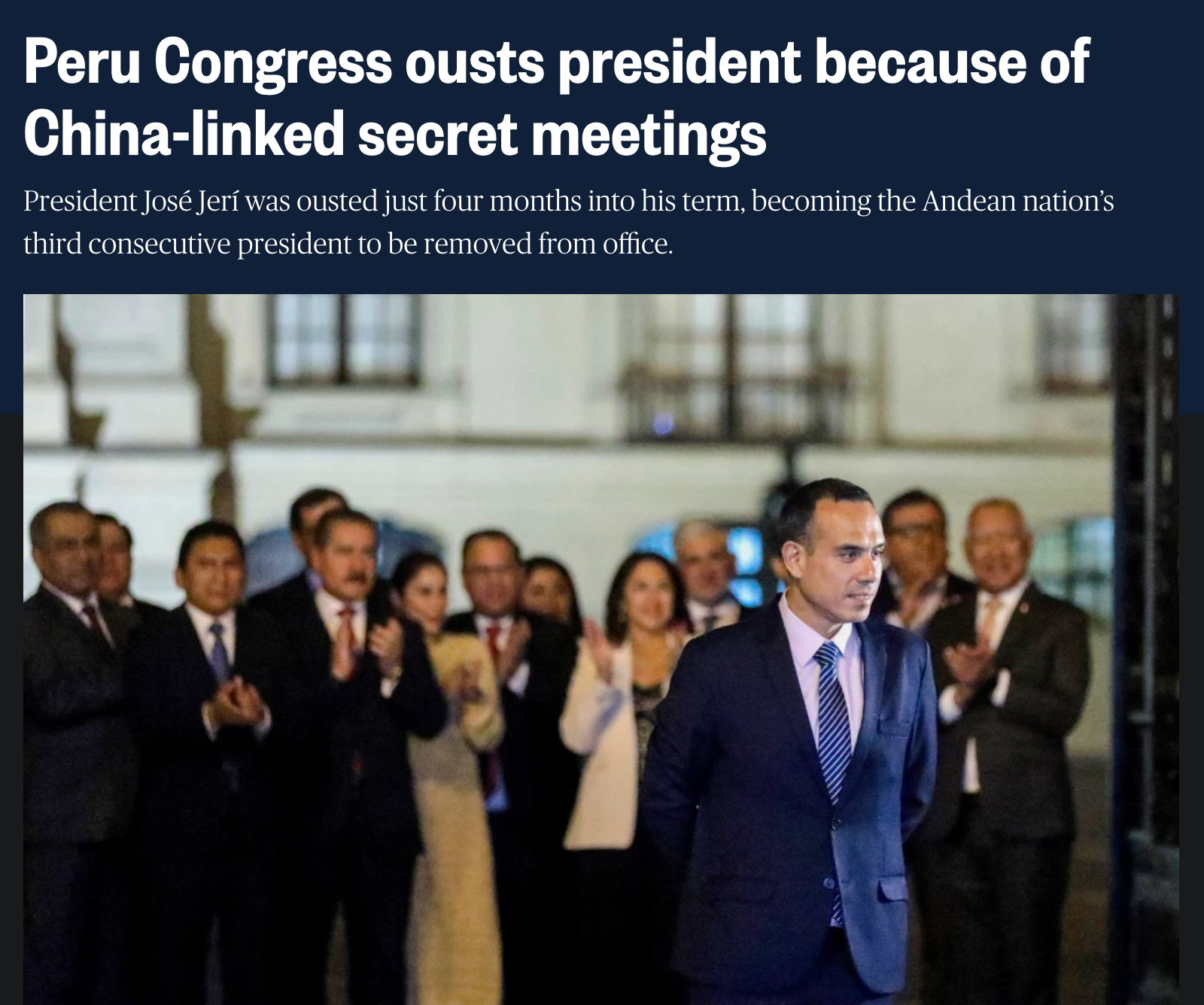
🇵🇪⚖️ Peru’s Congress Ousts President José Jerí After Just Four Months
In a dramatic political shake-up, Peru’s Congress voted Tuesday to remove President José Jerí from office, just four months after he assumed the presidency. The decision follows allegations involving undisclosed meetings with a Chinese businessman, further fueling concerns over transparency and governance.
The vote underscores Peru’s ongoing political instability, marking yet another abrupt leadership change in a country that has faced repeated institutional crises over the past decade.
 🗳️ The Congressional Vote Breakdown
Lawmakers approved Jerí’s removal with:
-
✅ 75 votes in favor
-
❌ 24 votes opposed
-
⚖️ 3 abstentions
Under Peru’s constitutional framework, Congress holds the authority to remove a sitting president under specific circumstances, including allegations of misconduct or moral incapacity.
With this vote, Jerí becomes the third consecutive president removed from office and the eighth president in just eight years — a striking statistic that reflects deep-rooted political volatility.
🏛️ What Happens Next?
Following Jerí’s ouster, Congress will elect a new head of Congress, who will then assume the presidency under Peru’s succession rules.
This mechanism, while constitutional, has contributed to a cycle of short-lived administrations, often limiting the government’s ability to implement long-term reforms or stabilize national policy.
Political analysts warn that frequent leadership changes may further erode public confidence in democratic institutions.
🔎 The Scandal Behind the Removal
The controversy centers on alleged undisclosed meetings between President Jerí and a Chinese businessman. Critics argue that the lack of transparency surrounding these meetings raised serious concerns about potential conflicts of interest.
While details of the meetings have not been fully disclosed, opposition lawmakers described them as inappropriate and inconsistent with public accountability standards.
Congresswoman Ruth Luque, who supported the removal, stated that Peru needs leadership committed to transparency and public security. She criticized what she described as a political transition marked by “hidden interests” and “secret meetings.”
🇵🇪 A Pattern of Political Turbulence
Peru has experienced a prolonged period of instability in recent years, with successive presidents either resigning, being impeached, or removed by Congress.
Key challenges facing the country include:
-
Rising crime rates 🚨
-
Persistent corruption scandals ⚖️
-
Economic uncertainty 📉
-
Growing public dissatisfaction
Short-lived administrations have struggled to implement structural reforms, creating a cycle of governance crises and weakened executive authority.
📊 Impact on Governance and Public Trust
Frequent presidential removals can have lasting consequences for national stability:
-
Reduced investor confidence
-
Delayed policy implementation
-
Weakened international standing
-
Heightened political polarization
Public frustration has grown as leadership turnover continues without clear signs of sustainable reform.
Analysts suggest that without institutional changes or stronger political consensus, Peru’s governance challenges may persist.
🌍 Regional and International Implications
Political instability in Peru, one of South America’s key economies, may also affect regional cooperation and trade relations.
International observers are closely monitoring how Congress manages the leadership transition and whether the next administration can restore confidence and stability.
🕊️ Conclusion: Uncertainty Continues in Peru
The removal of President José Jerí after just four months in office highlights the fragile nature of Peru’s political landscape. As Congress prepares to select a new leader, questions remain about whether the country can break its cycle of short-term presidencies and address pressing national issues.
For now, Peru’s political turbulence shows little sign of slowing — and the path toward long-term stability remains uncertain.