SCHOOLS VS. SILICON VALLEY: District Lawsuit Wave Expands as Marshall County Joins Youth-Mental-Health Fight
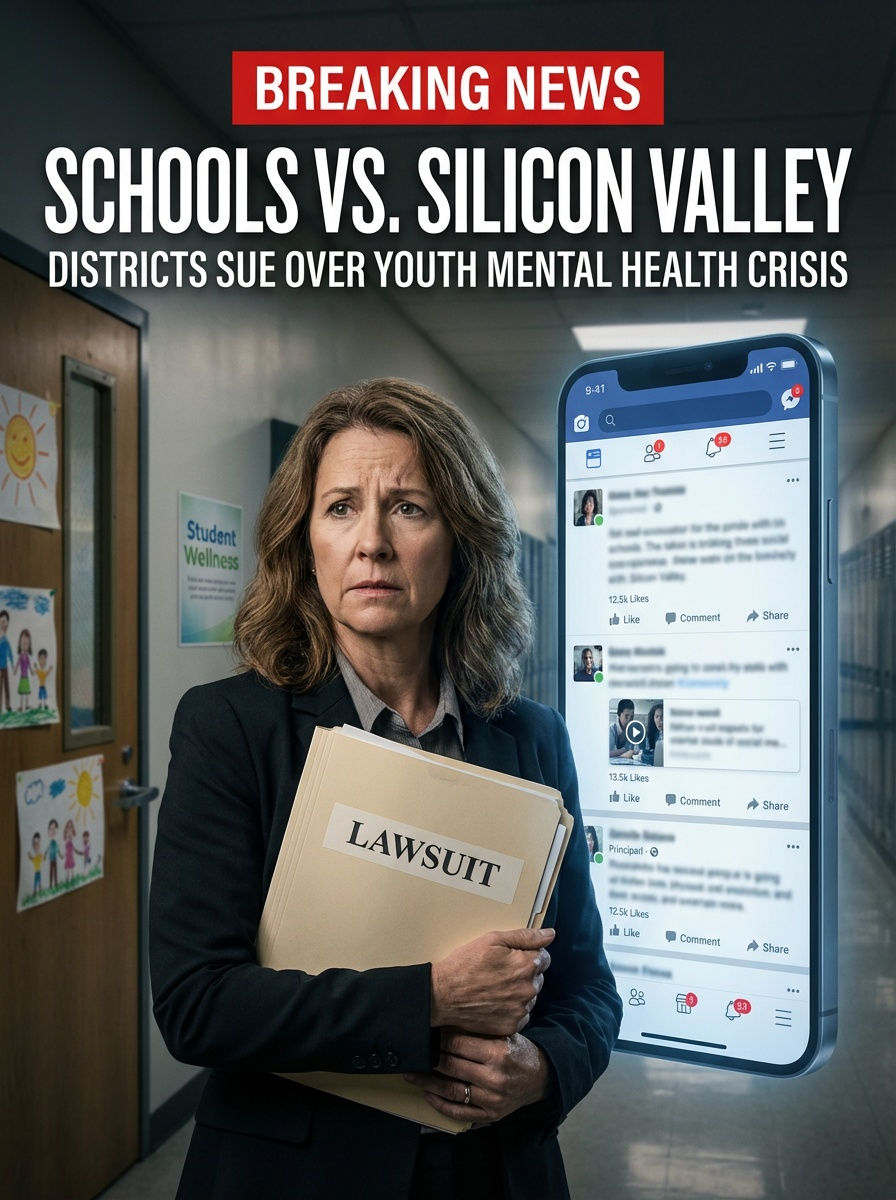
A new front has opened in the legal war over teen mental health: Marshall County Schools has joined a national lawsuit targeting major social media platforms, arguing that product design choices—not just user behavior—are driving addiction-like use patterns among children and overwhelming school systems. Local reporting says district leaders are aligning with broader claims that platforms knowingly built features that keep minors engaged for longer and at greater psychological cost.
The move lands as the nationwide social-media litigation enters a pivotal phase in federal court. Reuters reports that Meta, Snap, TikTok and other companies recently asked a U.S. judge to block certain school-district cases from reaching trial, arguing federal law shields them from liability tied to third-party content. Plaintiffs counter that the suits target companies’ own design and product decisions.
That argument is central to the multidistrict litigation (MDL) in Northern California, where school districts and families allege negligence and public nuisance linked to youth harms, including rising anxiety, depression, classroom disruption, and increased counseling burdens. Public tracking of the MDL notes that in 2024, the court allowed key district claims to proceed in part, even while dismissing some legal theories.
The dispute is no longer abstract. Recent trial coverage shows executives being pressed directly on whether “addiction” is an appropriate framework for compulsive teen use. In one closely watched hearing, Instagram chief Adam Mosseri disputed the addiction label while acknowledging problematic use among some young users.
For schools, the stakes are immediate: if courts ultimately force product changes or fund mitigation, districts could gain resources for counseling and prevention. If not, educators warn they will keep carrying the downstream costs alone. Marshall County’s entry underscores a widening belief among school leaders that this is not merely a tech-policy debate—it is a public-health and education-capacity crisis unfolding in real time.