MIDDLE EAST POWDER KEG: U.S. Naval Buildup Raises Stakes Ahead of Geneva Talks
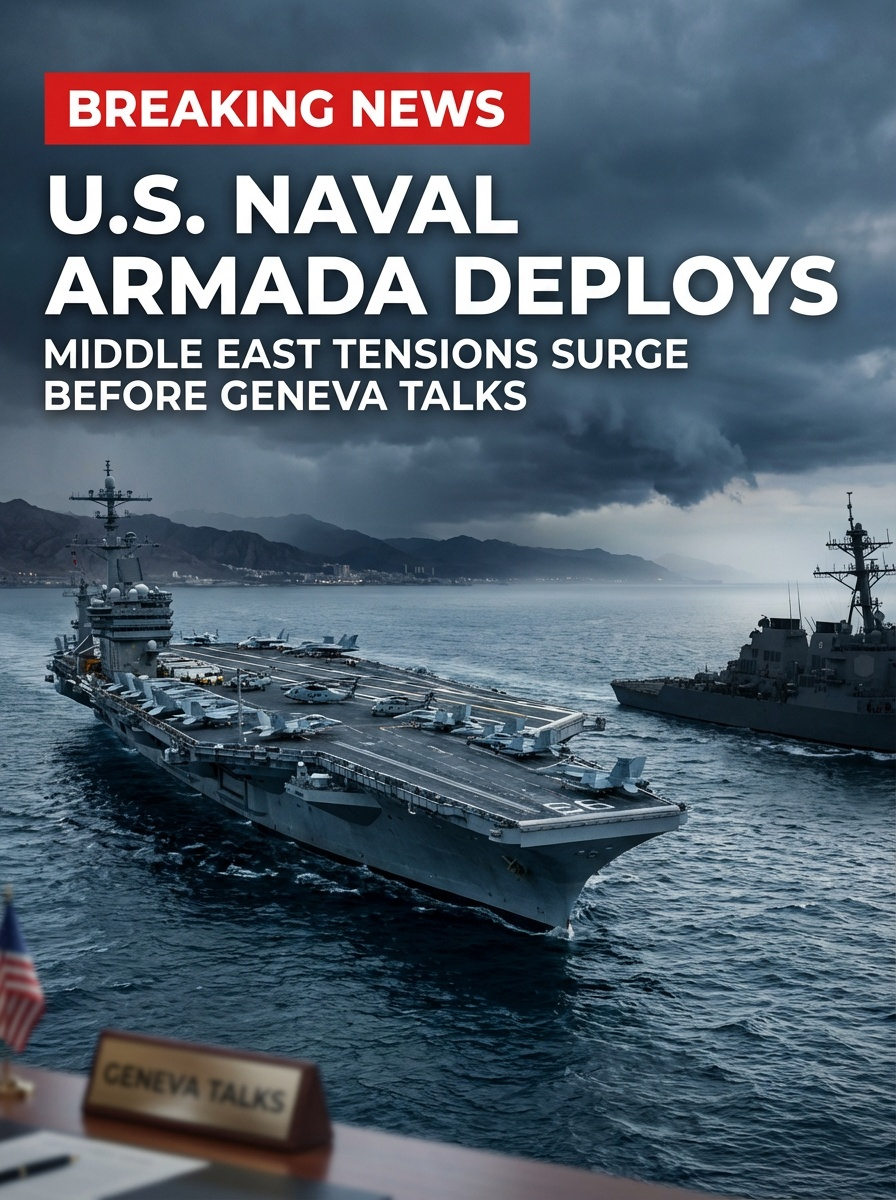
The United States has sharply increased its military posture in the Middle East just as high-risk diplomacy with Iran moves to Geneva, creating one of the most combustible moments in the region since last year’s direct strikes on Iranian nuclear infrastructure. U.S. President Donald Trump said on February 17 he would be “indirectly” involved in the new round of talks, while signaling Washington is prepared to escalate pressure if negotiations fail.
At the center of the buildup is a reinforced naval presence. Reuters and AP report that a U.S. carrier strike group had already entered CENTCOM waters in late January, and a second carrier was then moved toward the theater as tensions climbed. U.S. officials describe the deployments as deterrence and force protection, but the scale of movement has fueled speculation about contingency planning for military action.
Iran has responded with visible signaling of its own. AP and Financial Times report Tehran launched live-fire naval drills and temporarily closed the Strait of Hormuz during exercises on the same day talks resumed—an extraordinary step in one of the world’s most critical energy chokepoints.
The diplomatic track remains narrow. Washington wants stronger limits on Iran’s nuclear activities; Tehran insists enrichment rights are non-negotiable and says talks should stay focused on the nuclear file and sanctions relief. Meanwhile, the IAEA is pressing for fuller access and accounting after prior damage to key facilities.
Whether this is brinkmanship that enables a deal—or a prelude to wider conflict—will likely be determined in days, not months. For now, the region is operating under dual logic: negotiation at the table, coercive signaling at sea. In that environment, miscalculation is the most immediate threat, and every military movement now carries diplomatic consequences far beyond Geneva.