⚖️💰 Trump Seeks $10 Billion in Lawsuit Against IRS and Treasury
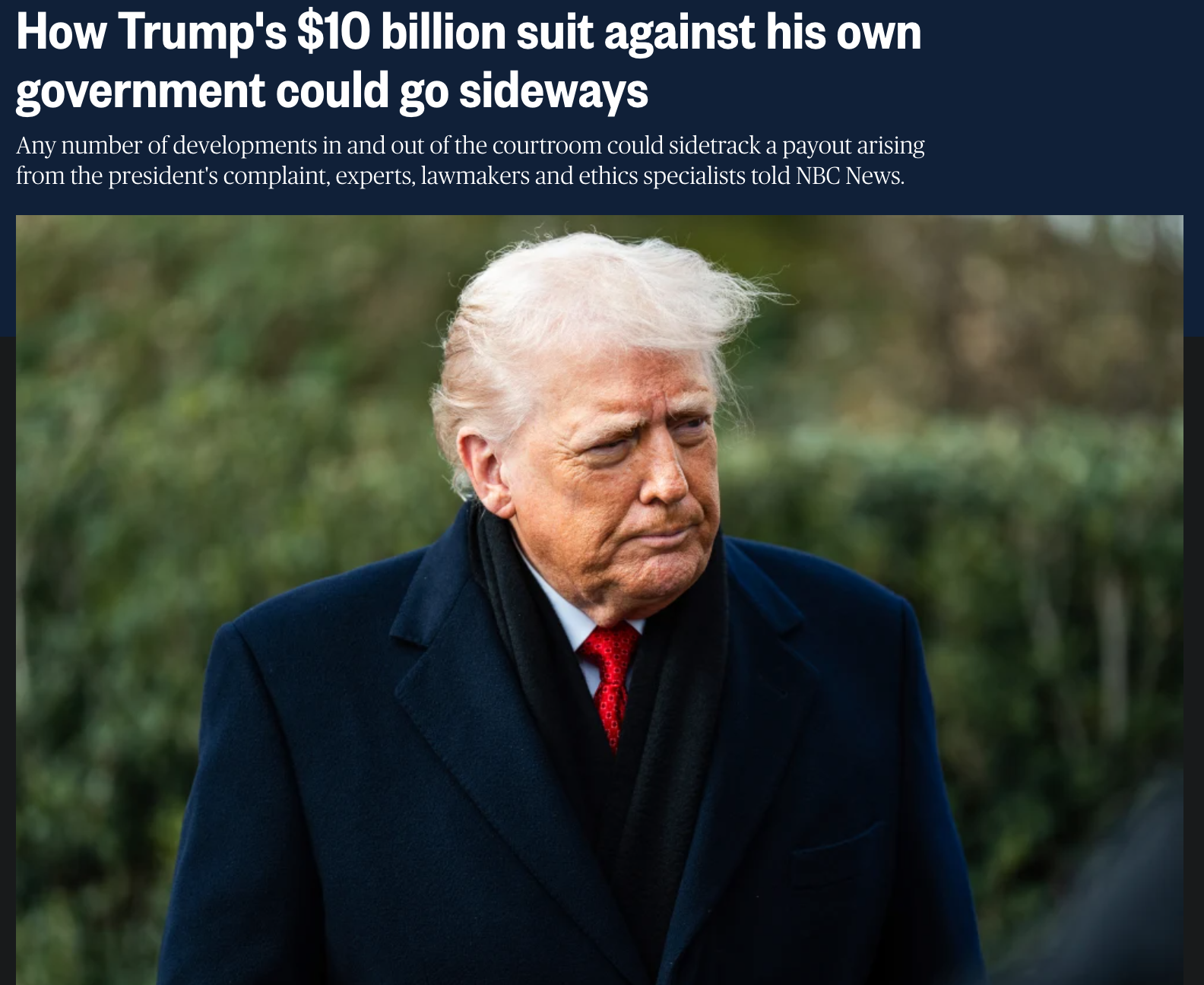
⚖️💰 Trump Seeks $10 Billion in Lawsuit Against IRS and Treasury
A sitting president suing the federal government he oversees for $10 billion in personal damages is virtually unprecedented — and raises complex legal and ethical questions about conflicts of interest and executive power. 🇺🇸
Donald Trump, alongside his two eldest sons and the The Trump Organization, filed the lawsuit last month against the Internal Revenue Service (IRS) and the United States Department of the Treasury.
Trump stated that if he prevails, “100%” of any awarded funds would go to charity — pending government approval.
 📌 Legal and Political Hurdles Ahead
Despite the bold claim, legal experts warn that significant courtroom and political obstacles could delay or block any potential settlement.
One key question: who within the federal government would authorize a payout if the executive branch is effectively suing itself? ⚖️
🧾 Senate Pushback
Ron Wyden has announced plans to introduce legislation that would impose a 100% tax on any payout or settlement, effectively preventing Trump from personally benefiting from a court victory.
The proposal signals that Congress could intervene if the case advances.
⚖️ Watchdog Groups Seek Delay
Government watchdog organizations — including Common Cause and Project On Government Oversight — along with four former federal officials, filed a 23-page amicus brief urging the court to delay proceedings until Trump leaves office in January 2029.
They argue that potential conflicts of interest could influence whether the United States Department of Justice aggressively defends the Treasury Department while Trump remains president.
📂 Origins of the Case
The lawsuit stems from Trump’s first term in office, when former IRS contractor Charles Littlejohn stole and leaked Trump’s tax records from 2019–2020.
Littlejohn later pleaded guilty and is currently serving a five-year federal prison sentence.
🔎 What Happens Next?
The case now moves into complex legal territory, with constitutional, ethical, and political implications likely to shape its trajectory.
Whether the courts allow it to proceed immediately — or delay it until after Trump leaves office — could set a significant precedent for future presidential litigation against federal agencies.