🤝🇺🇸🇨🇴 Trump and Colombia’s Petro Hold Unlikely Oval Office Meeting
🤝🇺🇸🇨🇴 Trump and Colombia’s Petro Hold Unlikely Oval Office Meeting
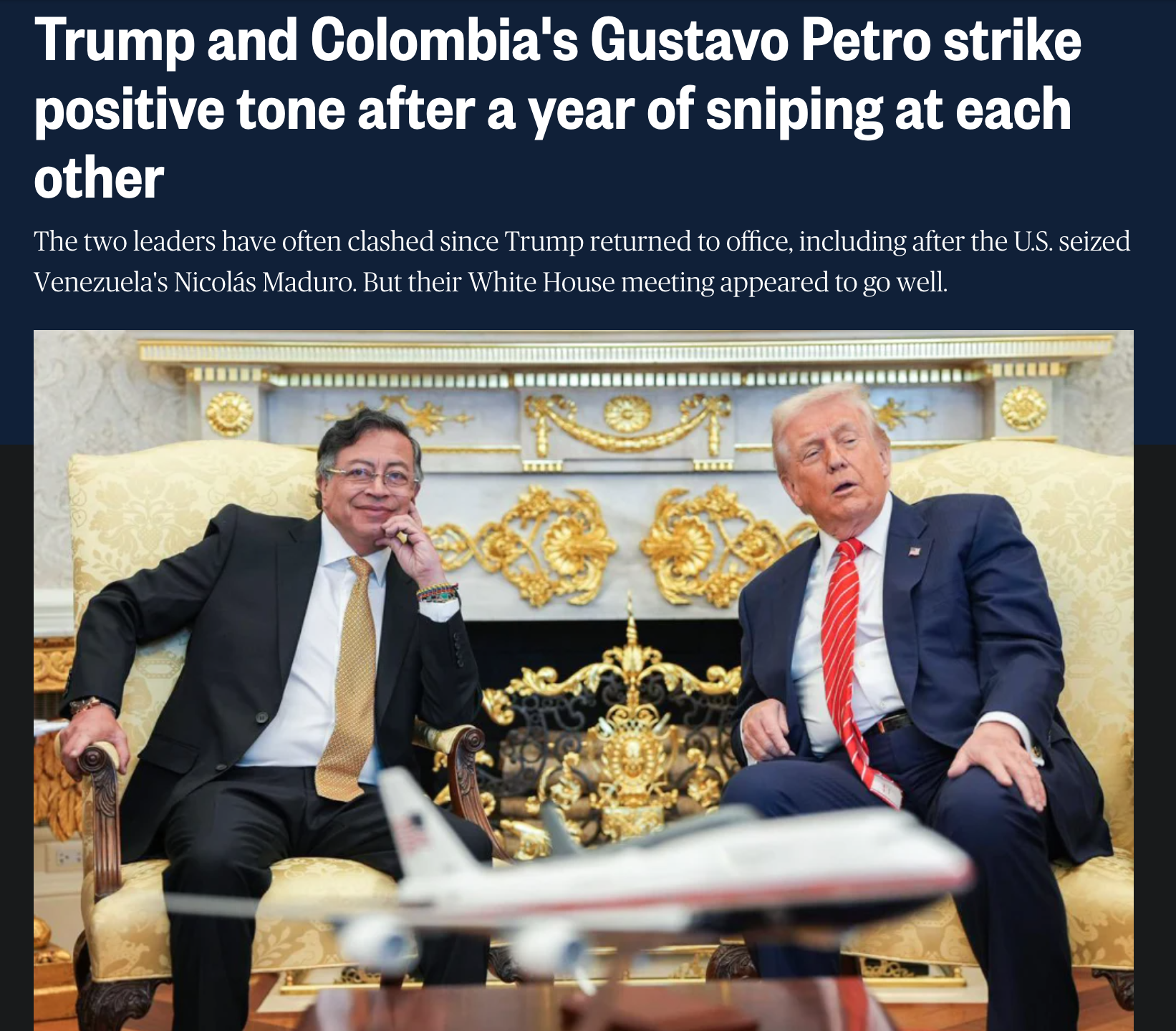
Donald Trump and Gustavo Petro met at the White House this week for their first in-person talks, marking a surprising diplomatic shift after months of harsh rhetoric and strained U.S.–Colombia relations. The nearly two-hour meeting took place on February 3 in the Oval Office.
Initially seen as tense — with Trump previously threatening possible military action against Colombia and accusing Petro of failing to stop drug trafficking — the encounter ended on a decidedly friendlier note. Both leaders described their talks as productive and constructive. Trump told reporters he and Petro “got along very well,” calling the Colombian president “terrific.” Petro characterized the discussion as “positive and optimistic.”
 📍 Historic Diplomatic Turn
The meeting was the first between Trump and a South American head of state since the U.S. raid that led to the capture of Nicolás Maduro in January — a development that had previously heightened regional tensions.
Despite earlier clashes — including Trump’s public criticism of Petro over narcotics and threats about military force — both sides walked away emphasizing cooperation on shared concerns, particularly security, counternarcotics efforts, and regional stability.
🎁 Symbolic Gesture: “Make the Americas Great Again”
A standout moment came when Trump presented Petro with a red “Make America Great Again” cap. In a light-hearted diplomatic twist, Petro added an “s” to the slogan — transforming it into “Make the Americas Great Again” — reflecting his vision of broader continental collaboration.
The gesture quickly became emblematic of the unusual détente between the two leaders, illustrating how a symbolic item tied to U.S. domestic politics was repurposed to signal regional solidarity.
🔎 Background of Tension and Cooperation
Relations between the United States and Colombia had been rocky in recent months. Trump had previously revoked Petro’s U.S. visa, imposed sanctions, and openly criticized Colombia’s drug policies, while Petro accused the U.S. of aggression after the Caracas operation captured Maduro.
Yet this meeting reflects a pragmatic step toward reconciling differences and reaffirming bilateral ties, even as substantive policy disputes remain unresolved. Both leaders indicated they plan to build on the dialogue, focusing on issues like cocaine trafficking, Venezuela’s crisis, and regional security.
📌 What Comes Next?
With tensions eased but underlying disagreements still present, this White House encounter represents a diplomatic reset more than a full policy convergence. Analysts say the personal rapport between Trump and Petro may open doors to future collaboration — but the long-term trajectory of U.S.–Colombia relations will depend on follow-up actions and how both governments manage ongoing challenges in the region.